
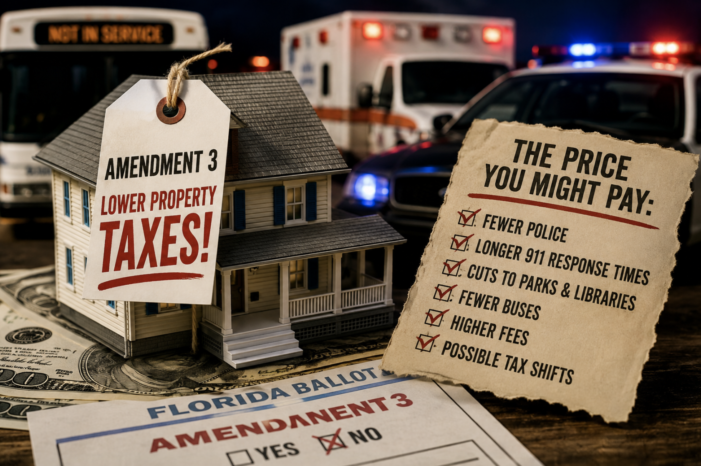
Mayor Daniella Levine Cava starts ‘No on 3’ campaign
Miami-Dade Mayor Daniella Levine Cava and a small army of mayors, commissioners, cops, firefighters and local-government types are embarking on what may be the hardest political sales job of the 2026 election: ‘Please, Florida voters, do not vote to lower your property taxes.’
Good luck with that.
Because Amendment 3 — the sweeping property-tax measure Tallahassee lawmakers put on the Nov. 3 ballot — sounds pretty darn good if you own your home.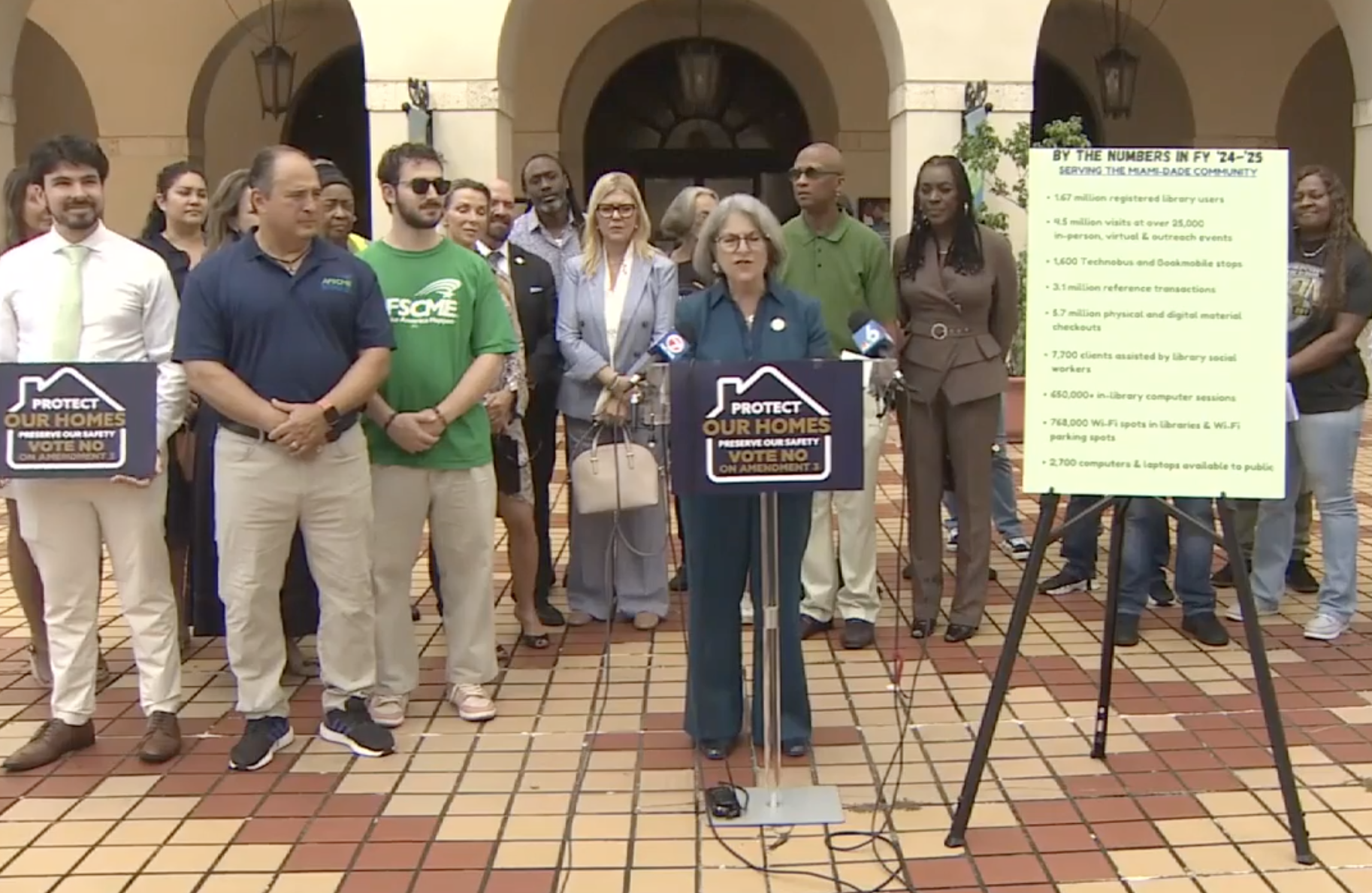
It would increase the homestead exemption for non-school property taxes from the current $50,000 to $150,000 next year and then to $250,000 in 2028, indexed for inflation after that. It also lowers the cap on annual assessment increases for non-homestead properties from 10% to 5%.
And that’s not even the end game.
The amendment also directs the Legislature to come up with a process allowing counties and municipalities to eventually increase the homestead exemption all the way to the property’s full assessed value — essentially providing a road map toward eliminating those local property taxes altogether.
Sounds fantastic! Who wants to pay property taxes? Nobody.
Which is exactly the problem Levine Cava and the growing statewide ‘No on 3’ movement face.
Read related: Tallahassee just put property taxes on the chopping block in November
On Wednesday, the Miami-Dade mayor stood outside the county’s downtown library with local elected officials to begin making the decidedly less sexy counterargument: Yes, you could save money on your tax bill. But you might want the ambulance to come when you call 911.
“Amendment 3 is deceiving, deceptive,” Levine Cava said. “It’s being presented as a tax cut, but it doesn’t eliminate the cost of providing the services that our communities depend upon.
“Roads and bridges and our storm water infrastructure, our flood protection, parks, libraries, after school programs, public transit and other 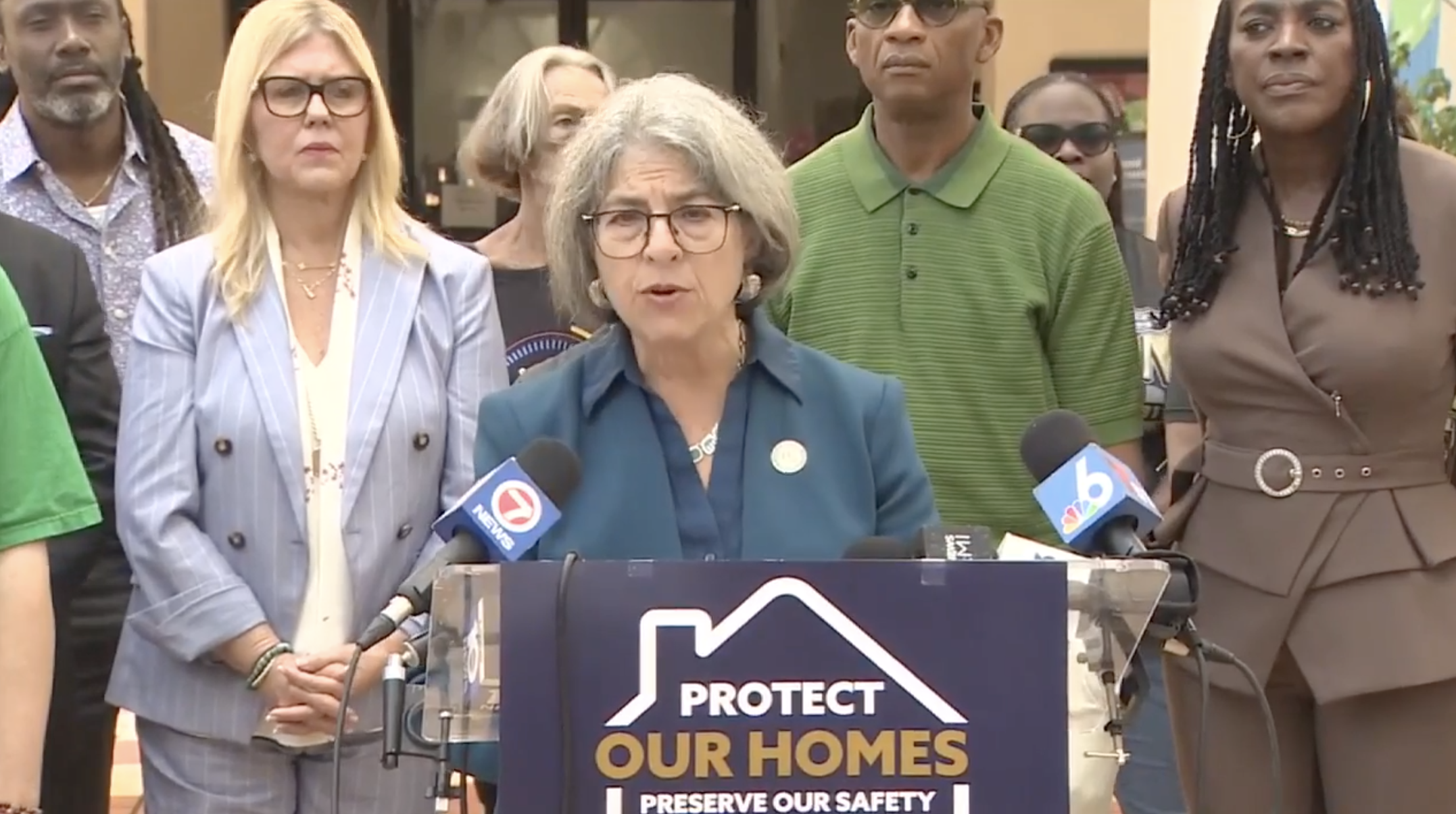 neighborhood services could all face difficult cuts,” the mayor explained in the press conference. “And that’s what’s at stake.”
Cue the scary music.
Except this isn’t just the mayor crying wolf because Tallahassee is coming for her budget. The numbers are pretty scary.
Miami-Dade estimates it would lose about $359 million in property-tax revenue in the first year alone if Amendment 3 passes. And the impact grows as the larger exemption kicks in. That’s money used for police, fire rescue, ambulances, corrections, transit, parks, libraries, Jackson Health and all the other things people tend to remember government provides only when they need them.
Smaller cities could get hit even harder proportionally. Pinecrest Mayor Elect Shannon del Prado said it means $15 million in lost revenue to her village in the first five years.
Outgoing Palmetto Bay Mayor Karyn Cunningham said Wednesday that more than 60% of her village’s revenue comes from ad valorem taxes and that 51% of that goes to law enforcement.
So go ahead. Cut the taxes. Now, which cop do you want to fire?
That, essentially, is going to be the ‘No on 3’ campaign.
And the polling suggests it might actually work.
Because right now, Amendment 3 is winning. A statewide poll released last month by the conservative James Madison Institute found a whopping 74% of registered voters supported the amendment, including 76% of likely voters. That’s important because constitutional amendments in Florida need 60% approval.
At 74%, Amendment 3 doesn’t merely pass. It cruises.
But then pollsters told voters about the tradeoffs — that dramatically reducing local property-tax collections could mean less money for police,  firefighters, parks, libraries and other services.
Support fell to 55%.
Game over.
A separate University of North Florida poll found almost exactly the same phenomenon.
Initially, 61% supported the proposal — barely clearing Florida’s 60% constitutional hurdle. Then voters were told that the amendment could create an estimated $11.8 billion shortfall for Florida cities and counties over two years.
Support plunged to 45%.
Same voters. Same tax cut. The difference between passage and defeat was basically: Do you know what happens next?
Which tells you everything about how the next two months are going to look.
The Yes side has perhaps the easiest bumper sticker in the history of Florida politics: ‘LOWER YOUR PROPERTY TAXES.’ They can talk about bloated budgets and government waste, which is a really easy sell.
The No side needs a PowerPoint presentation.
Read related: Anthony Rodriguez, Florida lawmakers discuss elimination of property taxes
This isn’t simply another blue Miami-Dade-versus-red Tallahassee fight. The opposition is becoming surprisingly broad.
The Florida Sheriffs Association has expressed significant concern about Amendment 3. So has the Florida State Fraternal Order of Police. The Florida Professional Firefighters and Florida Fire Chiefs Association have also opposed or raised serious concerns about what happens to public-safety funding when billions disappear from local tax rolls. One conservative sheriff called the proposal a “train wreck.”
That’s going to complicate the Tallahassee narrative that greedy local politicians just don’t want to tighten their belts. When sheriffs and firefighters start asking where the money for deputies, engines, patrol cars and paramedics is supposed to come from, “government waste” stops being quite as satisfying  an answer.
The Florida League of Cities and Florida Association of Counties are also warning about the consequences. The League’s message is essentially that this isn’t simply a tax cut; it’s a tax shift.
And that’s another vulnerability opponents will hammer.
Homesteaded homeowners get the big break. Renters don’t. Businesses don’t get the homestead exemption either, although Amendment 3 does cut the annual assessment-growth cap for non-homestead property from 10% to 5%.
So if cities and counties still have to provide police, fire rescue, roads, garbage collection, stormwater systems and everything else — and, spoiler alert, they do — the money has to come from somewhere.
That could mean higher fees. Special assessments. Cuts in services. Bonds. Another half penny tax. Pressure elsewhere in local budgets.
And landlords aren’t exactly famous for absorbing increased operating costs out of the goodness of their hearts. Renters could therefore end up paying more while receiving exactly zero dollars from the expanded homestead exemption.
That is why the statewide Save Our Services — ‘No on 3’ coalition is trying to make this less about “property tax relief” and more about who pays instead.
Read related: Financial finesse? Miami-Dade budget shortfall disappears in final version
There is also a delicious bit of history surrounding the words voters will actually see on their ballots.
The Legislature originally called the measure, “Save Our Homes From Excessive Property Taxes.”
Subtle. Why not just call it “Vote Yes If You Love Puppies and Hate Taxes”?
A Leon County judge ruled that the original title and summary were misleading and ordered them rewritten.
So voters will instead see the considerably less propagandistic title: “Increased Homestead Exemption; Lower Cap on Increases in Non-Homestead Property Assessments.”
The new summary explains the $150,000 exemption in 2027, the $250,000 exemption in 2028, the lower assessment cap on non-homestead properties and restrictions on how cities and counties can use property-tax revenue.
That rewrite could matter enormously. Remember those polls? They show that the more voters know about Amendment 3, the less they seem to like it.
Which makes this less a traditional campaign than an education race against the clock.
Levine Cava has now formed her own political committee, No on 3. Protect Our Homes, to raise money for the fight. She joins the statewide Save Our Services effort and other groups already organizing against the amendment.
And expect Miami-Dade to become ground zero. The county has a lot to lose, and local governments here rely heavily on property taxes to fund services residents interact with every day.
But Miami-Dade cannot defeat Amendment 3 by itself. This amendment, pushed by Florida House Speaker Daniel “Danny” Perez and Gov. Ron DeSantis, is 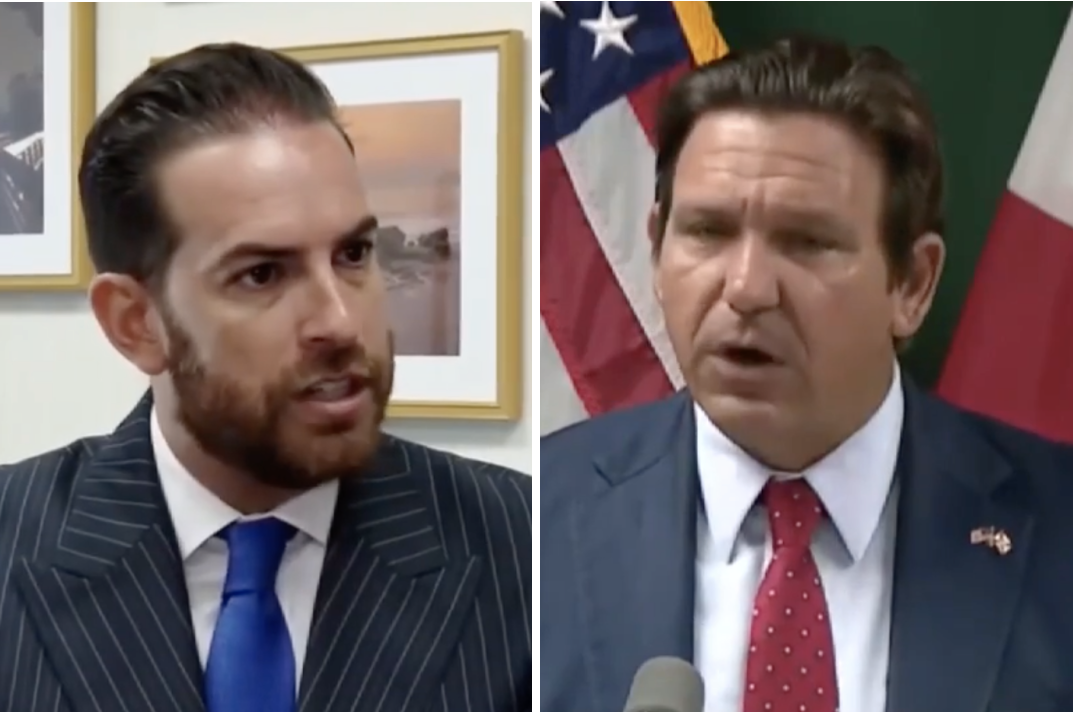 statewide.
And there are millions of homeowners from Pensacola to Key West who are going to open their ballots and see something promising them a dramatically larger property-tax exemption.
Then they’re going to think about their insurance premium. Their grocery bill. Their FPL bill. Their condo assessment. Their mortgage.
And somebody is going to have to look them in the eye and say: ‘We know everything costs too much. Please vote against the tax cut.’
Ay, Dios mío.
Still, those polls show that the No campaign has an opening — maybe a big one. It doesn’t necessarily have to convince Floridians that property taxes are wonderful. Nobody is going to buy that.
It has to convince them that Amendment 3 doesn’t make the cost of government disappear. It just decides who gets the bill.
That’s why Levine Cava’s strongest argument Wednesday may have come from Commissioner Oliver Gilbert.
“If you’re a senior who takes the buses for free, this matters to you,” Gilbert said. “If you’re someone who’s going to call the police and want them to get there in a reasonable time, this matters to you.”
Exactly.
The Yes campaign gets to ask voters: Would you like to save money?
The No campaign has to ask: What are you willing to give up for it?
And Florida voters have exactly two months to decide.
This kind of independent, government watchdog reporting is crucial to transparency and democracy. And more so every day. Help shine a light on the darker corners of our community with a contribution to Political Cortadito. Click here. Ladra thanks you for your support.

Amendment 3 looks like a winner — until Florida voters learn what it does added by Ladra on
View all posts by Ladra →
I would never have considered this, but with all the free give aways that our local governments continue to provides to billionaires, stadium deals, junkets abroad, and many other items too extensive to include here, maybe this will forced them to be a little more considerate with our tax dollars.
P.S. By the way where’s the soccer field that was to be built behind the Miami Arena?
You’d think that voters would know that cutting property taxes will have direct negative impacts on public services. It’s shocking that they have to be told about the tradeoffs. This really is an idiocracy.