
Miami-Dade’s elected officials are kinda freaking out
Florida lawmakers this week did something that would have sounded completely insane just a few years ago. They put the beginning of the end of property taxes on the ballot.
Not all property taxes. Not yet.
But close enough that every mayor, commissioner, city manager, budget director and county bean counter from Miami Beach to Homestead probably spilled a little cafecito when the final votes came in.
Not that it wasn’t totally expected and announced, sorta like a hurricane.
¡Prepárense!
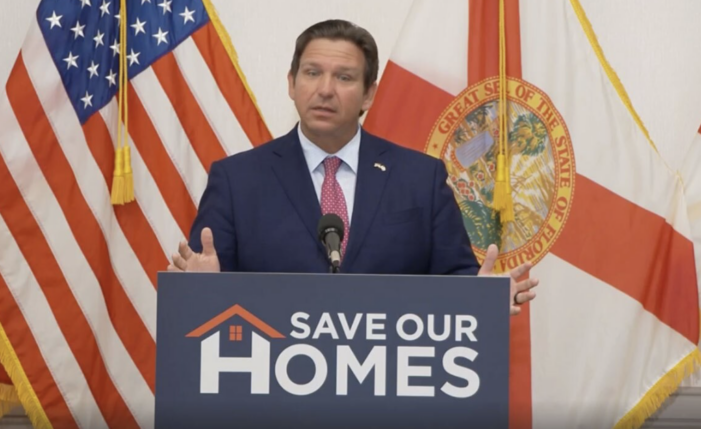
By largely party-line votes of 75-26 in the House and 30-9 in the Senate, lawmakers approved Governor Ron DeSantis‘ signature property tax  overhaul and sent it to Florida voters for approval in November.
And if 60 percent of voters say yes, Florida will embark on one of the most dramatic tax experiments in modern state history.
The proposal would boost the homestead exemption from $50,000 today to $150,000 in 2027 and then to $250,000 in 2028.
Supporters are calling it historic tax relief and, finally, a leash for local governments who have gone wild with an increasing pot of public money.
Critics are calling it the fiscal equivalent of jumping out of an airplane and figuring out where the parachute is on the way down.
Either way, Florida voters will get the chance to decide Nov 3.
Read related: Anthony Rodriguez, Florida lawmakers discuss elimination of property taxes
And while Ladra doesn”t know about any credible, statewide public polls measuring support or opposition to the specific referendum approved this week — title and ballot language comes later — pollsters have long found that voters are amenable to tax relief in abstract. Like, duh.
According to legislative estimates, the measure could eventually remove between $4.6 billion and $8.4 billion annually from local government revenue streams. These are the same local governments that pay for police officers, firefighters, parks, roads, drainage systems, libraries, code enforcement, pension obligations, emergency services, pothole repairs, mosquito spraying and all thos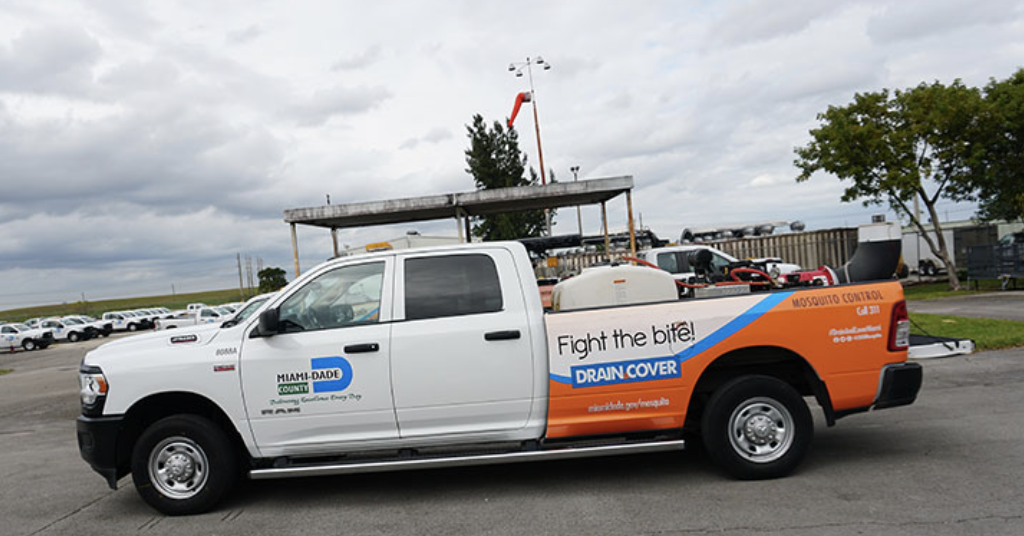 e other little luxuries people tend to notice when they disappear.
How much do you want to bet that doesn’t make it to the ballot?
But don’t worry. The Legislature has a plan. Actually, it’s less a complete plan than a framework for a future plan that may someday lead to the eventual elimination of property taxes on homesteaded property.
Maybe. Eventually. Somehow. The details can be worked out later.
What could possibly go wrong?
Senate President Ben Albritton hailed the proposal as a fitting way to celebrate America’s 250th birthday, declaring that Floridians shouldn’t have to continually pay government for the right to live on their own property.
State Sen. Bryan Avila, the Miami Springs Republican carrying the measure, argued that rising property tax bills have become an increasing 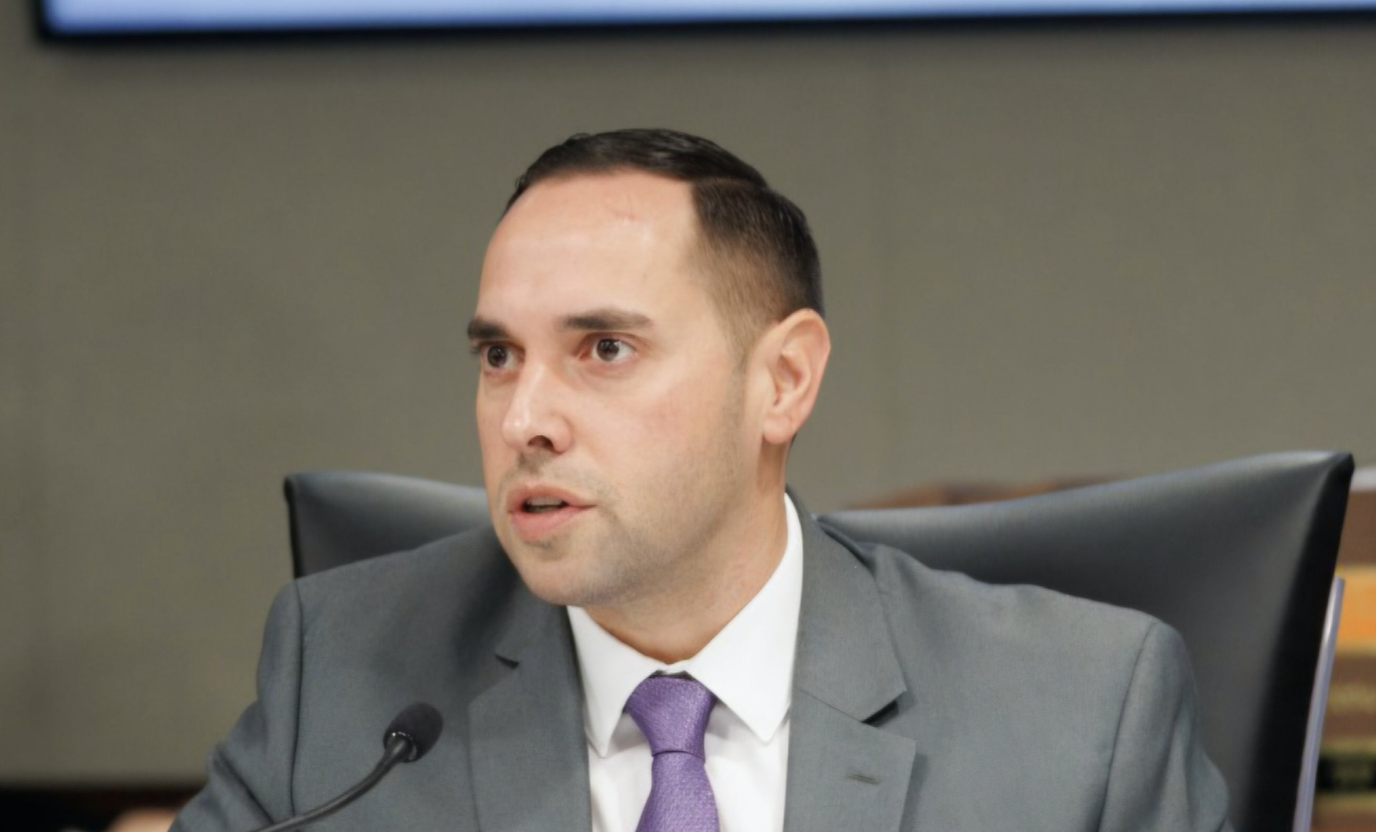 burden on homeowners and that local governments have enjoyed years of rapidly increasing revenues driven by soaring property values.
And let’s be honest. They’re not wrong. Governments are raking it in and spending money in questionable deals. Meanwhile, Florida homeowners are getting crushed. Insurance bills are skyrocketing. Housing costs are through the roof.
Read related: DOGE Days in Miami: Florida CFO Blaise Ingoglia calls BS on city spending
But here’s where things get interesting. Because while Tallahassee is selling tax relief, local governments are quietly doing math.
And the math is making them nervous. Very nervous.
Many city officials have openly worried about how they would be able to shift expenditures to cover basic services — and what kind of perks would have to be cut. Most openly concerned have been the Miami-Dade County Commissioner, especially Danielle Cohen Higgins and Chairman Anthony Rodriguez, who have been warning about this coming day as their colleagues emptying the county’s wallet on projects like the Miami Center for Mental Health and Recovery and the reliance on county funding by the area’s non-profits.
Remember, the budget process is about to begin.
Rodriguez told Ladra that he has mixed feelings because he wears two hats. One as a chairman of the commission and one as a resident.
“As a resident of Miami-Dade County, yes, of course I want to see less property taxes,” Rodriguez said. “But I see the budget and I understand what it takes to run this county. To have the grass get cut, to have the parks operate, to have the buses run.
“Something will suffer.”
The most forceful opposition has come from Miami-Dade Mayor Daniella Levine Cava, who publicly warned that gutting or eliminating 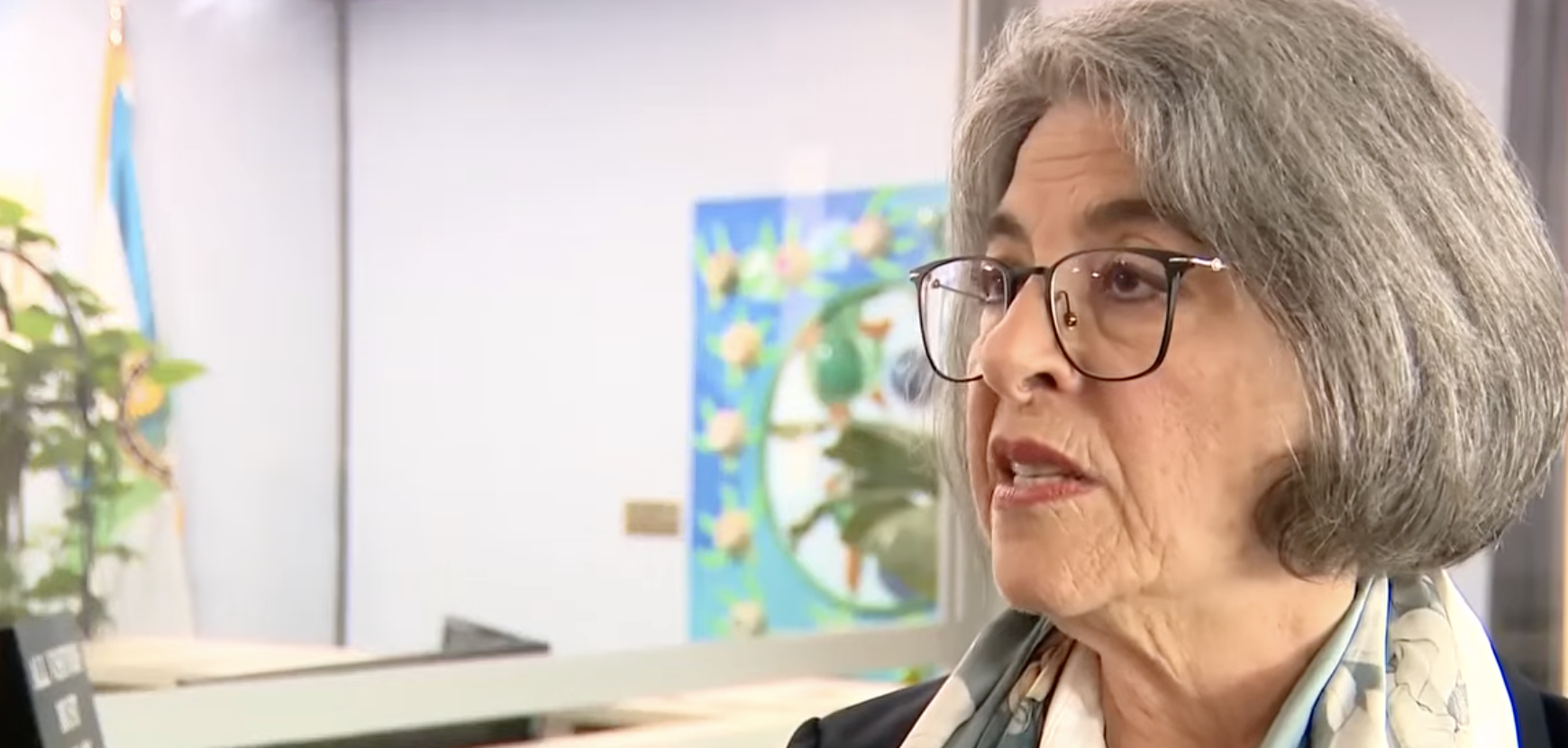 property taxes would be “catastrophic” for Miami-Dade.
In a Miami Herald op-ed published Monday, Levine Cava argued that while she supports tax relief, property taxes fund the county’s core services — police, fire rescue, transit, parks, libraries, infrastructure and social services. She warned that the state’s proposal amounts to dismantling the primary revenue source local governments rely on to operate.
She believes in tax reform, she wrote. “But there is a profound difference between thoughtful, sustained tax relief and what the state is now proposing: the wholesale dismantling of the property tax system that funds the essential services that make our community run.”
Read related: Looks like Annette Taddeo is running for something after all — Florida CFO
The revised proposal attempts to address some of those concerns by protecting school district funding, requiring remaining property tax revenue to be spent on core government services and lowering the annual assessment cap on commercial properties from 10 percent to 5 percent.
Supporters say that protects homeowners and small businesses. Opponents say it protects homeowners by handing local governments a calculator and wishing them luck.
Which raises an uncomfortable question nobody seems eager to answer: If property taxes go away, who pays for everything?
 Sales taxes? Higher utility fees? Special assessments? Stormwater charges? Garbage fees? Impact fees? A magical Tallahassee money tree?
At the moment, the answer appears to be some combination of shrugs and future legislative workshops. Which is understandable. Nobody wants to be the politician publicly defending property taxes while voters are staring at mortgage statements and insurance premiums.
Silence may not be an option for long, however. Because if this amendment gains traction, local mayors and commissioners will eventually have to answer questions voters aren’t yet asking.
Questions like: How much money would my city lose? What services would be affected? Would police and fire budgets be protected? Would fees increase? Would the county have to fill the gap? Would Tallahassee?
Or would everybody simply be expected to do more with less, which is politician-speak for “we have absolutely no idea yet.”
For decades, local politicians have campaigned on lowering taxes. This fall, they may find themselves in the unusual position of explaining why taxes exist in the first place.
Because everybody loves the idea of eliminating property taxes. Right up until somebody asks who is going to pay for the firefighters.
This kind of independent, government watchdog reporting is crucial to transparency and democracy. And more so every day. Help shine a light on the darker corners of our community with a contribution to Political Cortadito. Click here. Ladra thanks you for your support.

Tallahassee just put property taxes on the chopping block in November added by Ladra on
View all posts by Ladra →
Mayor Cava and Mayor Higgins have hired too many overpaid public sector employees. Their pay and benefit packages are going up much faster than inflation. FYI 77% of the City of Miami’s taxes and fees go to the 5,000 employees pay and benefit packages. Very little is left over to keep the lights on and fix potholes.
[…] Read related: Tallahassee just put property taxes on the chopping block in November […]
If I can keep about $3500 of the $4500 I pay the county to deliver most services I DO NOT use, I will impact with that money real jobs in the private sector, spend my money in the community and really help improve the lives of hundreds of thousands of people that do a lot of hard work.
This is the only industrialized country where you buy a roof, and you continue to pay exorbitant taxes on YOUR property.
Therefore, I will vote YES and let government do what my wife and I do every day trying to survive with less and less.
Saw on another site. Worth pondering.
For everyone in Florida cheering for the end of property taxes, WE asks 10 REALLY good questions:
1. If this is real tax reform, what replaces it?
Florida built local government around property taxes because Florida has no state income tax.
You can dislike the system, but you cannot remove the load-bearing wall without explaining what keeps the roof from collapsing afterward.
2. Is this a tax cut… or just a tax costume change?
Homesteaded homeowners may save money upfront.
But governments still need revenue.
So does the bill simply reappear through rent, insurance, utility bills, assessments, fees, and higher costs on businesses and apartments?
Taxes rarely disappear.
They usually come back wearing a different name tag.
3. Who pays the debt already backed by property taxes?
Florida communities have borrowed billions for roads, drainage, water systems, police stations, fire stations, and hurricane infrastructure.
Bond payments do not disappear because politicians change the math.
4. What exactly counts as a “core service”?
Police and fire are easy answers. After that, the politics begin.
Is drainage a core service in a hurricane state? Stormwater? Road maintenance? Permitting? Parks? Libraries? Transit? Homeless services? Constitutional officers?
The real fight will not be over taxes. It will be over who gets to decide what government is allowed to do.
5. Who actually controls your city budget after this?
If Tallahassee defines “core services,” spending limits, reimbursement formulas, allowable millage growth, and allowable revenue… then local government becomes government by permission slip.
Your city council may still hold meetings, but the real budget power moves to the Capitol.
6. What happens during the first recession?
Property taxes are stable.
Sales taxes and tourism revenues are not.
So what happens when the economy slows, tourism drops, state revenues fall, and demand for local services spikes at the same time?
A system designed only for boom years is not reform.
It is a fair-weather theory.
7. What funds the trust fund when Florida itself is projecting multi-billion-dollar deficits?
Sales taxes? Documentary stamps? Debt? New fees? “Future growth”?
Florida’s own long-range forecasts already project structural deficits beginning in fiscal year 2027-28.
So what is the durable funding source?
A trust fund without recurring revenue is not reform. It is delayed instability with a press release.
8. What happens to Florida’s special districts?
Florida already relies heavily on CDDs, special districts, MSTUs, infrastructure authorities, and assessment-based financing.
If cities and counties lose flexibility, does growth simply shift into more off-book financing structures and special assessments?
Taxpayers do not care which government entity sends the invoice. They care that the invoice still arrives.
9. Are we trying to solve a housing crisis entirely through the tax code?
Florida’s affordability crisis is not just taxes. It is missing starter homes, restrictive zoning, rising insurance, infrastructure costs, and years of making housing harder to build.
You cannot tax-cut your way out of a starter home shortage.
10. Does this proposal reduce the cost of government or simply change the collection mechanism?
Nothing in the proposal prevents governments from relying more heavily on utility fees, stormwater charges, mobility fees, special assessments, franchise fees, or special districts.
If the total cost to taxpayers remains roughly the same, this is not necessarily smaller government.
It is simply a different billing system.
Bonus question: Where is the sunset clause?
This proposal would fundamentally restructure local government finance in the third-largest state in America.
So where is the mandatory five-year review?
Measure homeowner savings, renter impacts, debt stress, infrastructure quality, public safety, and unintended consequences.
Big reforms need an exit ramp if the theory fails.
RIP Downtown Development Authority
Finaly relief could be coming to residents of Downtown/Brickell No more hostage tax.crosing fingers
This is unacceptable! How are we voting to take money out of the hands of local municipalities that have been efficient in handling it!!! Unheard of. It’s not like our own County has the biggest deficit in history. These people are good with money, trust them!
Governor DeSantis has successfully promoted Florida as the “Free State of Florida,” encouraging individuals, families, and businesses from states such as New York and California to relocate here. The result has been unprecedented population growth, record demand for housing, and substantial increases in property values across Florida.
That increase in property values is not inherently a bad thing. For most Americans, their home is their largest investment and most valuable asset. Rising home values create wealth, increase homeowner equity, strengthen retirement security, and provide financial stability for families throughout the state.
However, if state leaders are being honest about the causes of higher property values, they must acknowledge that local governments are not the primary driver.
When ultra-wealthy individuals such as Ken Griffin and Jeff Bezos purchase multimillion-dollar homes at prices well above asking price, those transactions influence surrounding property values. Likewise, large-scale investments by private equity firms, institutional investors, and foreign investors—particularly from Latin America—have increased competition for housing and contributed to escalating market prices throughout Florida.
These market forces cannot simply be ignored.
The reality is that Florida’s housing affordability challenges are being driven by demand, investment capital, insurance costs, and the broader economics of a rapidly growing state. Local governments did not create these conditions.
At the same time, growth has increased demand for essential public services. Every new resident requires police protection, fire rescue services, emergency medical response, roads, parks, libraries, water systems, and public infrastructure. These services are funded primarily through local property taxes.
A substantial reduction in homestead property taxes may provide short-term tax relief, but it would also remove billions of dollars from the cities and counties responsible for delivering these services. The likely result would be fewer police officers, fewer firefighters, delayed infrastructure improvements, reduced park maintenance, reduced library services, and longer emergency response times.
Florida cannot continue encouraging rapid population growth while simultaneously weakening the local governments responsible for supporting that growth.
If affordability is truly the concern, there are more effective places for state leaders to focus their attention.
Homeowners across Florida are struggling with skyrocketing property insurance premiums. Energy costs continue to rise. Repeated utility rate increases approved by state regulators have placed additional burdens on working families and retirees alike. These costs often exceed annual increases in local property taxes and have a much greater impact on monthly household budgets.
Before portraying cities and counties as the problem, state leaders should examine the areas under direct state influence:
* Reducing homeowners insurance costs.
* Addressing utility and energy rate increases.
* Limiting speculative investment activity that drives housing prices.
* Exploring targeted affordability programs for seniors and working families.
* Providing state-funded tax relief without reducing local government revenues.
The conversation should not be about making local government the villain. Police officers, firefighters, paramedics, parks employees, public works crews, and librarians are not responsible for Florida’s affordability challenges. In fact, they are the people who make Florida communities safe, attractive, and desirable places to live.
The success of Florida’s growth strategy has increased property values and created wealth for homeowners. Those same rising values generate the revenues necessary to provide the public services that residents expect and deserve.
Growth should pay for growth. If Tallahassee wants to provide tax relief, it should do so without sacrificing the police, fire rescue, parks, libraries, and infrastructure that Florida families rely upon every day.
It should come as no surprise that property tax is the Florida GOP’s target, given that it is the only progressive tax in Florida. No income tax, and sales tax disproportionately affects low-income residents who spend a much higher percentage of their earnings compared to wealthier residents.
Another point not mentioned enough: as property tax on non-homestead (read: rental) properties will remain, the only residents who will continue to pay property tax under this plan are THOSE WHO DON’T OWN THE PROPERTY. Make it make sense.
Time for all of our City and County overpaid hacks to do some soul searching and second guess their plans for fleecing the citizens with their laughable salaries and perks i.e. City Manager, Attorneys and others making more than surgeons.
Next step for the clown shows – The PR Blitz saying how city and county services will suffer and how we need to vote NO
Our Next step – hold them accountable to cut those salaries or find more qualified people that will work hard and diligently for half the salaries they are getting paid.
Time of Reconning has arrived
PS – can’t stand De Santis but I love the move
Maybe the state should eliminate its portion of sales taxes first, watch its collections crater and then come up with a plan on how to replace the revenue. That way, the politicians in Tallahassee will understand first-hand how silly it is to cut first and then ask the hard questions about how to pay for essential government services later.
No one likes property taxes. A professor I had in college in 1987 asked the class which tax was most-hated, and the answer was the property tax. But I’m not sure why there is a sudden urge to cut property taxes. Mine have gone up no more than 3% annually since I’ve been a homeowner here since 1997. But the tax increases, due to my homestead exemption, have been nominal compared with the increase in homeowner insurance premiums. When I first bought my first house here in 1997, my premium was less than $1,000. Now it is over $12,000, and that is after all the discounts for hurricane-proofing, etc. That is a 1,100% premium increase, and the legislature has done nothing to protect against that. Sure there have been some insurance reforms, but not the ones that will actually guarantee reasonable premiums and competition. Why not pass a law requiring any auto insurer in Florida to also offer homeowner’s insurance? Why not pass a law prohibiting Florida-only insurers, so big companies like State Farm and Allstate can’t operate as State Farm Florida and limit exposure to Florida only? There are a lot of things legislators could do to help make housing more affordable, but they don’t want to because they are bought and paid for by the insurance industry, just like they are by the sugar industry, the energy conglomerates (FPL, Duke, etc.), and every other large industry willing to pay to play. Property taxes are an easy target because local government, the biggest recipient of property tax revenue, does not buy and sell…I mean make campaign contributions to…state officeholders.
This is a real shonda. I don’t like property taxes and I wish mine and my other family members’ property taxes were lower, but I like police and fire service, trash pick-up, libraries, parks and good roads, and the price I and most people pay is a bargain for the service received.
Hopefully, this will make the local politicians cut their unnecessary spending.
I am extremely concerned with the ramifications, but then I consider the money and debt incurred on Marlins Stadium, the Miami Arena and the Freedom Tower give-away, along with the $400 million Miami-Dade will need to pay for the nine-acre parcel for the Fisher Island refueling property. I’m sure I’m forgetting a few other instances of taxpayer money being siphoned to billionaires.
I’m an under-40s homeowner. No kids yet. I work hard, get paid well, and pay my taxes, even property taxes. I’d like to have kids. I’d like to raise them here.
Eliminating property taxes is the most self-destructive thing a state can do. Just look at Prop 13 in California, which almost singlehandedly destroyed the prospect of properly housing people. Its 70% of why they have such a high homeless population.
This policy is even worse. It guarantees that local governments won’t be audited, or regulated, just disemboweled. Everyone cares about police, fire, and teachers. Great. What about the property appraiser’s office? What about the clerk of courts, which are partially funded locally, especially in Miami? What about the county employees who make sure building codes are enforced so people don’t build shit shacks? How about hiring garbage men and park cleaners? What about local parks? What about local schools? For the families who can’t afford Belen or Lourdes or Ransom, how are their children supposed to get a decent education?
What about the value of homes, while the rich elite gobble up properties and every other acre triples in price? How will young people get homes? Move into bigger homes? How can older people get new homes?
For all these old, angry, ignorant anti-tax crusaders, you can moan about misfeasance and paying too much for too little. You can complain that you don’t “really” own your home and whine about how you “earned” the right to live in a massive property that you don’t need.
But you live in an orderly society where things work because you pay taxes. ESPECIALLY property taxes, the fairest method of taxation yet made.
People don’t pay taxes in Somalia and Sudan. But they live in chaos, paid for in blood and bullets.
This is beyond atrocious governance. It’s evil. DeSantis and the Republican Party of Florida are sacrificing their future for power, to keep vacuuming votes from the Boomer/Retiree class in this state. They do not care about the future. Because they have none left. They don’t care about young people, because they will die soon.
What does DeSantis care? He can run for president. Worst-case scenario, another Fox News talking head who lives in DC with his wife’s fake charity. He’s set.
I love where I grew up. I never wanted to leave. I will vocally oppose this at every opportunity.
But if and when the Baby Boomer Class votes for this, and every bone in my body says they will, I will leave and make my life elsewhere. Maybe you don’t care. But I won’t be the only one – far from it.
Maybe when you’re all dead, we can come back.
Everyone might have to pay the same amount of taxes to cover local government budget needs.”
Agree and they will not call it a tax but as Ladra noted and others pointed out the cost of trash pick up , utilities , etc , etc will simply go up.
============================
”My insurance bill has gone up around 200% in 8-years.”
I live in a no frills small gated community in Doral and a few people have their own swimming pools in their yards from what I heard all lost their insurance coverage .
My house is 1 story but the 2 story homes their insurance has doubled in last 3 years.
From what I understand years ago one of the by-laws in these flunky communities was you had to have insurance but so many in every community have ended or lost their coverage that it is no longer enforced as impossible.
Some communities have their own home insurance but a real estate broker told me these are Hialeah ” garage businesses ” and when time to cover they will disappear and not a thing will be covered .
Property tax rates are set locally each year. Wouldn’t the local government just increase tax rates for everyone to compensate for the loss of tax revenue. Everyone might have to pay the same amount of taxes to cover local government budget needs.
I always found DeSantis the Republican version of California’s Newsom which is another con artist.
Both self serving all talk , special interest OWNED con artists who put on a show but no real results.
California in another link I posted listed as the most corrupt state as far as HOA and Florida ranked number 2 because real laws with serious prosecution , accountability you are not going to get from these 2 up for sale Governors.
”Florida’s unscrupulous HOAs contribute to our high cost of housing ”
https://www.miamiherald.com/opinion/article285982511.html
I’m really looking forward to voting with a resounding No on this. Unfortunately, I fear most voters will be lured by the prospect of saving some money, especially with the current state of the economy. Passing this tax amendment will further consolidate power in Tallahassee, leaving our local governments (and us) more dependent than ever on state funding for local projects – and subject to the demands and requirements of people we haven’t even voted for. Do we want someone from New Port Richey deciding what Miami and Miami-Dade County need? Are we ready to fill in potholes ourselves because there’s no Public Works Department anymore? I also think this will result in higher property prices, making housing even less affordable than it already is. Let’s approach this with long-term vision.
My properties taxes have gone up around 20% in the last 7-8 years. My insurance bill has gone up around 200% in 8-years. Tell me where the real problem is… This will be a tax shift. businesses and renters will pay more.
Property taxes are insane in Florida HOWEVER I agree that we will see — ‘ Sales taxes? Higher utility fees? Special assessments? Storm water charges? Garbage fees? ‘all go up so ANOTHER smoke / mirrors show..