
If you haven’t voted yet, congratulations. You’re in the overwhelming majority.
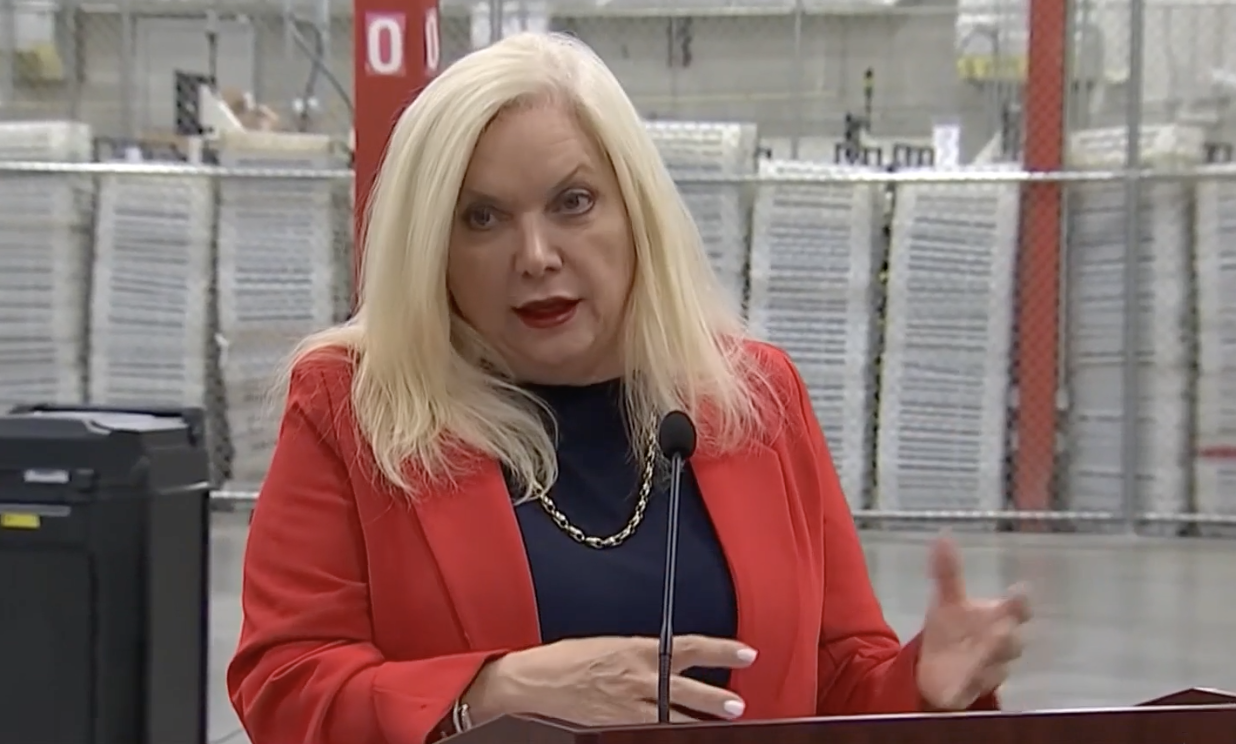
Miami-Dade heads into Tuesday’s primary Election Day with just 12.5% of registered voters having cast ballots through early voting or vote-by-mail, according to Miami-Dade Supervisor of Elections Alina Garcia, who diplomatically described the turnout as “not optimal.”
 No me digas.
That means nearly nine out of every 10 registered voters in Miami-Dade had not voted as of Monday — leaving an awful lot to be decided Tuesday in races for governor, Congress, the Florida Legislature, Miami-Dade Commission, judgeships and two City of Miami referendum (as well as a few charter amendments in Sweetwater).
Polls are open Tuesday from 7 a.m. to 7 p.m. And early voting is over. It ended Sunday after two weeks and now voters must go to their own precinct, not one of the 23 voting sites around the county for the early voting period.
So this is it, people.
Read related: Miami-Dade absentee ballots go out this week — so do the campaign attacks
According to election data from the Miami-Dade Supervisor’s website, about 160,600 Miami-Dade voters had cast ballots before Election Day — and almost twice as many had voted by mail. The latest available breakdown showed about 102,312 vote-by-mail ballots and 58,364 early votes.
Statewide, more than 1.9 million Floridians had already voted — 1,095,564 by mail and 818,171 in person during early voting.
There is an interesting partisan split statewide. Republicans have dominated in-person early voting while Democrats have had the advantage in vote-by-mail. But that has not been the case in Miami-Dade’s electorate so far.
The published breakdown Monday showed 76,930 Democrats, 57,176 Republicans and 24,717 voters with no party affiliation among those who had voted, plus several thousand voters registered with minor parties.
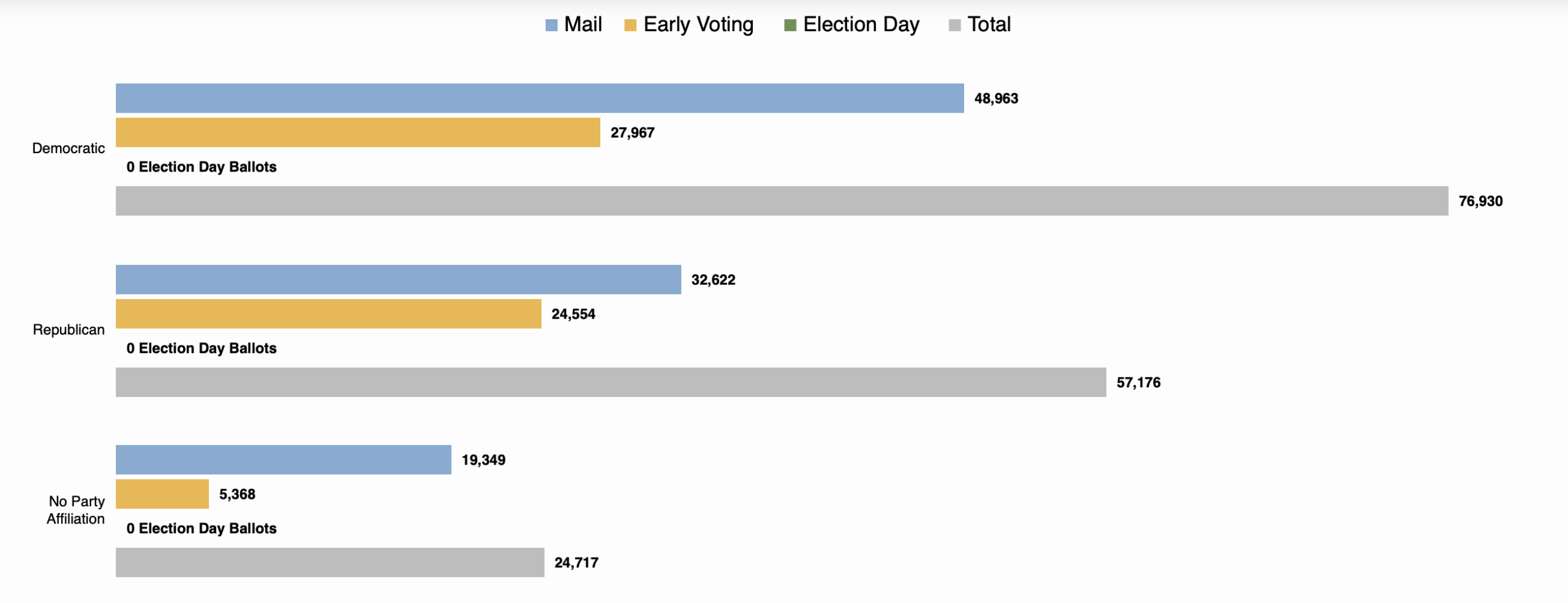
And anyone telling you Candidate X is definitely ahead because Democrats returned more mail ballots or Candidate Y is crushing it because Republicans voted early is probably selling something. Don’t buy it.
We don’t know how anybody votes, of course. This isn’t Cuba. But we do know who voted. We know turnout is low. And we know that could make Tuesday particularly interesting in several Miami-Dade races where three candidates are splitting the vote.
Because in the nonpartisan Miami-Dade Commission contests, the number everybody will be watching come 7 p.m. Tuesday isn’t 12.5%. It’s 50% plus one.
A candidate who gets more than half the vote Tuesday wins. If nobody does, the top two advance to a runoff on Nov. 3.
And there are three candidates in each of the three contested County Commission races.
Ay, ay, ay. Ahora, sí.
It’s not such a contest in District 2, though, where incumbent Commissioner Marleine Bastien faces Ernst Jean and Miguel “Skip” Quintero. Both challengers are nice guys, even if a little quirky, but Bastien, who is seeking her second term, is definitely the front runner. Still, with three names on the ballot, even a strong incumbent has to clear that 50% mark to finish the job Tuesday. Everyone expects Bastien to do that.
In District 5, appointed incumbent Vicki Lopez faces former Miami Commissioner Joe Sanchez and Rob Piper. This is the most interesting of 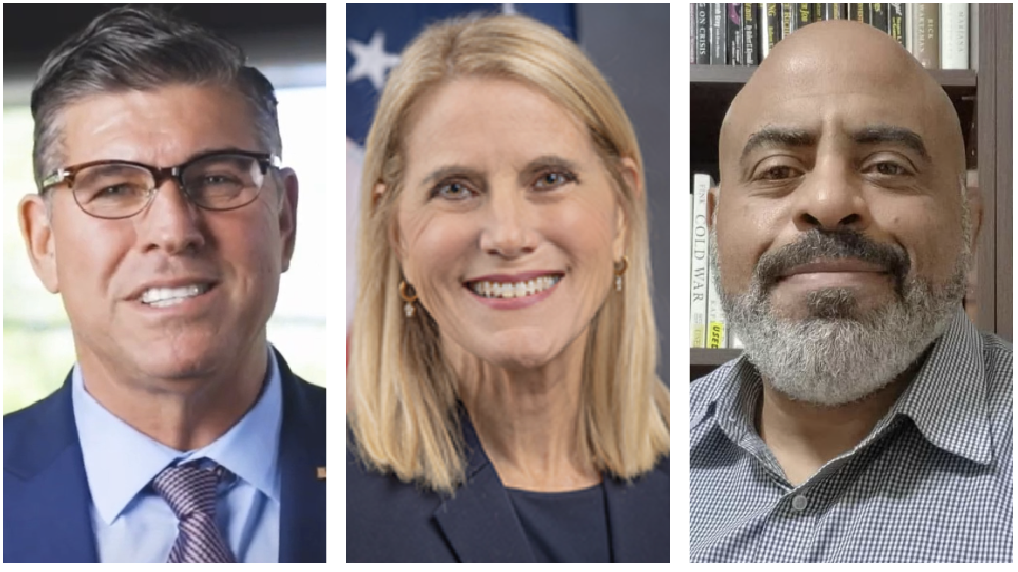 the county commission races. Lopez was appointed to replace Eileen Higgins after La Gringa was elected Miami mayor last year. This is her first D5 election.
The district stretches across a politically and geographically diverse collection of neighborhoods that includes Miami Beach, downtown Miami, Brickell, Little Havana, The Roads and surrounding areas, which overlap quite a bit with her former House district. Lopez has incumbency. And establishment money. Sanchez has decades of name recognition as a former Miami commissioner and onetime candidate for county sheriff. And Piper has been working the Democratic voter base and secured endorsements from both The Miami Herald and SAVE.
Read related: Pick your baggage: Miami-Dade District 5 voters get quite the menu this election
And in District 8, incumbent Commissioner Danielle Cohen Higgins faces former Palmetto Bay Mayor John DuBois and Martha “Vega” Hero. Like Bastien, Cohen Higgins is definitely the favorite, with her formidable campaign war chest and professional team. But she, too, still faces two opponents, one of which has been elected in part of the district before.
Three candidates. Low turnout. Fifty-percent threshold. That kind of math makes a November runoff a very real possibility in one or more of those races.
Money buys mailers. Money buys television. Money buys consultants. Money buys enough text messages to make you want to throw your phone into Biscayne Bay.
Pero it does not buy the 50% plus one. At least it’s not supposed to.
Then there are the partisan primaries, where the turnout numbers become a different animal and a 50% threshold is not needed. They’re decided by plurality — whoever gets the most votes wins the party’s nomination, even if that candidate receives less than 50%.
So, for example, in one of the most interesting Republican primaries, House District 113 — where former Miami-Dade Commissioner Bruno 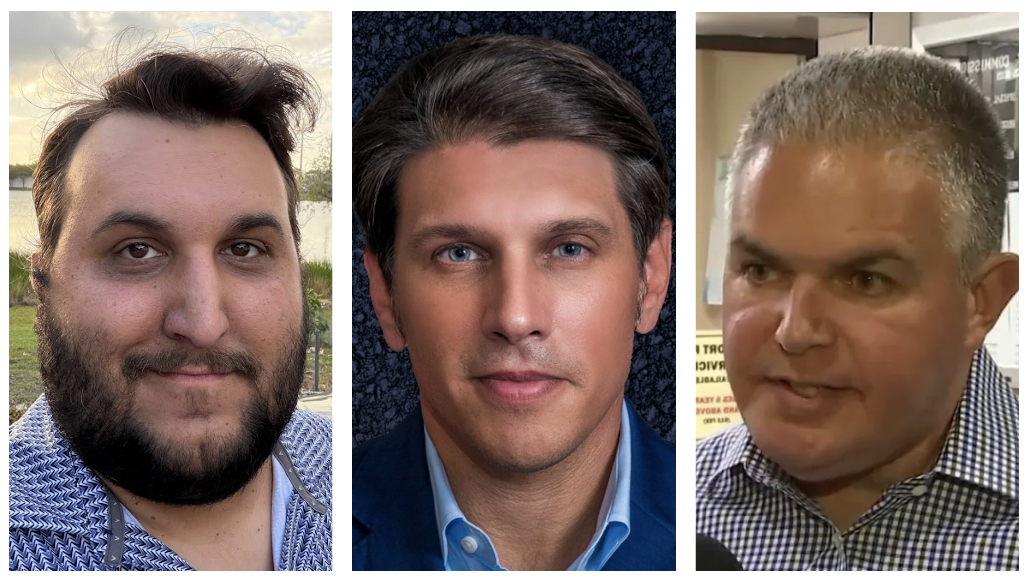 Barreiro, small businessman and breath-of-fresh-air Tony Diaz and political operative and recent Brickell Key resident Frank Lago are fighting for the nomination — somebody could win with a mere 35% of he vote (if the other two get 34% and 31%).
There hasn’t been credible public polling in that race, which makes all the campaign chest-thumping basically what it sounds like: Chest-thumping.
Barreiro has decades of name recognition and an established political base. Lago has spent heavily and attacked Diaz repeatedly in mailers, like he’s really worried. Diaz has tried to distinguish himself with a more anti-development, anti-Live Local message and reformist tone. With his appeal to independents and environmentalists, Diaz is probably the best one to go up against whoever wins the Democratic primary, Gloria Romero Roses or Justin Mendoza-Routt. But Republicans would have to get out of their own way first..
Still, turnout — particularly where those Republican voters are coming from — could matter enormously in a low-turnout three-way primary.
That’s a story Ladra intends to look at much more closely after the votes are counted.
There is also the judicial race between incumbent Miami-Dade Circuit Court Judge Mavel Ruiz and challenger Destiny Alvarez, which has become 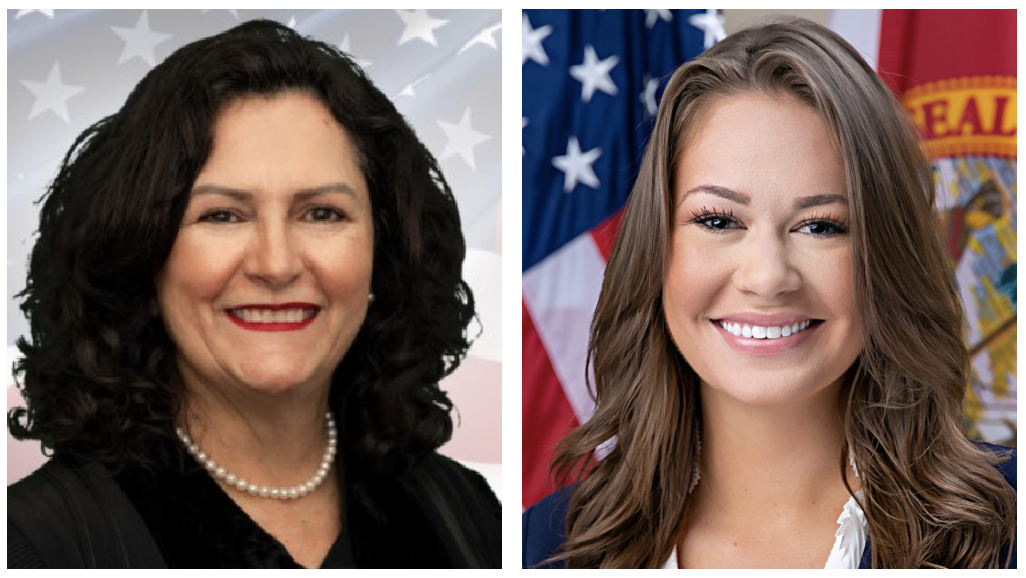 far more political than your typical sleepy judicial contest after Ruiz’s role in the litigation involving the proposed Donald Trump presidential library/hotel/office tower property giveaway.
Judicial races are typically nonpartisan, and trying to extrapolate the outcome from Democratic or Republican turnout is normally foolish. But the Alvarez campaign has definitely been appealing to the Republican base with the attack on Ruiz, calling her a communist and anti-Trump.
Read related: Mavel Ruiz lawsuit follows the money behind ‘communist judge’ campaign
And don’t forget all those NPAs.
More than 50,000 no-party-affiliation voters had already participated in Miami-Dade before Election Day, according to the published figures. They can’t vote in closed partisan primaries, but they can vote in nonpartisan races — including the County Commission and judicial contests — and ballot questions.
That is not an insignificant bloc.
Which brings us back to the biggest number of all: 12.5%. That’s where Miami-Dade stood Monday afternoon.
Election Day voters, however, can dramatically change the picture Tuesday. They usually do. And this could be where the Republicans gain more  ground, since many of them have said they don’t trust mail-in ballots and want to vote on Election Day.
Is it worth it standing in line? Absolutely. County commissioners make decisions about billions of dollars in spending, development, transit, police, parks, taxes, garbage, housing and basically every other thing Miami-Dade residents complain about on a daily basis. Judges can decide whether you keep your house, your money, your freedom or your children. State legislators decide laws that increasingly reach into local governments, schools, property rights and people’s daily lives.
In Miami, voters are also looking at how future elections are going to be held and what happens with the Miami Marine Stadium.
And nearly nine out of 10 registered Miami-Dade voters hadn’t weighed in yet as of Tuesday morning. Then everybody complains.
When the polls close Tuesday night, there will be winners crying, losers crying, consultants pretending they knew what was going to happen all along and candidates breathing enormous sighs of relief.
Others will discover that their campaigns aren’t over at all.
Because if nobody gets that magic 50% plus one in those County Commission races, congratulations: We get to do this all over again in November.
More mailers. More attack ads. More texts. More PACs. More consultants. More money.
And more Ladra.
Election Day is Tuesday. But in Miami politics, tu sabes, Election Day is never really the end.
To find out where your polling place is, visit the Supervisor of Elections’ website.
This kind of independent, government watchdog reporting is crucial to transparency and democracy. And more so every day. Help shine a light on the darker corners of our community with a contribution to Political Cortadito. Click here. Ladra thanks you for your support.

Miami-Dade limps into Election Day with 12.5% turnout — runoffs looming added by Ladra on
View all posts by Ladra →