
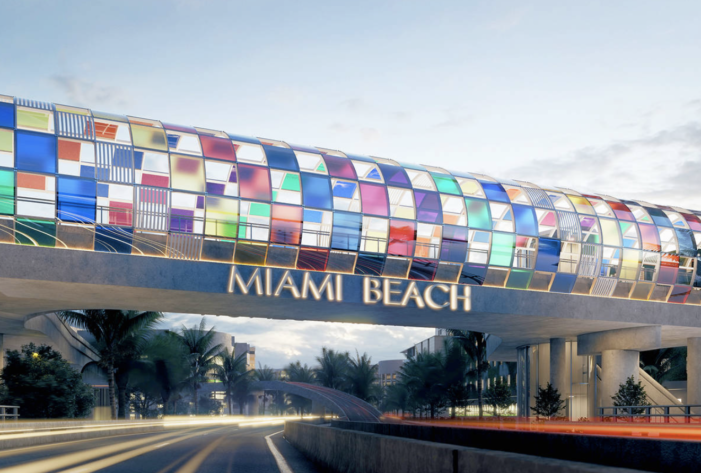
Mayor Steven Meiner is washing his hands of it
Miami Beach residents should have known it was too good to be true.
There were colorful renderings. A world-famous French artist. A ceremonial groundbreaking. Speeches about pedestrian safety, connectivity and walkability. City officials and developers grabbed their proverbial golden shovels and congratulated each other on the magnificent new landmark that would welcome visitors to South Beach.
Now, more than a year and a half later, there is no bridge. There is just rusting rebar.
And on Thursday, the Miami Beach City Commission will consider beginning the process of abandoning the promised Fifth Street Pedestrian Bridge — also known as the Kaleidoscope Bridge or the Buren Bridge after the designer — and negotiating some kind of over-water Baywalk as a replacement.
The item basically provides an escape hatch for the developer on a long promised public benefit that helped them get variances for the tallest condo on South Beach. And it’s on the consent agenda, because someone wants it to fly under the radar.
The resolution, sponsored by Mayor Steven Meiner and Commissioner Laura Dominguez, directs the administration to review the developer’s 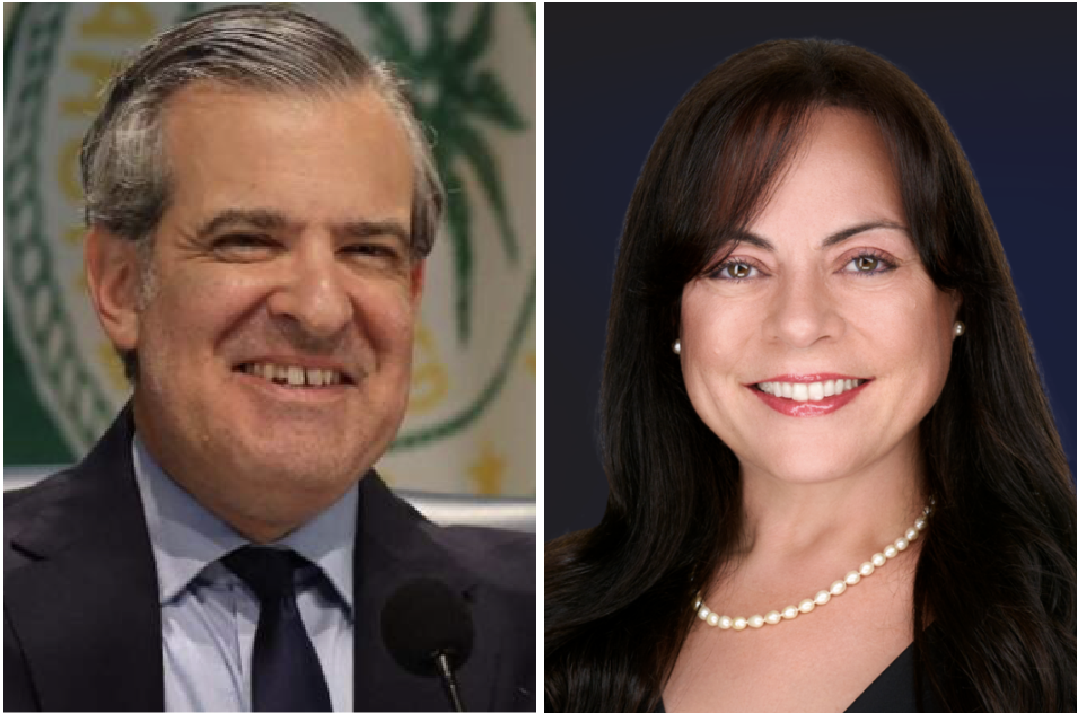 claim that the long-promised bridge is suddenly impossible. And if the administration agrees, the developer gets an official offramp from building it — and an invitation to negotiate some cheaper, easier over-water alternative instead. The resolution says the existing financial obligations should follow, but it sets no minimum value, firm deadline or guarantee that residents will receive anything comparable to what was promised.
In other words, this is not just a review. It is the first legal step toward letting the developer out of the deal. It’s a gift to the developers, David Martin of Terra and Russell Galbut of Crescent Heights, who has a hand in everything, including the recent Fisher Island fuel farm fiasco and the Miami-Dade School Board giveaway of its parking lot (more on that later).
By letting the administration make a determination — and Ladra suspects they will confirm the developer’s findings — Meiner can say it was out of his hands. He couldn’t do anything about it. He has plausible deniability.
Commissioner Alex Fernandez told Political Cortadito that it would not be passed without discussion. “We need that for transparency purposes and to truly understand what is feasible,” Fernandez told Ladra. He supports an independent evaluation, however.
“It’s a very complicated piece of infrastructure that was promised to voters as part of a development agreement,” the commissioner said. “The voters were promised a bridge. They’ve been waiting for a bridge for a long time. Obviously ther are safety concerns.. but the developer needs to be held accountable financially.”
Read related: The Fisher Island fuel depot long con may be over; now comes the bill
The Five Park luxury tower is already finished. The condos have been sold. The developer received its approvals. The politicians got their photo op.
It is only the public benefit that has become too difficult.
Qué sorpresa.
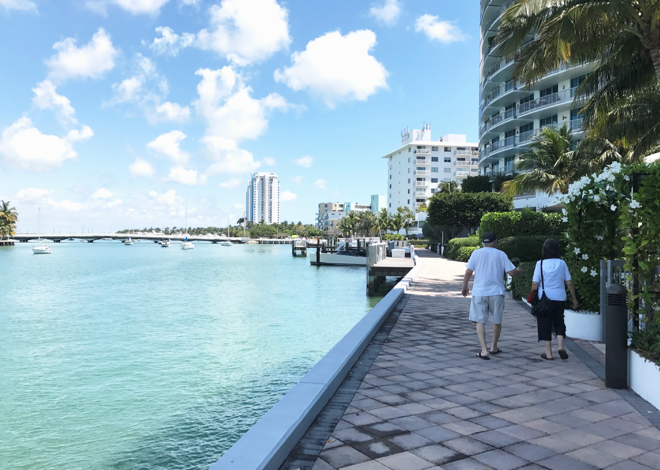
The 158-foot enclosed pedestrian bridge was supposed to cross Fifth Street and West Avenue, connecting South of Fifth and the Beachwalk at South Pointe Park to Canopy Park and the Baywalk north of the MacArthur 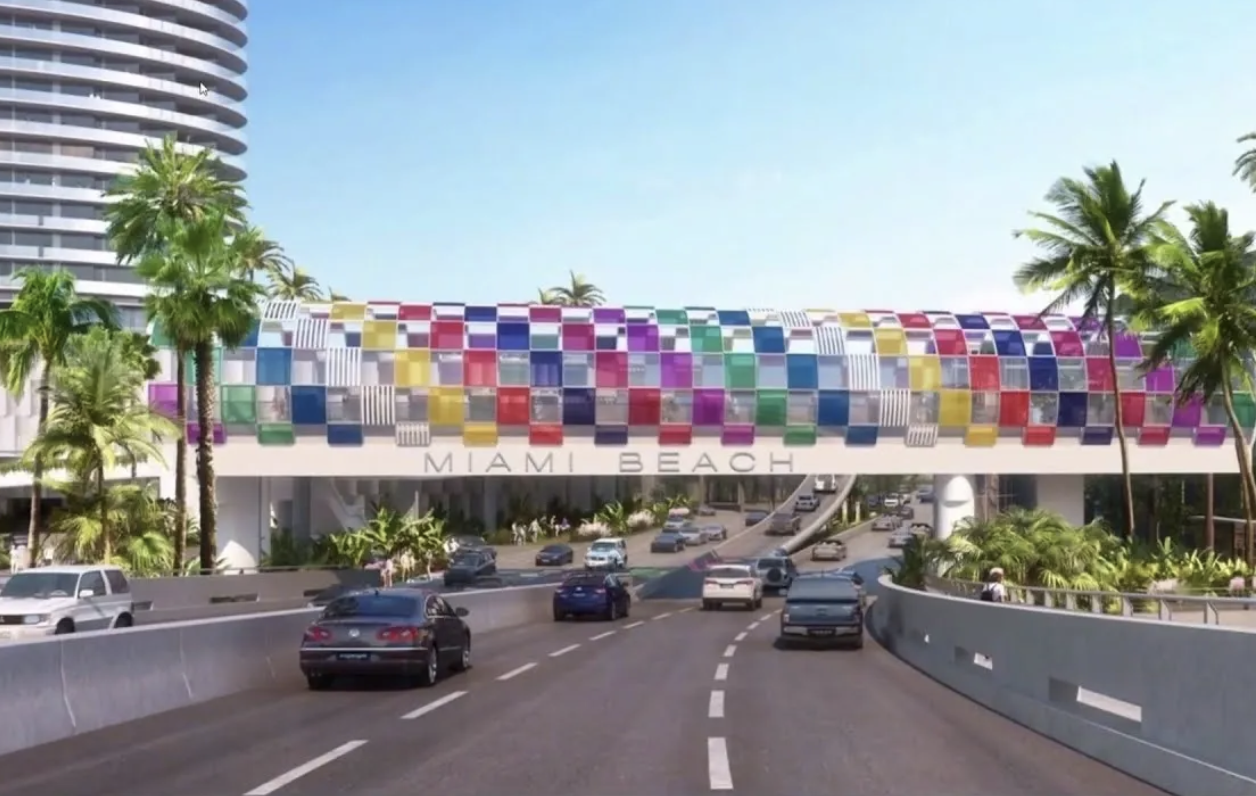 Causeway.
Designed by French conceptual artist Daniel Buren, it was envisioned as more than a crossing. Its bright translucent panels would create “a dynamic interplay of light and color,” according to the breathless descriptions. It would become a signature entry to the city.
It was going to be safe. It was going to be beautiful. It was going to be iconic.
It was also going to be done by now.
When Miami Beach and the developers held the official groundbreaking at 500 Alton Road in February 2025, Meiner called the bridge a critical public-safety improvement. “This project isn’t just about aesthetics — it’s about safety, accessibility and walkability,” the mayor said then. “By providing a secure and enjoyable way to cross one of our busiest roadways, we’re making Miami Beach safer and more connected.”
Terra CEO David Martin was equally enthusiastic. “We are proud to partner with the City of Miami Beach and GFO Investments to deliver this landmark as part of the Five Park development,” Martin said.
Key word: Deliver.
Not study. Not reconsider. Not substitute. Not negotiate an alternative after the tower was completed.
Because the bridge was part of the much larger development agreement that allowed the developers to build Five Park, the 48-story condominium 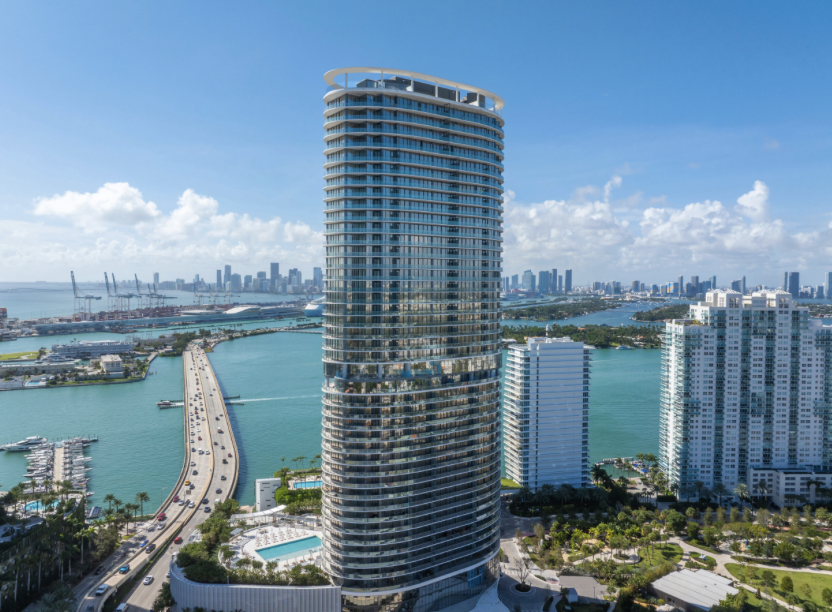 tower that now dominates the entrance to South Beach.
To make the project possible, Miami Beach vacated Sixth Street between West Avenue and Alton Road, allowing the developer to unify multiple properties, move development rights among them and concentrate the available floor area in the tower.
The city also settled a legal dispute over whether elevator shafts, stairwells and mechanical spaces would count toward the project’s floor-area calculations. The developer was allowed to proceed under the favorable interpretation, although the maximum number of residences was reduced from 410 to 330.
In exchange, residents were promised public benefits.
Read related: Op-Ed on development: Who benefits when Miami conveys public city assets?
The developers did deliver the three-acre Canopy Park in 2022. Nobody should pretend otherwise. It is a real and valuable public amenity built at 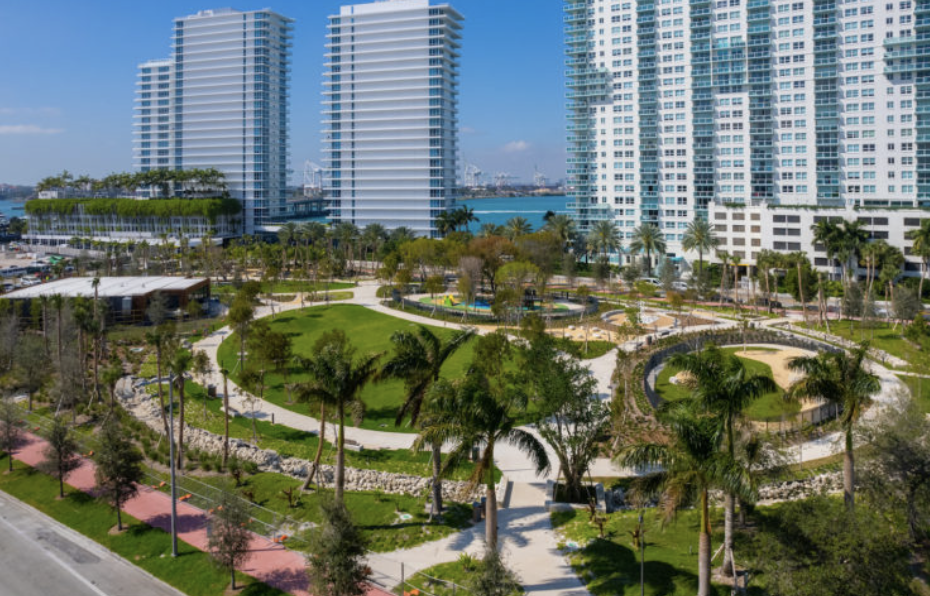 the developer’s expense and eventually conveyed to the city.
But the bridge was the signature piece — the dramatic connection over one of Miami Beach’s busiest and most dangerous roads. One crossed by children going to school and seniors shopping for groceries.
It was also marketed as part of the Five Park experience. The development’s promotional materials feature Buren’s bridge as both public art and a neighborhood amenity.
Funny how the bridge was real enough to help sell multimillion-dollar condos. Now it may be impossible.
According to Miami Beach Commissioner David Suarez, construction crews encountered serious conflicts with underground utilities, particularly high-voltage Florida Power & Light feeder lines that power South Beach. Suarez, sounding very much like a lobbyist for the developers, said FPL got the location wrong three times.
“In fact, on the second time that they gave the city and the developer a location, when they started to drill it for pilings, they hit the encasement of the FPL feeder line,” Suarez told Local 10.
Nobody wants workers drilling into a high-voltage transmission line. Nobody wants to black out South Beach for months. The danger is real and should not be minimized.
But FPL disputes the suggestion that it is responsible. The utility says it has located its underground facilities several times using different methods. Under Florida law, FPL said, the utility identifies its lines while the developer must verify those locations and design around the existing infrastructure.
Translation: FPL says, “Don’t blame us.”
So who failed?
Did FPL repeatedly provide incorrect locations? Did the developer fail to verify them? Did engineers design a $12.5 million bridge without knowing what was beneath its foundations? Did the city approve the design without sufficient underground surveys?
And why are taxpayers and residents only learning that the project may be impossible after seven years of planning and a ceremonial groundbreaking?
Read related: Miami Beach to Fountainebleau on water park: Can we talk before we sue?
These are not minor questions. Someone screwed up.
The developer’s engineers — NV5 and EAC Consulting — now reportedly say the bridge cannot be constructed as designed and cannot feasibly be redesigned. They say the high-voltage lines cannot be relocated and there is no safe or practical place for the bridge footings.
But those are engineers hired by the developer, okay?
The resolution on Thursday’s commission agenda directs the city administration to “thoroughly evaluate” the developer’s assessment and supporting documents before agreeing that the bridge is dead. That independent review is essential. But how independent is it. Especially if the resolution already provides the offramp.
If the administration agrees that the bridge cannot be redesigned, the city would begin negotiating with the developer to build an over-water Baywalk — or some similar alternative — to connect the Baywalk north and south of Fifth Street.
But let’s not hold our breath, right?
The administration would return to the commission with its findings and recommendation in October. So Thursday’s vote does not formally kill the bridge.
It merely begins planning the funeral.
The resolution says the city’s and developer’s existing financial obligations should be transferred to the alternative project. That sounds protective until one examines the original financial arrangement. Because while the bridge has routinely been sold to residents as a developer public benefit, taxpayers were always expected to pay most of the bill. Miami Beach agreed to contribute as much as $9.61 million, largely through the voter-approved General Obligation Bond program to the $12.5 million bridge project. The developer was responsible for designing and constructing the bridge on the city’s behalf and paying costs above the city’s cap.
That means taxpayers were covering about 77% of the original budget. Some gift.
The developer’s financial exposure started at roughly $2.85 million and included cost overruns. Overruns like underground utility conflicts have made the project more complicated and presumably more expensive? So, the development agreement was strong enough to let the developer build Miami Beach’s tallest residential tower, but it may not be strong enough to make the developer finish the pedestrian bridge once promised as part of the deal.
This is why the replacement proposal must be examined under a microscope.
How much has Miami Beach already spent on design, engineering, permitting, utility work and the groundbreaking-to-nowhere? How much has been reimbursed by the developer? How much of the city’s $9.61 million for the bridge remains?
Would an over-water Baywalk provide the same function as an elevated bridge? Would it actually get pedestrians safely across Fifth Street, or simply create a longer recreational route around the problem?
How much would it cost? Who would maintain it? What environmental and submerged-land permits would be required? How many additional years would residents wait?
And if the replacement costs less than the city’s maximum contribution, would the developer put in any additional money at all?
Read related: Miami Beach 1, Tallahassee 0, as city rebuilds rainbow crosswalk in sidewalk
The commission cannot simply transfer the old formula to a cheaper alternative and call the public benefit delivered. Otherwise, taxpayers could 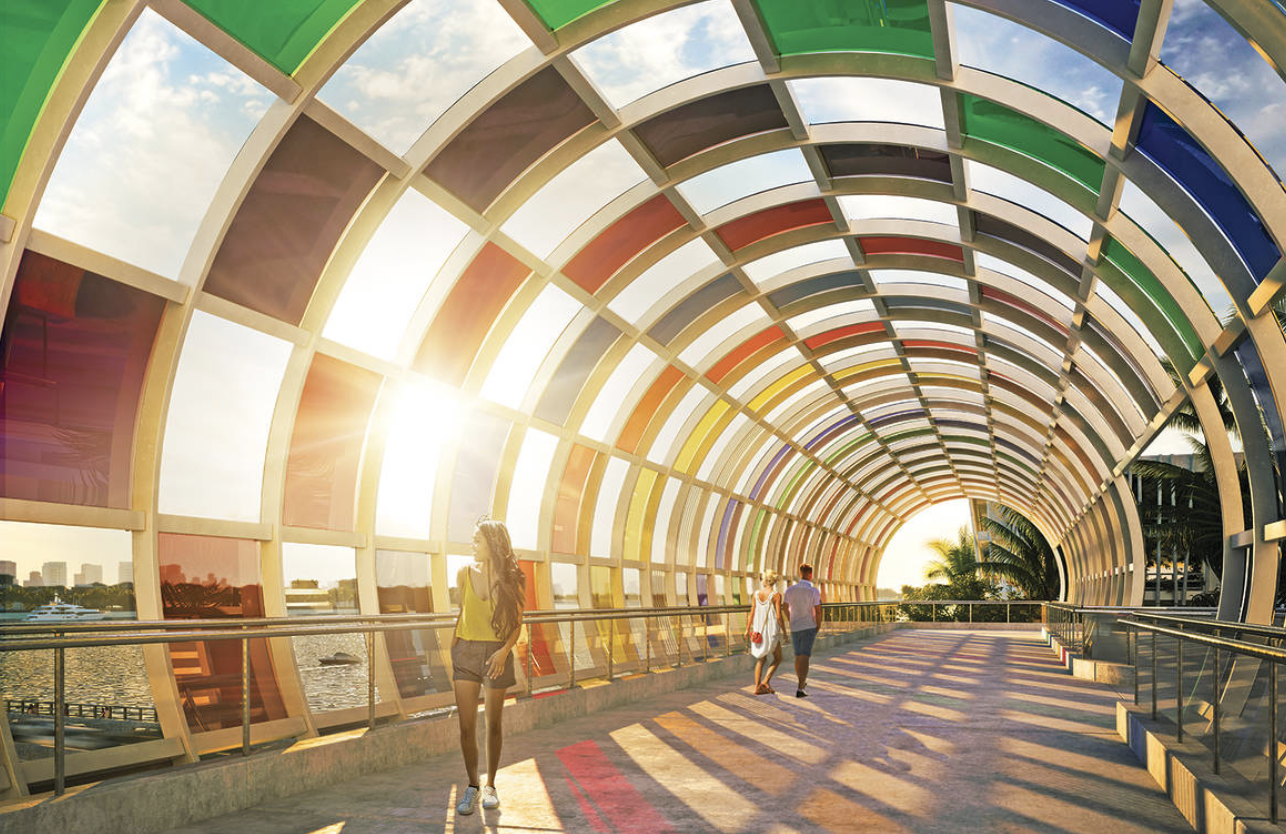 pay for virtually the entire replacement while the developer escapes the cost, complexity and overrun risk of the bridge it promised to construct.
Residents should also demand every engineering study, utility-location report, email and meeting record involving the developer, FPL, FDOT and the city. The city should establish who knew what, and when. Because it is difficult to believe that nobody discovered these critical underground transmission lines until after Five Park was approved, built, opened and marketed with the bridge as an amenity.
The developer got its tower. The developer got the street vacation. The developer got its consolidated site. The developer got the floor-area interpretation it needed.
And residents got a groundbreaking ceremony.
Now City Hall wants them to be satisfied with an unnamed over-water “alternative” that has no design, no price, no completion date and no guarantee that it will provide anything close to the promised connection.
Maybe the bridge truly cannot be built. Safety has to come first.
But “impossible” should be determined by independent engineers working for the public — not merely accepted from consultants hired by the party seeking relief from its obligation.
And if the original bridge is genuinely impossible, the developer must provide a substitute of equal or greater public value, with a firm budget, a firm deadline and enforceable financial guarantees.
No more renderings. No more golden shovels. No more vague promises about future connectivity.
Residents already bought that bridge once.
They should not have to buy it again.
The Miami Beach commission meeting begins at 8:30 a.m. Thursday at City Hall, 1700 Convention Center Dr., and can be watched remotely on the city’s website.
This kind of independent, government watchdog reporting is crucial to transparency and democracy. And more so every day. Help shine a light on the darker corners of our community with a contribution to Political Cortadito. Click here. Ladra thanks you for your support.

Miami Beach’s shiny pedestrian bridge — another broken developer promise? added by Ladra on
View all posts by Ladra →