

Apparently, the text messages weren’t enough.
Neither were the protests at City Hall. Or the activists confronting Miami Mayor Eileen Higgins at public events. Or the dozens of speakers who packed a commission meeting in June demanding that the city get out of its controversial 287(g) agreement with U.S. Immigration and Customs Enforcement.
So now they’re putting it on billboards.
The Florida Immigrant Coalition is spending at least $25,000 on a new advertising campaign aimed at pressuring Higgins and the Miami City Commission to finally rescind the agreement that allows specially trained Miami Police officers to perform certain federal immigration enforcement functions.
Two billboards were scheduled to go up Monday — one visible from I-95 at Northwest 62nd Street and another at Southwest 17th Avenue and First  Street in Little Havana.
“Miami Mayor Eileen Higgins and Miami Commissioners: Protect Venezuelans and Haitians losing Temporary Protected Status! End Miami’s police collaboration with ICE!” they read.
But the real bite comes over the radio.
FLIC is also running a Spanish-language ad for several weeks called “Wolf in Sheep’s Clothing” — Lobo con piel de oveja — and that one puts Higgins squarely in the crosshairs.
Read related: Miami commission to discuss 287(g) ICE agreements–sans Mayor Eileen Higgins
This is an escalation in what has become a sustained pressure campaign against Miami’s new Democratic mayor over an agreement that, ironically, she didn’t vote for, didn’t sign and says she doesn’t support.
But activists say that’s not enough.
“Miami cannot claim to be a welcoming city while its Police Department maintains an agreement that facilitates collaboration with ICE,” FLIC  spokesman Thomas Kennedy said in announcing the campaign.
And the timing is deliberate.
Hundreds of thousands of Venezuelans and Haitians nationally have faced uncertainty over Temporary Protected Status under the Trump administration, and South Florida has one of the country’s largest populations from both countries. Higgins herself joined the mayors of Boston, Cincinnati and Kansas City, Missouri, in briefs opposing the termination of Haitian TPS.
So nobody can accuse her of being a closet MAGA immigration hawk.
Still, FLIC’s message is basically: Nice words. Now do something.
There is, however, one rather important wrinkle: Higgins doesn’t get a vote. The five commissioners do.
The 287(g) agreement was approved by the Miami City Commission in June of 2025, months before Higgins became mayor. She criticized it during her campaign and, the day after she was elected, said there was “no reason” Miami police should be doing the job of federal immigration enforcement.
She has repeated her opposition since.
“Since my campaign and when I took office, I made clear to the community that we must treat all residents humanely and with dignity, which is why I said the city should revisit the 287g agreement,” Higgins said in a statement Saturday.
Then came the important part: “Since then the commission held a discussion at the end of June, and I look forward to a legislative item hitting my desk so I can sign it swiftly.”
Translation: Commissioners, send me the damn thing.
Because there may already be three votes to do it.
Read related: Miami commissioners had the votes to ditch ICE 287(g) agreement — but didn’t
When commissioners finally discussed 287(g) in June — discussed being the operative word because nobody actually moved to repeal anything — Commissioners Christine King, Damian Pardo and Rolando Escalona all indicated they were open to getting Miami out of the agreement, 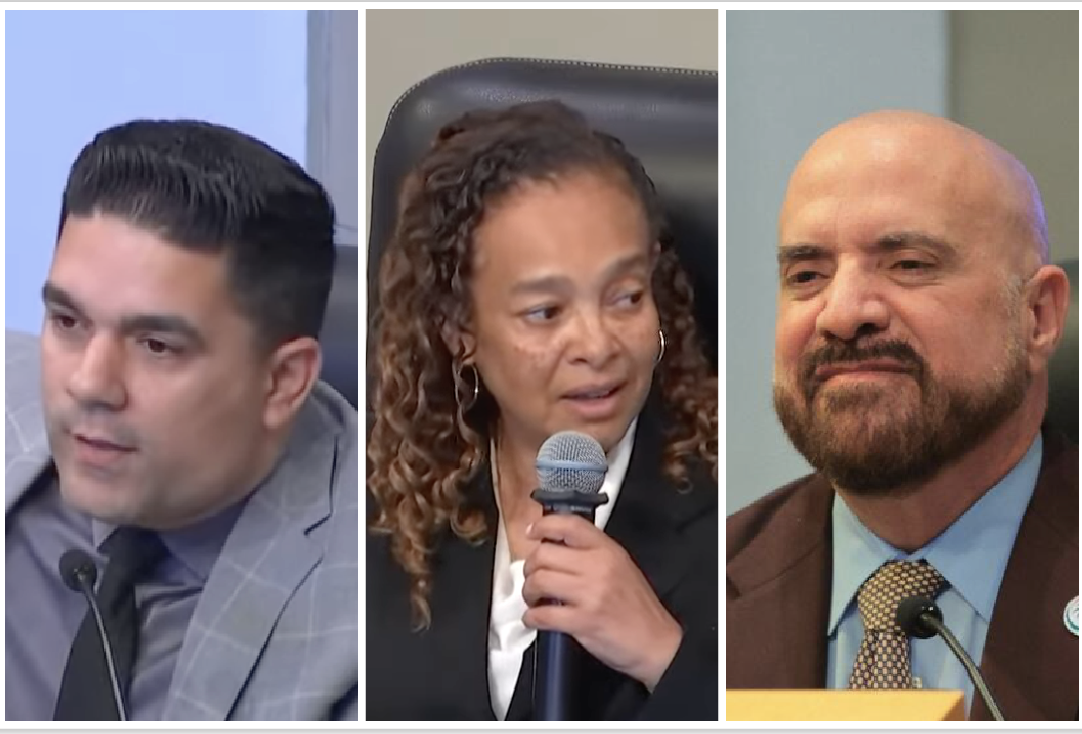 provided it could legally be done.
Three commissioners. That’s a majority, right? And yet here we are, almost two months later, with no repeal.
Granted, the commission has been on recess and doesn’t return until September. But if immigrant advocates really want this thing dead, those billboards might want to save a little room for King, Pardo and Escalona.
Because Higgins can’t rescind the agreement by mayoral decree.
That doesn’t mean the mayor is powerless, of course. Mayors have bully pulpits. They lobby commissioners. They negotiate. They call people. They twist arms. They make things priorities.
And Higgins certainly knows how to push something she wants. Remember the proposed $450 million general obligation bond? Yeah. Ladra does, too.
That’s really the argument activists are making: If killing 287(g) were as high on Higgins’ priority list as she says it is, they want to see her expend some political capital to make it happen rather than wait for legislation to arrive on her desk.
The pressure has been building for months.
As Political Cortadito reported in June, activists blasted Higgins with text messages accusing her of breaking a campaign promise. One read: “You can’t spell Eileen without L-I-E.” Immigration and climate activist Laura Muñoz was pushed away by mayoral staff while trying to question Higgins about 287(g) at a public event — an awkward encounter caught on video.
Then more than 50 people came to City Hall when commissioners discussed the agreement June 25.
And earlier this month, the issue got some statewide Democratic star power when State Rep. Angie Nixon — who has since won the Democratic nomination for U.S. Senate — stood outside City Hall and challenged Higgins and the commissioners to end the agreement.
“This is not just about Republicans,” Nixon said, calling on Democrats to have “the political courage to stand up and do the right thing.”
Read related: Downtown Miami protest planned Saturday vs Donald Trump policies
Now come the billboards and radio ads.
Meanwhile, the actual scope of Miami’s participation is relatively small. City Manager James Reyes told commissioners in June that only two Miami Police officers had received 287(g) training. Police Chief Edwin Lopez has said immigration enforcement is not his priority and has tried  to reassure residents that officers are not trolling neighborhoods looking for undocumented immigrants.
But immigrant advocates say that’s beside the point.
They argue that simply having the agreement damages trust between police and immigrant communities because residents may fear that calling 911, reporting a crime or cooperating with an officer could somehow expose them or their family members to immigration authorities.
“Miami’s immigrant communities should not have to choose between calling the police and protecting their families from immigration consequences,” Kennedy said.
There is another complication — because, of course, this is Florida.
City Attorney George Wysong warned commissioners in June that rescinding the agreement could potentially cost Miami about $7.5 million a year in state funding, given Tallahassee’s aggressive posture toward local governments that resist cooperation with federal immigration authorities.
King basically shrugged at that possibility, saying the city could find the money elsewhere.
Fine. Then bring the item.
Because that’s where this gets a little strange.
Higgins says she’ll sign it. Three commissioners have said they’re open to it. The police chief says immigration enforcement isn’t his priority. Dozens of residents have demanded it. Activists have protested it. A Democratic U.S. Senate nominee has called for it. And now somebody is spending $25,000 putting it on billboards and Spanish-language radio.
Yet the agreement is still there.
So perhaps when commissioners return in September, somebody should stop discussing 287(g) and actually put something on the agenda that requires a vote.
Then we’ll find out who really wants it gone.
And who just likes saying they do.
This kind of independent, government watchdog reporting is crucial to transparency and democracy. And more so every day. Help shine a light on the darker corners of our community with a contribution to Political Cortadito. Click here. Ladra thanks you for your support.

Billboards, radio ads turn up heat on Miami Mayor Eileen Higgins over ICE 287g deal added by Ladra on
View all posts by Ladra →
