
Most voters head into an election focused on the candidates.
Who’s running. Who’s attacking whom. Who’s got the slickest mailer. Who’s promising to save Miami from, well, Miami.
Then they get to the bottom of the ballot: Referendums.
The part where eyes glaze over and people start filling in bubbles based on instinct, optimism or whatever campaign sign they saw on the way to the polling place.
This year, however, Miami voters may want to slow down. Because buried beneath the campaign ads are two ballot questions that could shape City Hall for years — one for four decades.
That’s not a typo.
Read related: City of Miami moves elections to even-numbered years — 8 years from now
The first referendum asks voters whether to move City of Miami elections to even-numbered years, lining them up with state and federal elections beginning in 2032.
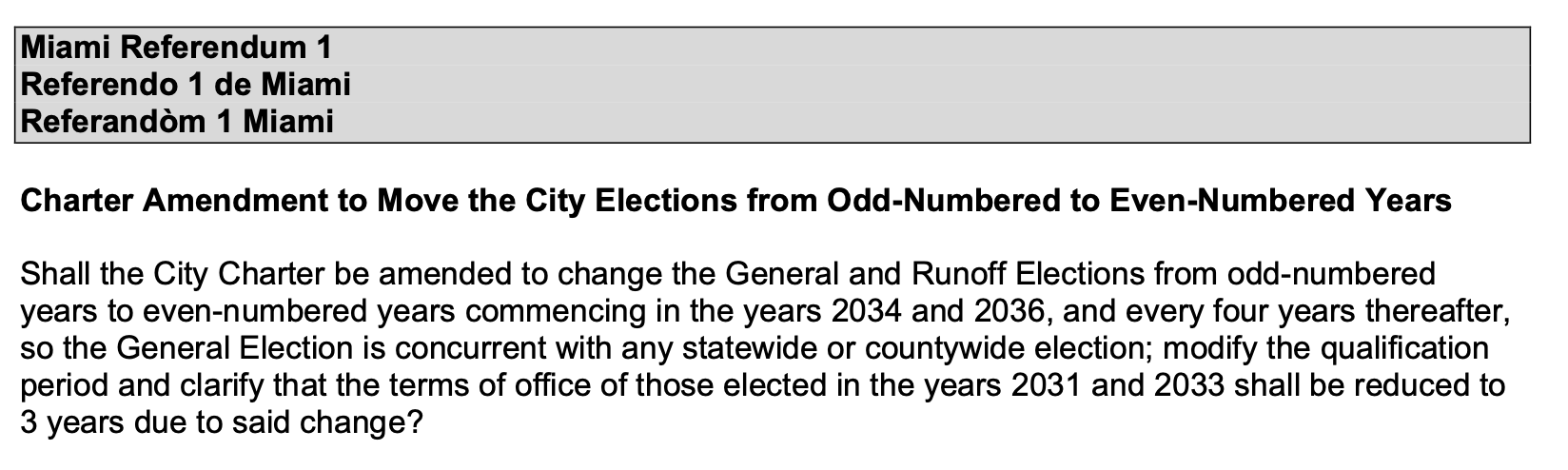
If this sounds familiar, it should. City commissioners already tried to move elections without asking voters. That didn’t end well. A candidate for last year’s election sued. A judge stepped in. The city lost.
So now officials are doing what many people thought they should have done in the first place: They’re asking permission.
Supporters say moving elections to even numbered years will dramatically increase voter turnout while reducing the cost of holding standalone city elections. Turnout in odd-year municipal elections is notoriously low, often leaving the future of a city of nearly half a million people in the hands of a relatively small number of voters.
Those are legitimate arguments.
Critics, however, argue that local races will be swallowed whole by presidential politics, congressional races, constitutional amendments and everything else competing for voters’ attention every November.
They’re not wrong, either.
It’s a classic democracy tradeoff. More voters. Less focus. Choose your poison.
Read related: Miami Marine Stadium’s revival plan could be on city’s November ballot
Then comes the second referendum.
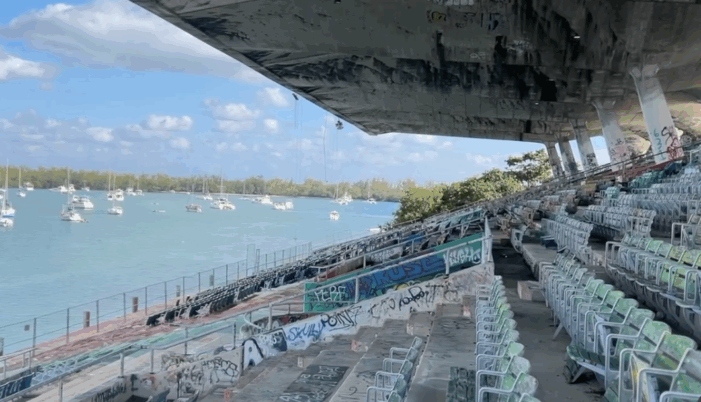
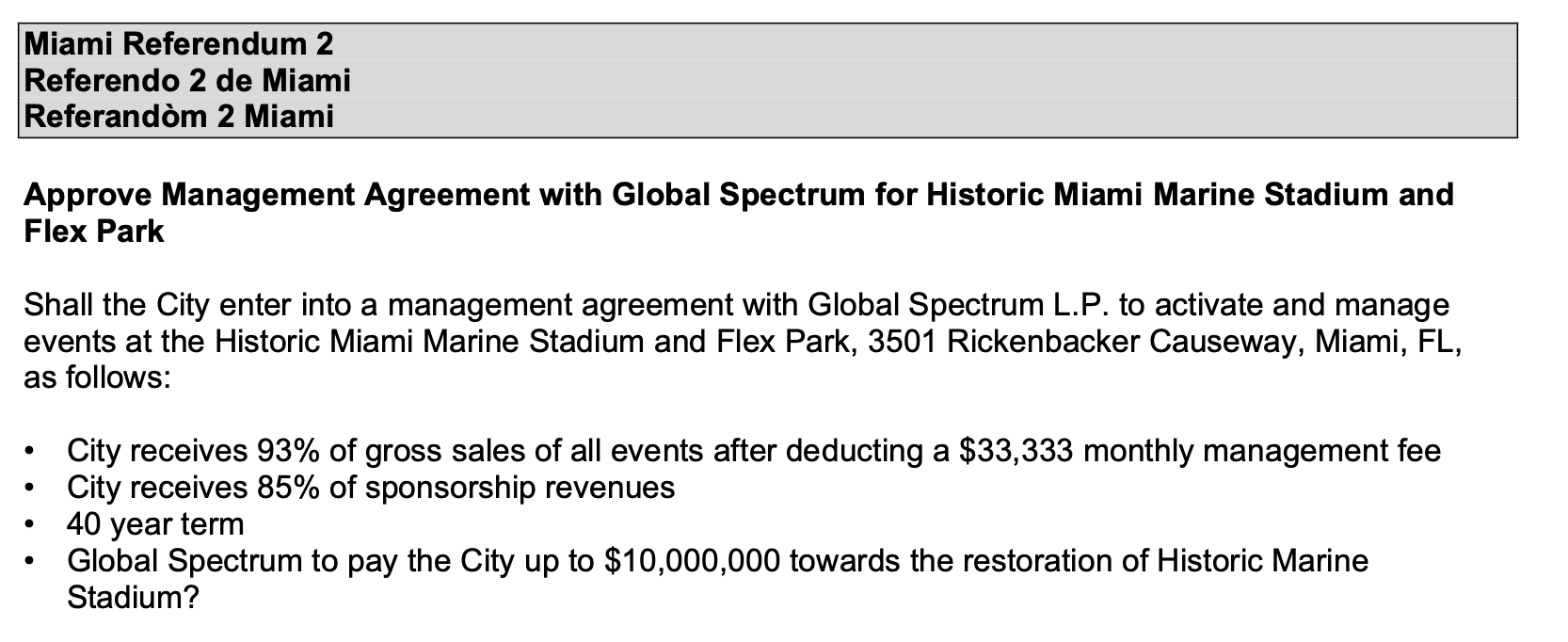
This one asks voters whether the city should enter into a 40-year management agreement for the long-shuttered Miami Marine Stadium with Global Spectrum, the company that already manages several major entertainment venues. Global is a subsidiary of Oak View Group, which won the request for proposals (RFP) to manage the venue with local partner Breakwater Hospitality Group. Under the proposal, the company would manage events at the stadium complex and invest up to $10 million toward restoring the historic facility, while the city would receive the 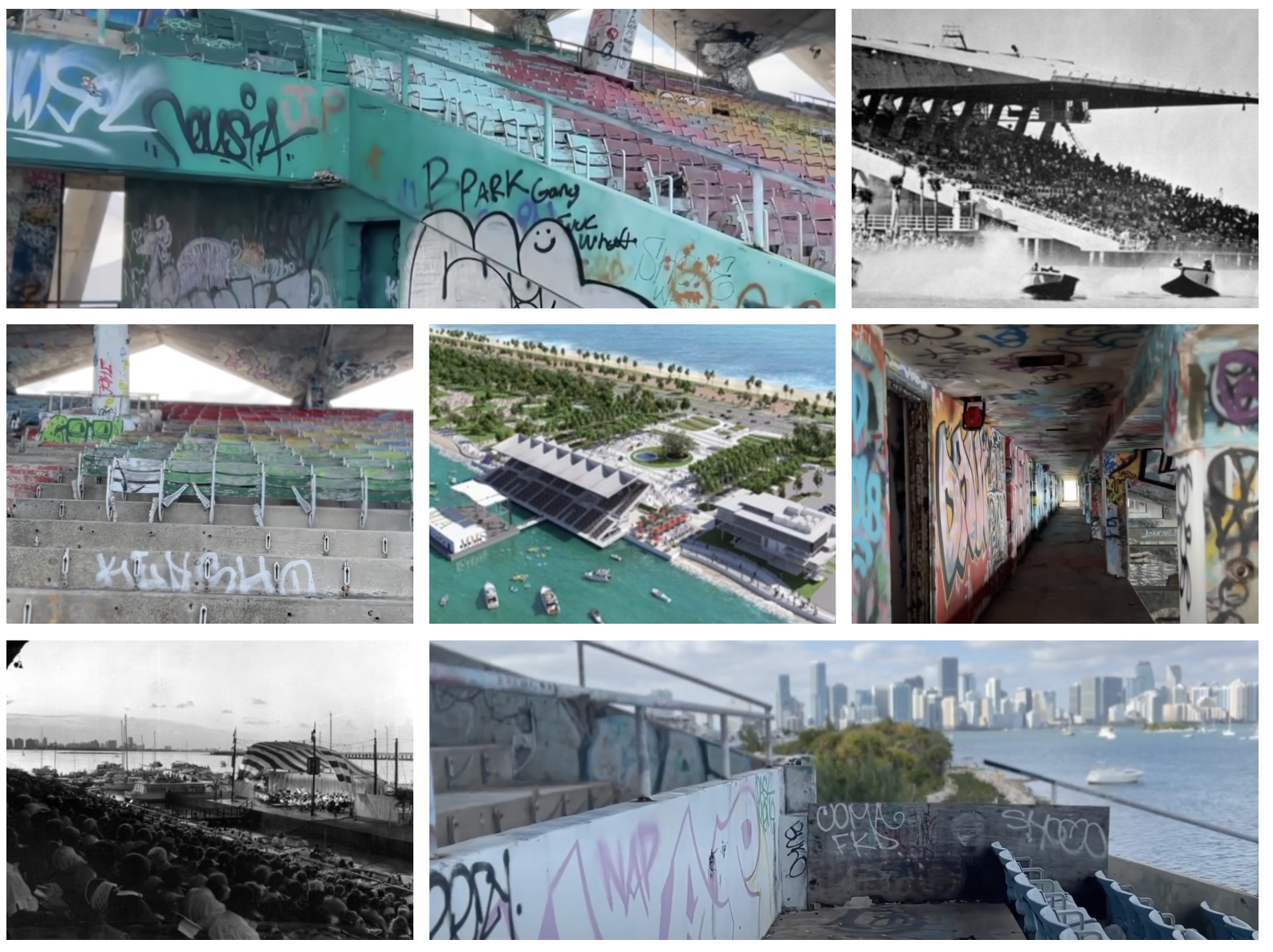 overwhelming share of event revenues and sponsorship monies after the management fee is paid.
Let’s pause for a second and think about where we were 40 years ago.
Some readers hadn’t been born. Some commissioners were in kindergarten. Miami has had multiple mayors, countless commissioners and enough political plot twists to fill an entire Netflix series since then.
And yet voters are being asked to approve a management arrangement that could outlast several generations of City Hall.
Supporters say that’s exactly what’s needed to finally bring the historic stadium back to life after sitting idle since Hurricane Andrew. Multiple well-intentioned campaigns, private donations — including $500,000 from Gloria Estefan — and municipal bond plans since then failed to fully cross the finish line, primarily due to soaring restoration costs and political gridlock. Why? Funding the full restoration was always the hurdle. While the building has widespread nostalgic and historical support, the price tag ballooned over time due to inflation and specialized concrete repairs. Activists and city leaders historically struggled to agree on a business model that would stabilize the stadium’s finances without privatizing public waterfront land.
Aside: Estefan pledged the money in June 2014 to support the Friends of Miami Marine Stadium initiative, but in late 2014, a proposed $121 million redevelopment plan by the non-profit was rejected by Miami city commissioners over transparency issues, lack of guaranteed financing, and proposed board-member fees. Estefan publicly blasted the group’s final proposal, expressing deep disappointment over how the non-profit handled the project and distributed board compensation.
Opponents of the referendum, however, worry that once a 40-year agreement is signed, future generations will have very little say over one of the city’s most recognizable public assets. Miami doesn’t have a great history with asset management.
Both are fair arguments.
And wait. There’s more. What’s not in the ballot question is how the city may leverage the new event and sponsorship revenues generated by the flex park, which will be built on the parking lot — a water-oriented public recreational facility that could also be used for special events — to safely issue and back a future $65 million revenue bond to finance the full stadium rebuild.
Because $10 million ain’t gonna do it.
This is not to be confused with the other referendum on the ballot in November for a different long-term lease at the Rickenbacker Marina. This would be a 45-year initial lease term, with two additional 15-year renewal options, a guaranteed rent stream projected at roughly $204 million over the initial term, plus a percentage of revenues, and an estimated $80 million private redevelopment of the Rickenbacker and Marine Stadium marinas. Oh, and the lease is from 2017 with old figures that are likely very different today.
Read related: Back to the future: Miami to sell voters a 10-year-old Rickenbacker Marina deal
But that’s in November. We’re talking about the August ballot for now. And the hardest part may not be deciding how to vote. It may be remembering that these questions are even there.
Referendums have a bad habit of getting buried beneath the candidate drama. That’s unfortunate because, in many elections, they’re the decisions that last the longest.
Commissioners come and go. Mayors get termed out. Campaign signs disappear.
A 40-year contract? That sticks around.
So does changing how — and when — Miami chooses its leaders.
To summarize: There are two referendums on the ballot for Magic City voters. One asks whether more people should participate in city elections.The other asks those same people to decide whether to authorize one of the longest public management agreements the city has considered in years.
Not bad for two little questions hanging out at the bottom of the ballot.
Political Cortadito can only exist with the financial support from readers like you. In these dark times, we need to shine a light here and there, now and then. If you like what you read here today, please consider making a contribution to support the independent, government watchdog journalism on this website. Click here. Ladra thanks you!

Even year elections and Marine Stadium referendums on Miami’s August ballot added by Ladra on
View all posts by Ladra →
Miami Marine Stadium renovation? If it passes City officials will increase Real Estate Taxes and they will increase fees. The cost and the cost overruns will be huge. Remember, idiots and crooks like Ken Russell and Marc Sarnoff voted Yes to spend billions to build the Marlins Stadium. Vote yes if you want to pay higher taxes.
Renovating Marine Stadium will cost taxpayers over $200 Million, including debt service. The sleazy architect wants a $6 million fee upfront. Taxpayers are getting screwed.
What’s with the obsession with a pathetic-looking structure whose concrete and steel reinforcement have been weakened by exposure to the corrosive effects of a marine environment over 63 years? The best practice is to raze the hideous edifice and, in its place and in the extensive surrounding area, build hotels, restaurants, and marine facilities, with adequate parking to generate significant revenue for the city. Miami elected officials and the city manager should think more like business entrepreneurs and less like novice preservationists. Within Miami, there are plenty of buildings that deserve historical preservation; the obsolete Marine Stadium is not.
Change elections to even years: Please vote NO.
Miami Marine Stadium: Please vote YES.
The reasons why are well stated in this story.
@D1 elections—-change is coming TRUST US!
Vote No on the Election item and Vote YES on the 40 yr marina
Ladra, with regard to the first question, I voted “NO.”
There is something to be said about a small group of people who are truly invested in their community. Increasing voter turnout (semi-)falsely by placing the local elections along with their bigger national counterparts lets those who barely know the topics as is to have control of issues they may not have a clue about.
It’s bad enough most general election voters are clueless about anything below the topline; why add municipal candidates and questions into the fray.
Others may disagree. I’m probably on the losing side.
We need the District 1 election cant come soon enough