
Will Mayor Eileen Higgins veto by Monday’s deadline?
Well, Miami finally found the cure for homelessness.
Not housing. Not treatment. Not more shelter beds. Not mental-health services. Not rent relief in one of the least affordable housing markets in the country.
Nope. It’s a verbal warning followed by handcuffs.
That’s it. Problem solved.
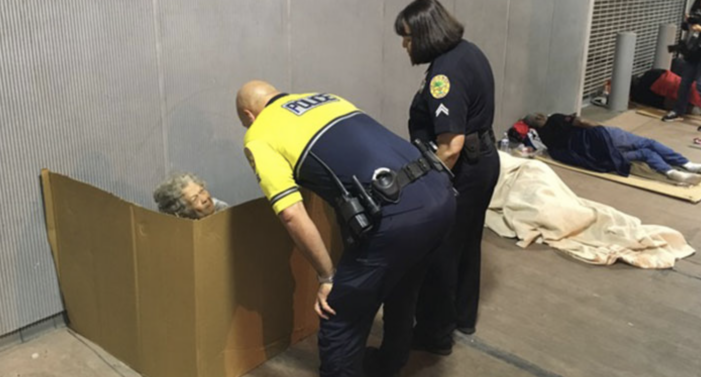
The Miami City Commission voted 3-2 last week to make it easier for police officers to arrest homeless people sleeping or camping in public spaces by eliminating the requirement that they first receive a written warning and 24 hours to move. You know, because they don’t have that much stuff.
Under the new ordinance, an officer can simply tell someone to leave, give them a “reasonable amount of time” to gather their belongings and then make an arrest if they don’t move quickly enough.
Key words: Reasonable amount of time. Who defines it?
That was the rather obvious question raised by Commissioners Christine King and Damian Pardo, who voted against the measure.
Is 10 minutes reasonable? An hour? One business day? How long does it take someone with no home, no car, perhaps no shopping cart and possibly a physical or mental illness to pack up every earthly possession and disappear from sight?
City Attorney George Wysong explained that it means as quickly as the person can remove themselves and their belongings from the right-of-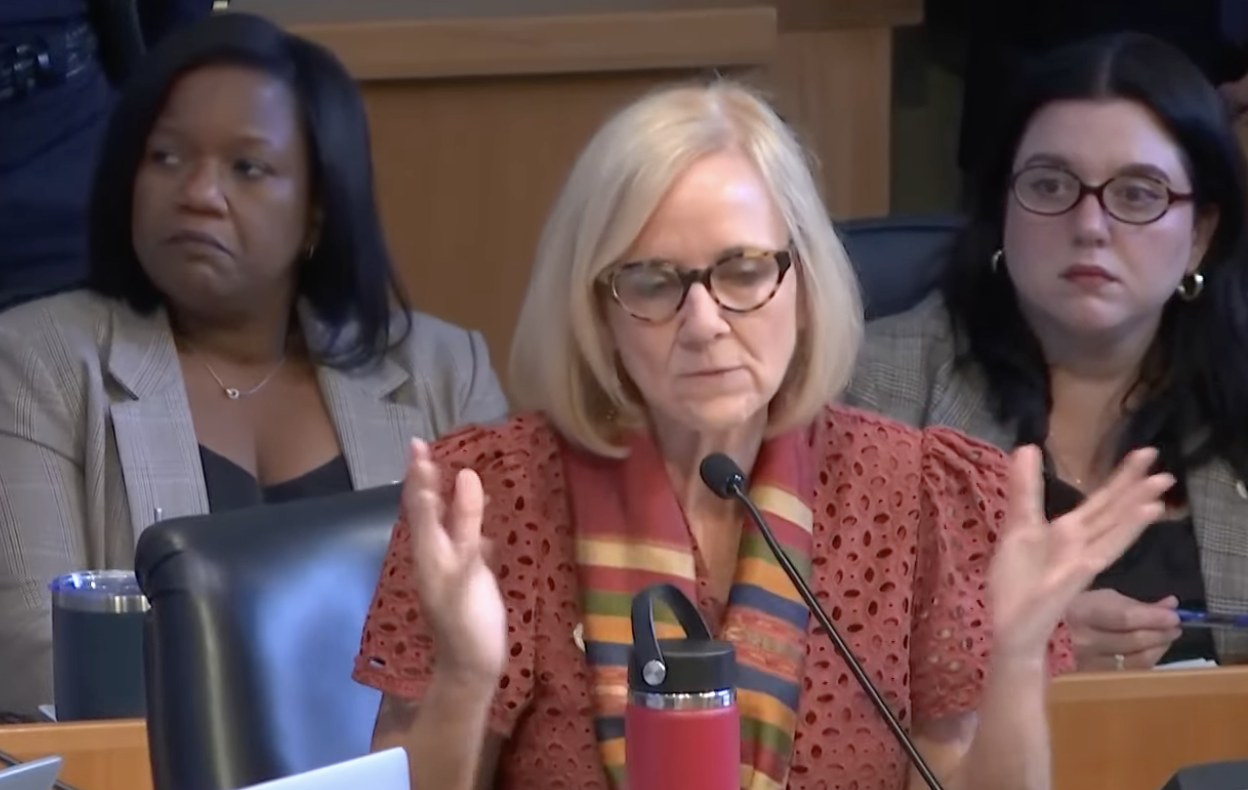 way.
way.
Oh. Well, that clears everything up.
Now, homeless and housing advocates are urging Mayor Eileen Higgins to veto the ordinance. She has until Monday — 10 days from the July 23 vote. Overriding a veto would require four commission votes out of the five, and the ordinance passed with only three. So it’s very possible a veto would survive. Here is Higgins’ true chance to have an immediate and positive impact on real lives and get back some of the voters she is losing.
Read related: Homeless advocates protest city of Miami’s treatment of the unsheltered
This is not the first time the city has grappled with how to approach the growing homeless crisis. It has been an issue at commission meetings for years. Former Commissioner Joe Carollo once famously suggested people offer their own front yards for homeless if they didn’t like the idea of a tiny home concentration camp on Virginia Key.
And yet the city always finds a way to keep on tightening the screws.
Sponsored by Commissioner Rolando Escalona and approved with the votes of Commissioners Ralph Rosado and Miguel Gabela, the ordinance is being sold as a simple streamlining of an existing law.
Nothing to see here, folks. Just removing a pesky piece of paper standing between an unhoused person and a jail cell.
Escalona says his office has received complaints from businesses and residents about encampments blocking sidewalks and storefronts, particularly around Flagler Street and Northwest 12th Avenue. Gabela has said his constituents decry what’s happened to the Northwest 7th 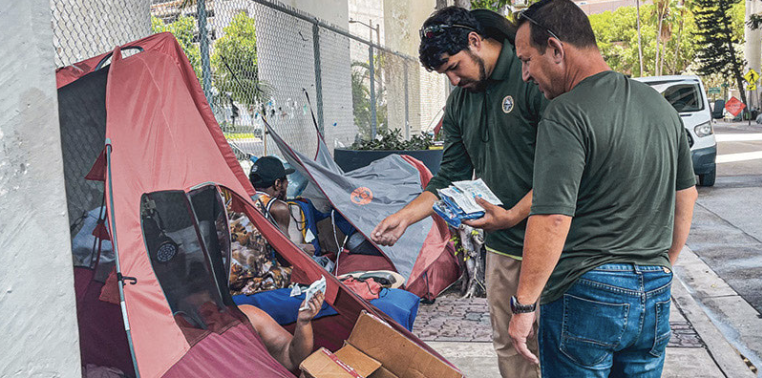 Avenue corridor all the time.
And those complaints should not be dismissed. Business owners should be able to open their doors. Residents should be able to use sidewalks safely. Nobody should have to step over sleeping bodies to enter a store or walk home.
But how does making an arrest happen a little faster solve any of that? Where does the person go after being pushed away from the doorway? The next block? The next business? The next commissioner’s district?
Escalona insisted the measure is not about putting people in jail. “We’re not taking anybody to jail,” he said.
Except, of course, the ordinance specifically makes it easier to take somebody to jail. That’s literally the point.
Wysong confirmed it himself. Public camping is already illegal, he said. The change simply removes the requirement that police provide written notice.
“That’s the step that we’re making it easier for the officer,” the city attorney said.
Exactly. It makes arrest easier.
Read related: Miami commissioners had the votes to ditch ICE 287(g) agreement — but didn’t
Por supuesto, the ordinance says police cannot arrest someone if no shelter bed or other immediate housing assistance is available. And if a bed is available, it must be offered.
Sounds comforting.
Except Miami-Dade Homeless Trust Chairman Ron Book says there are very few shelter beds available right now and the problem is far larger than the existing capacity. The county’s overall homeless population — which is anyone without permanent housing — increased slightly in the last year, from 3,615 people to 3,648. But the number of unsheltered people — or those who live on the street — rose by 38%.
Inside the City of Miami, the unsheltered population increased from 546 to 605.
That means more people are sleeping outside. And they are now vulnerable to the whims of an officer who thinks five minutes should suffice to pick up and pack everything that means anything to you.
Advocates packed City Hall to warn commissioners that eliminating the written-warning period would not connect people to services. It would simply speed up the enforcement machinery. They said that the timing was also crazy, no pun intended, with new beds about to open up, including some at the newly-approved Miami Center for Mental Health and Recovery, or as everybody calls it, the Leifman Center, after Judge Steve 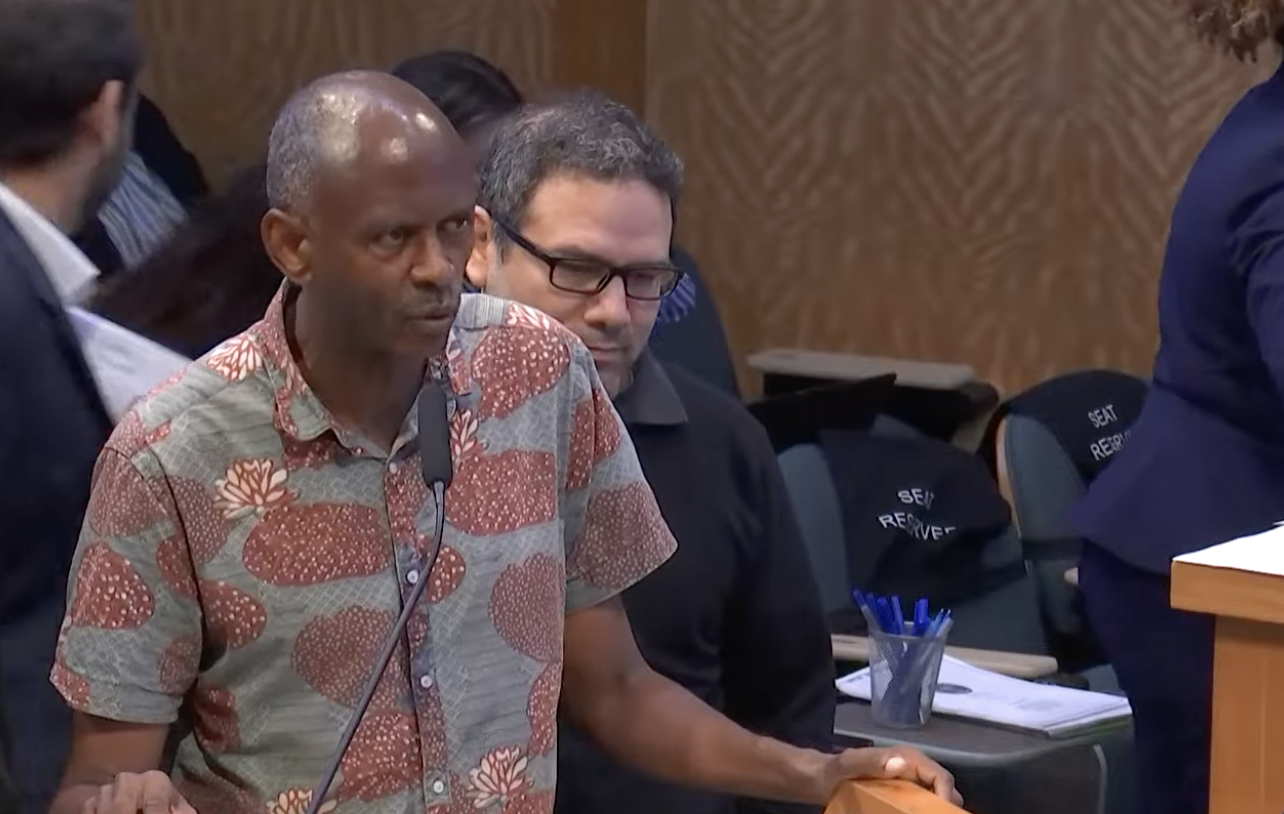 Leifman, who made it his life’s mission to open the jail-diversion building.
David Peery, executive director of the Florida Coalition to Advance Racial Equity, said the 24-hour period gave outreach workers time to identify people, determine their eligibility and try to connect them to shelter and housing.
“How can arrest remain the last resort when they’re expediting it?” Peery asked.
Another excellent question that received no meaningful answer.
Read related: Miami mental health center is finally approved — but the bill comes later
Research presented at the meeting also showed why the arrest-first — or arrest-faster — approach is so deeply unserious. The numbers indicate that 32% of unsheltered people surveyed across Florida had already been arrested. Among those with severe mental illness, that figure rose to 47%.
And what happened after the arrests? Ninety percent went right back to the street. Only a small fraction received help after being released.
Book warned that taxpayers would spend more money housing homeless people in jail without resolving anyone’s homelessness. He also pointed toward Miami Beach, which adopted a similar law in 2023 and has seen its unsheltered population decline while Miami’s increased. Basically asking where they planned to export the homeless to.
So, in short, taxpayers pay for the officer. Then the patrol car. Then the booking. Then the jail bed. Then the court and the prosecution. Then the release. Then the same person returns to the same sidewalk. Or a sidewalk nearby.
Government efficiency, Miami style.
Perhaps the most jarring testimony came from people who are not homeless — at least not yet.
Residents of the Silver Court Trailer Park in Little Havana came to City Hall because they are being evicted to make way for redevelopment. They told commissioners they have until Sept. 30 to leave their homes and may have nowhere else to go. They appealed directly to Commissioner 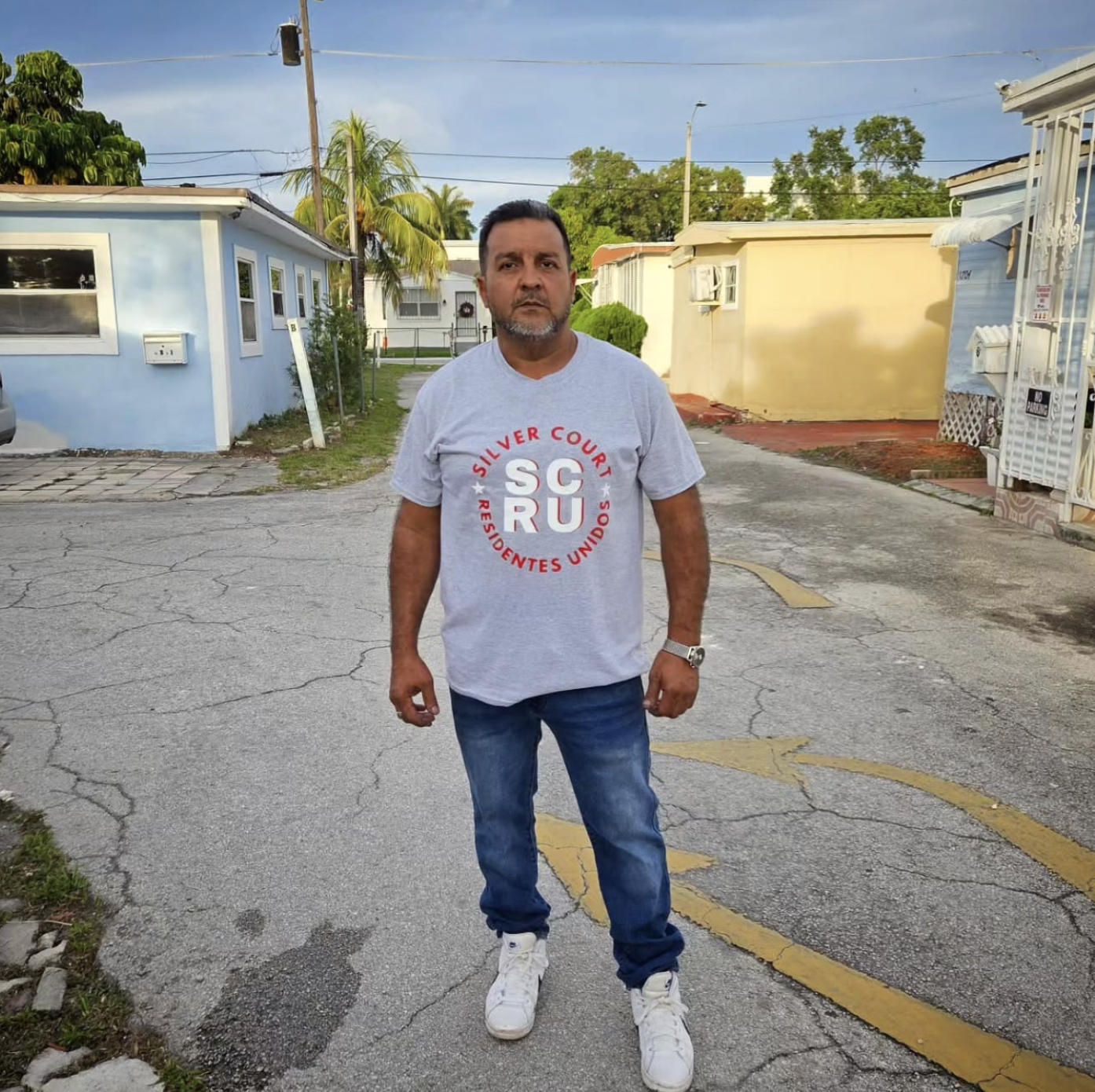 Rosado, whose District 4 is where the mobile home park is.
“We are low-income people,” resident Elvin Alebalo said. “We don’t have a place to go. We may end up on the street, and with this ordinance we will be victimized.”
Read related: Miami decides to fight Live Local Act — and Damian Pardo leads the charge
There it was. The entire Miami housing crisis compressed into one commission meeting.
On one side, residents losing existing affordable homes to another development. On the other, commissioners making it easier to arrest people once they have nowhere left to live.
Commissioner Rosado, whose district includes Silver Court, pledged that he would not let those trailer park residents become homeless. Ladra hopes he means it. Because promises are not apartments.
And the city is apparently preparing the enforcement response in case the housing response falls through.
The Silver Court fight deserves its own story — and it will get one — because it is becoming another familiar Miami tale: low-income residents pushed from their homes while land becomes more valuable to somebody else. Is anyone left at the Lil’ Abner trailer park?
The presence of the Silver Court residents at the homeless-camping debate exposed the central hypocrisy: Miami keeps approving development, losing affordable housing and watching rents soar. Then, when people fall through the widening cracks, government treats their visibility as the emergency.
Not their lack of housing. Their visibility.
It is not homelessness that City Hall seems determined to end. It is the inconvenience of having to look at it.
Read related: The Homeless Trust 101 — or ‘How Ron Book still keeps the cafecito warm’
Peery is among a group of homeless, legal and social-justice advocates who have sent the mayor a letter calling for a veto “without delay,” arguing  that allowing the measure to take effect would contradict her campaign promises to expand affordable housing.
This is Higgins’ first real test on the issue.
Does the city treat homelessness as a housing and human-services crisis? Or as an obstruction that needs to move — it’s messing up the IG aesthetic — before somebody goes to jail?
That does not mean businesses should surrender their entrances or residents should lose access to sidewalks. It means government ought to be honest about what this ordinance does.
It does not create one housing unit. It does not open one shelter bed. It does not add one outreach worker. It does not treat one mental illness. It does not reunite one family. It does not reduce rent.
It simply replaces a written warning with a spoken one and starts the clock sooner.
This is how Miami plans to end homelessness?
No. This is how Miami plans to move homeless people somewhere else.
Preferably somewhere none of the commissioners has to see them.
This kind of independent, government watchdog reporting is crucial to transparency and democracy. And more so every day. Help shine a light on the darker corners of our community with a contribution to Political Cortadito. Click here. Ladra thanks you for your support.

Miami’s brilliant new homeless policy: ‘Move faster or go directly to jail’ added by Ladra on
View all posts by Ladra →
