
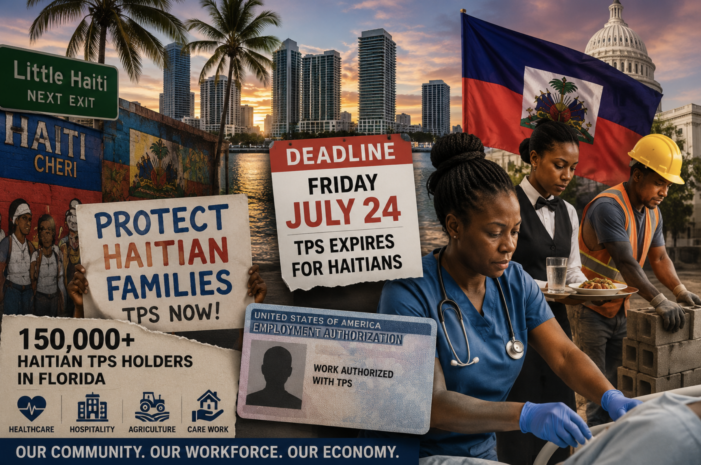
There are policy debates. And then there are reality checks.
Miami-Dade may be about to get one of the latter, based on the former.
By Friday, thousands of Haitian immigrants in South Florida who have lived and worked here legally under Temporary Protected Status (TPS) could begin losing authorization to work if Congress and the administration do not intervene. The looming deadline follows a U.S. Supreme Court ruling allowing the Trump administration to move forward with ending Haiti’s TPS designation while legal challenges continue.
But the politics of immigration that have dominated cable television for years land much closer to home economically. Washington loves to debate immigration in the abstract. Miami has to live with it in the concrete.
In Congress, it’s politics. In Miami-Dade, it’s who’s taking care of your grandmother, cleaning your hotel room, serving your dinner, harvesting your food and helping build your house.
And by Friday, South Florida may find out just how dependent it has become on a workforce that has been hiding in plain sight for more than a decade.
Read related: Haitian TPS holders get 11th hour reprieve from deportation threat
At a Wednesday press conference, Miami-Dade Mayor Daniella Levine Cava and Commissioner Marleine Bastien stood alongside 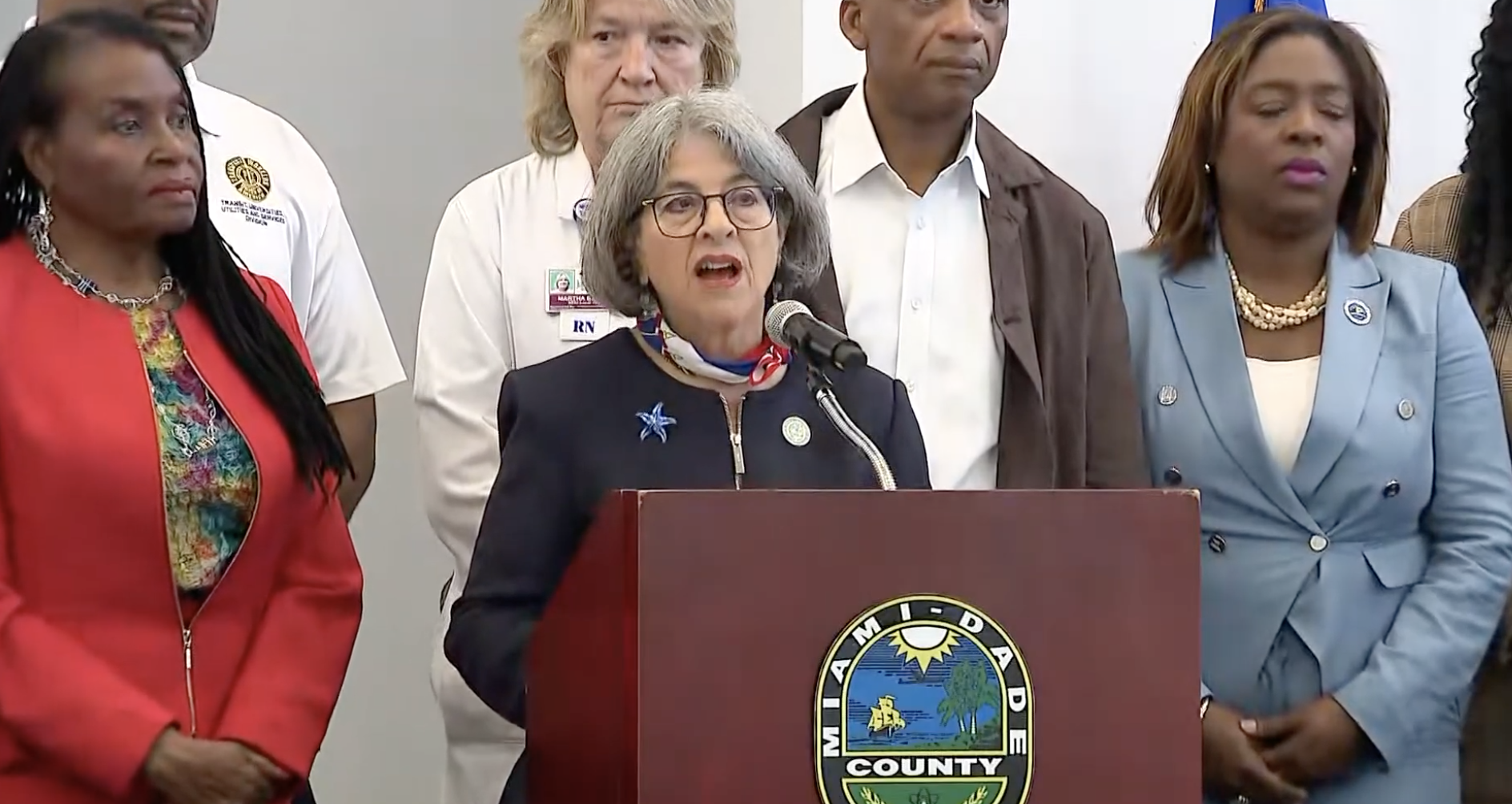 healthcare providers, clergy, labor leaders and business representatives with a message that extended well beyond immigration policy.
Their concern is not just the tearing apart of families and returning Haitians to a country with widespread gang violence, political instability and a humanitarian crisis. the concern is also the workforce.
“This is our lifeline. This is so critically important,” Levine Cava said.
“I always say what makes us so extraordinary is our diversity, but also that it is our greatest strength,” Levine Cava said, flanked by other electeds and community leaders. “And not just our diversity but our unity.
She said Haitians and Haitian-Americans have been a part of the U.S. fabric for decades, from the beginning as the country supported the U.S. in the fight against England.
“More recently, they’ve come here opening business, creating jobs, taking care of our elders, our seniors our children, building our homes, strengthening our neighborhoods, enriching our culture. so much,” La Alcaldesa said. “They are not just part of our community. They are a critical indispensable part of our economy. And right now, this community this economy faces an existential threat.”
Congresswoman Lois Frankel was a little more blunt earlier this month when she said ending TPS would “cripple” our economy.
According to county officials and business leaders, Florida has roughly 150,000 Haitian TPS beneficiaries, many concentrated in Miami-Dade and Broward counties. They work in hospitals, nursing homes, hotels, restaurants, agriculture, construction and home healthcare—jobs that employers have long struggled to fill. The mayor and commissioner argued that losing those workers would ripple through the local economy.
Their warning was echoed in an opinion piece they co-authored this week, arguing that Haitian TPS holders contribute billions of dollars to Florida’s economy and hundreds of millions in state and local taxes while filling critical positions in healthcare, hospitality and agriculture.
Whether one agrees with their policy prescription or not, the underlying question is difficult to ignore: If tens of thousands of legally authorized  workers disappear from payrolls almost overnight, what happens next?
Healthcare providers at the press conference said staffing shortages could worsen in hospitals, nursing homes and home-health agencies. Miami Jewish Health rehabilitation center has been bracing for this for months but are still looking at potential holes in staffing. Hospitality leaders warned hotels and restaurants could face additional labor shortages during South Florida’s busy tourism economy. Faith leaders spoke about families who have lived in South Florida for years and now face profound uncertainty. Immigration attorneys urged TPS recipients to prepare emergency plans covering everything from child care to mortgages, bank accounts and businesses.
None of that changes the legal reality.
Temporary Protected Status was always intended to be temporary. The Trump administration has argued that the program should not become a permanent form of legal residency and sought to end Haiti’s designation. On June 25, the Supreme Court allowed that policy to proceed while litigation continues.
Supporters of extending TPS counter that conditions in Haiti remain extraordinarily dangerous, pointing to the State Department’s Level 4 “Do Not 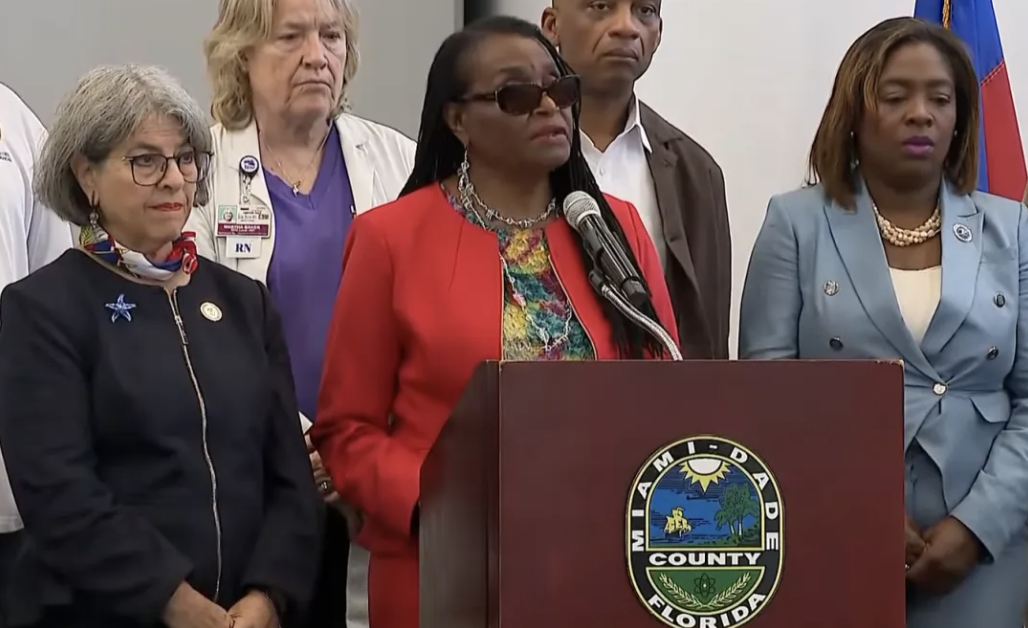 Travel” advisory and continuing gang violence. They argue the humanitarian conditions that justified TPS have not materially improved.
“They will return to a nation that is ten times worse than when TPS was awarded in 2010,” Commissioner Bastien said at the press conference, which was mostly attended by Democrat leaders.
The political divide, however, is not entirely along party lines.
Earlier this year, the U.S. House approved legislation to extend Haiti’s TPS designation with bipartisan support, including votes from several Florida Republicans. The Senate bill, S. 4814, remains pending.
One notable Republican voice has been Miami-Dade Congressman Carlos Giménez, who has publicly called ending TPS for Haitians a “huge mistake,” citing both humanitarian concerns and the economic role Haitian workers play in South Florida. That’s quite a reversal from his silence last year when the TPS was first being stripped from Haitians, Nicaraguans and Venezuelans. Maybe it’s because he’s facing re-election?
Read related: Video blasts U.S. Rep. Carlos Gimenez for silence on ending TPS, deportations
Sen. Shevrin Jones, who is now running for Congress to replace Frederica Wilson, has also blasted the decision to end TPS,
“TPS is not amnesty, and it is not a loophole,” Jones said in a statement. “Congress created the program in 1990, and every president since — 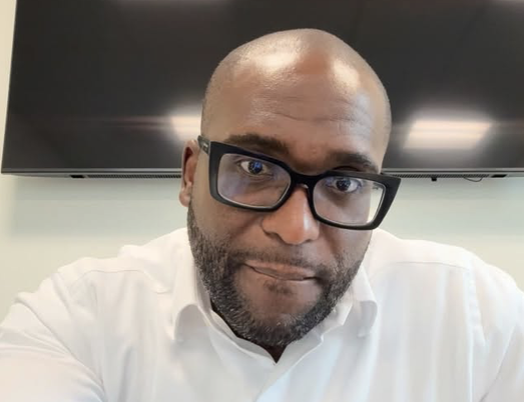 Republican and Democrat alike — has honored it as exactly what it is: a lawful, humanitarian protection for people who cannot safely return to a home country in crisis.
“Haiti today is in the grip of gang violence, political collapse and the lingering wreckage of natural disaster. The U.S. State Department itself warns Americans not to travel there,” Jones said. “Yet this administration insists it is safe enough to send hundreds of thousands of people back. That claim is not just wrong; the evidence shows it was never really about safety at all. Reporting has revealed that the Department of Homeland Security skipped legally required review procedures on the way to this decision, ignoring the very threats its own government agencies had documented. Coupled with a president who has described Haiti as a ‘filthy, dirty, disgusting’ country and accused Haitian immigrants of ‘poisoning the blood’ of America, the pattern is unmistakable: this is a policy built on racial animus toward Black immigrants, dressed up as a technical status change.
“The human cost of getting this wrong is almost impossible to overstate,” Jones said. “Many of these families have lived in the United States for decades. They followed every rule — registered, renewed on time, passed background checks, paid taxes — and now find themselves in limbo through no fault of their own.
“Nearly a third of Haitian TPS holders work in health care. They are the nurse’s aides who turn patients every two hours through the night, the home health workers who stay long after their shift ends, the direct-care staff propping up a workforce that is already stretched to its limit. Strip their status and deport them, and it isn’t just those families who suffer — it’s the elderly and disabled Americans who depend on that care, and the health systems that will struggle to replace it.”
Read related: Poll: In congressional race to replace Frederica Wilson, voters still shopping
Attention is now focused on Florida’s two U.S. senators, Rick Scott and Ashley Moody, whom local officials are urging to support Senate 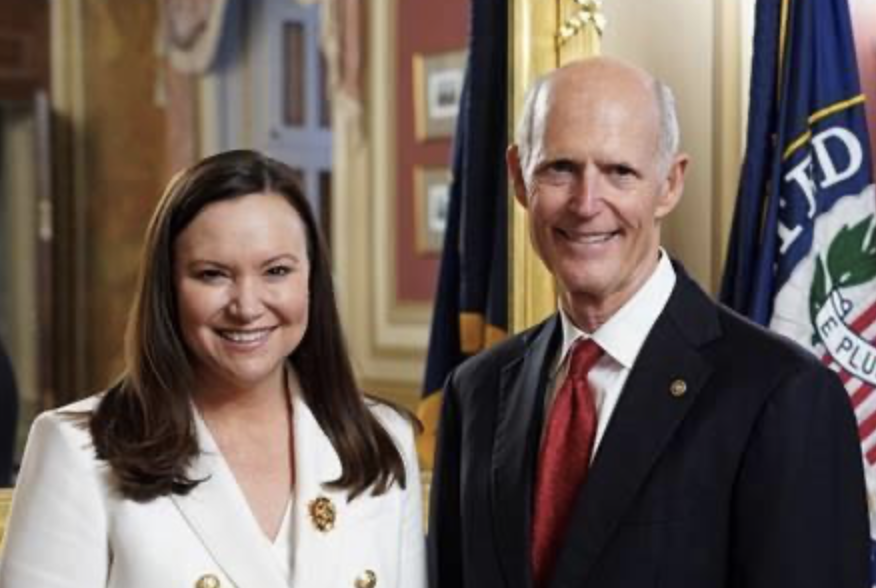 legislation that would extend Haiti’s TPS designation. As of late Wednesday, the measure had not advanced.
Whatever happens in Washington over the next several days, Miami-Dade may soon become a case study in how federal immigration policy intersects with local economics.
The debate is no longer just about legal status.
It’s about hospital staffing. It’s about hotel housekeeping and tourism rates. It’s about home health aides and their workload. It’s about the safety of restaurant kitchens. It’s about the experience of construction crews.
And whether South Florida has enough workers ready to replace the ones who may suddenly lose the legal authority to clock in.
Because immigration policy is debated in Washington. But its consequences are often felt first in places like Miami-Dade.
This kind of independent, government watchdog reporting is crucial to transparency and democracy. And more so every day. Help shine a light on the darker corners of our community with a contribution to Political Cortadito. Click here. Ladra thanks you for your support.

Friday looms — and Miami-Dade may see impact of ending TPS for Haitians added by Ladra on
View all posts by Ladra →
Ending TPS for Haitians is unjust and detrimental to the citizens of Miami Dade County. As a retired employee of Jackson Health System, I can attest to the incredible and vital contributions that they have made through the years. They are hardworking, decent and proud people and they are needed in our community. Wrong !!!
Go home ,
As far as fraud goes / White Collar crime we get a free pass due to our skin complexion , only reason Black Cubans were not beaten to a pulp by State Police and Miami Police when masses shut down highways , streets after Castro died is because the vast majority were White Cubans.
White is right in Florida but ESPECIALLY Miami .
Why do all these fanatical Cubans get to stay? Medical fraud, political extremism, domestic terrorism, overdevelopment, Section 8 freeloading Seniors, corrupt politicians the list is endless and substantial. Repeal whatever unlawful legislation that allowed this plague on our city and free Cuban so they can return home where they are always so concerned about anyway. Forcing those foreign politics into every municipality. Let them go home if that is their intention.
Since October 1, 2025, the US under Trump has accepted 6,668 refugees. Of those, 6,665 were white South Africans. Three—admitted last November—were from Afghanistan. No other refugees were admitted.