
Well, Coral Gables voters have spoken, and six of the eight charter amendments so ardently backed by Mayor Vince Lago — including one that will move the elections up from next year to this November — just sailed through.
Not a clean sweep, but a majority. Mission mostly accomplished.
Voters only rejected eliminating runoffs and giving commissioners the right to remove board appointees before their term ends, or what Ladra likes to call the Off With Their Heads If They Don’t Behave Rule. Voters must have seen it that way, too.
And now the real question begins: What exactly was approved?
Because while City Hall will call this modernization, efficiency and progress, critics are already whispering something else: consolidation. Power consolidation.
Read related: Coral Gables voters to decide their city’s future — from their mailboxes at home
A mail-in-only election with dense ballot language — save money and increase turnout — and a blanket “Vote Yes on All Eight” 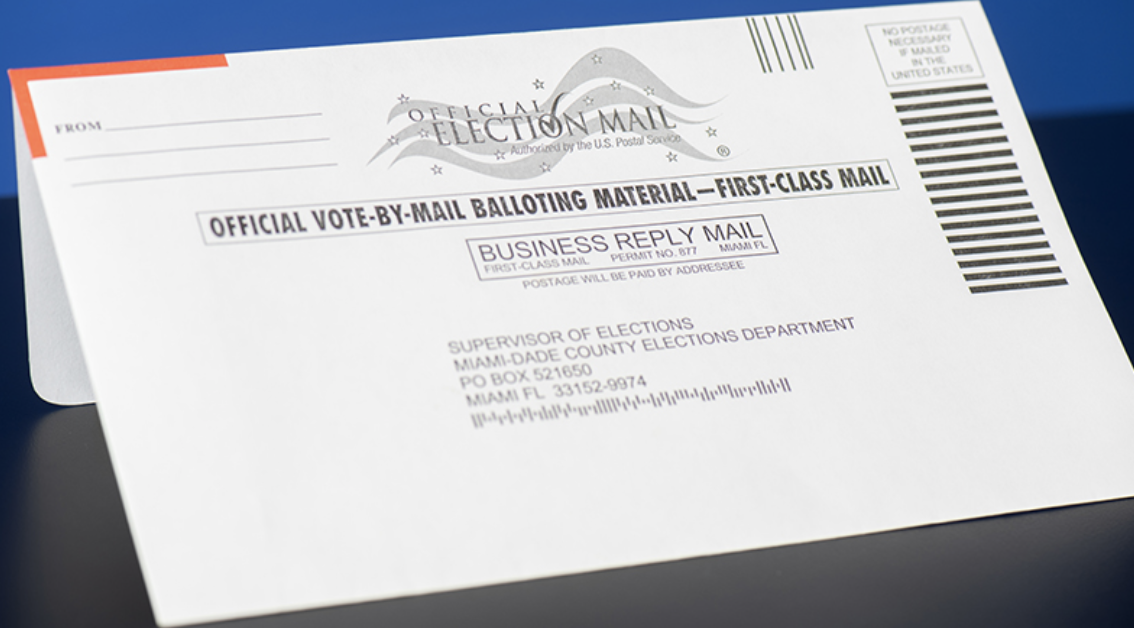 campaign run by Coral Gables First, the mayor’s own political action committee — and we won’t know how much he spent on this agenda until July — created the perfect conditions for momentum. And momentum wins elections when voters don’t have time to dissect the fine print.
For voters, this means the rules governing their city — elections, administration, and oversight — have just been rewritten in one fell swoop. Some changes may turn out harmless. Some may even be helpful. But others could quietly reshape how power flows inside City Hall for years to come.
Most significant is the change to city elections from April in odd numbered years, the norm for a century, to November in even numbered years, to coincide with county, state and national elections. It passed with 66% approval.
But the language was pretty convincing: “Shall the City Charter be amended to change the month and day when the City of Coral Gables holds its general elections from April of each odd year to the date of the national election in November of each even year commencing in 2026, resulting in an approximately four-month reduction of current elected official’s terms and adjustment of associated dates with the intention of increasing voter turnout and decreasing the cost of general elections?”
Increasing voter turnout? Decreasing cost? Sign me up! The nuances about giving established, monied candidates an advantage during a crowded election cycle and making it harder for grassroots candidates to get their message across are lost in the tilted ballot language.
The voters also made it impossible, by a 63% vote, to change that election calendar again without voter approval — which is kind of moot since the courts already decided the city can’t do that, like the mayor wanted to.
Read related: Coral Gables Mayor Vince Lago caves on election change; wants public vote
The rest of the amendments also went pretty much the same way, with more than 60%, practically two to one, on the questions that passed — with one notable exception. When asked if the city charter should be amended so that any change to electeds’ 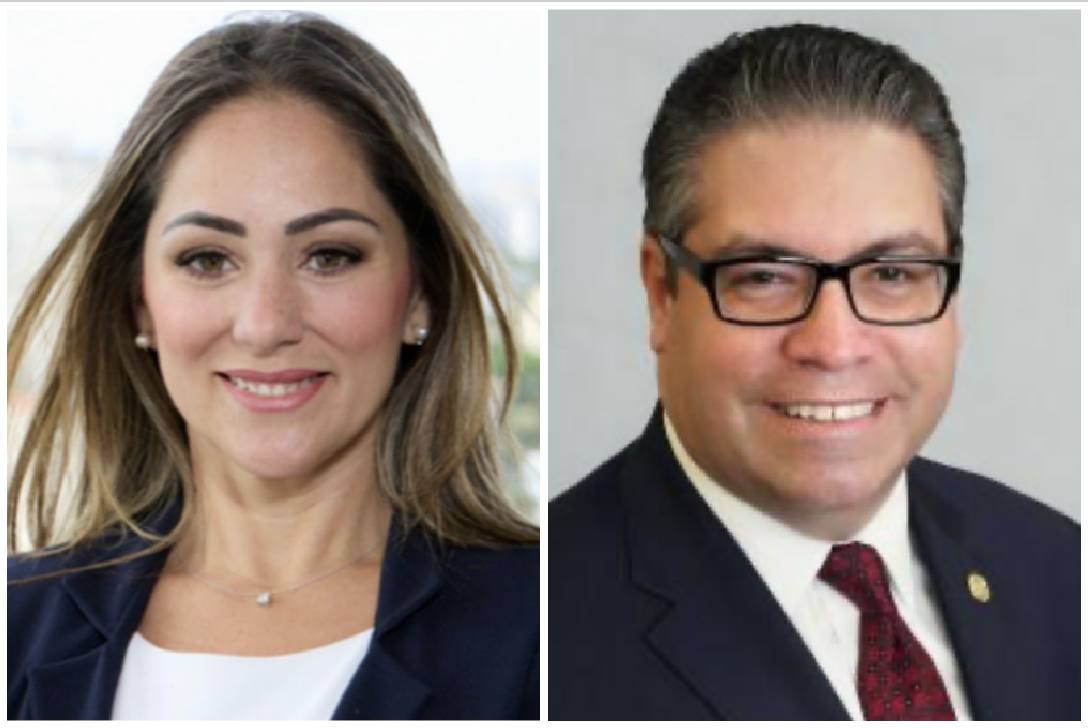 compensation beyond annual inflation adjustments also require the people’s vote, the people overwhelming said yes. By 78%.
This is a loud rebuke to Commissioners Melissa Castro and Ariel Fernandez — and former Commissioner Kirk Menendez — who had voted in 2023 to increase their salaries, which Mayor Lago can’t let go of. He’s going to milk this vote for what it’s worth. But maybe Castro and Fernandez deserve to be reminded every day about the biggest political mistake of their lives.
It’s not that they didn’t deserve go from $36,488 to $65,000 a year. It’s the way they did it seemed sneaky and self-serving.
You can bet lunch at Morton’s that this will still be part of the campaign material against Castro and Fernandez, who opposed some of the charter changes and now face a new reality: An election in six months rather than in April of next year.
And that’s where the political implications start to get interesting.
Because make no mistake — this is a political victory for Lago, who pushed aggressively for all eight amendments and treated the  referendum lke a confidence vote in his leadership. Winning three quarters of the ballot gives him leverage — not just policy leverage, but narrative leverage.
“The results are in, and our community has spoken,” L’Ego posted on Instagram. “By voting to move elections to November, approving an Inspector General’s Office, and requiring voter approval to change elected officials’ compensation, residents have sent a clear and unmistakable message — they reject positions taken by Commissioners Melissa Castro and Aerial Fernandez. These are all changes they opposed and fought tirelessly against.”
See? It wasn’t about reform at all.
Read related: Vince Lago sees ghosts, cries “election meddling” with ballots still rolling in
Ladra is pretty sure that he’s not going to talk about the two amendments he lost. One would have eliminated runoffs, which would make it possible for someone to win outright with a simple majority and not more than 50%. The other would have allowed him — any elected, but really Lago — to remove a board member from that position “prior to the expiration of their term, for any reason, in so far as that removal is not in conflict with state law?”
This was so blatantly about the ouster of Sue Kawelerski from the planning and zoning board last year — after she got into a public fight with Miami-Dade Commissioner Raquel Regalado over an RTZ overlay — and the potential ouster of Maria Cruz from the code 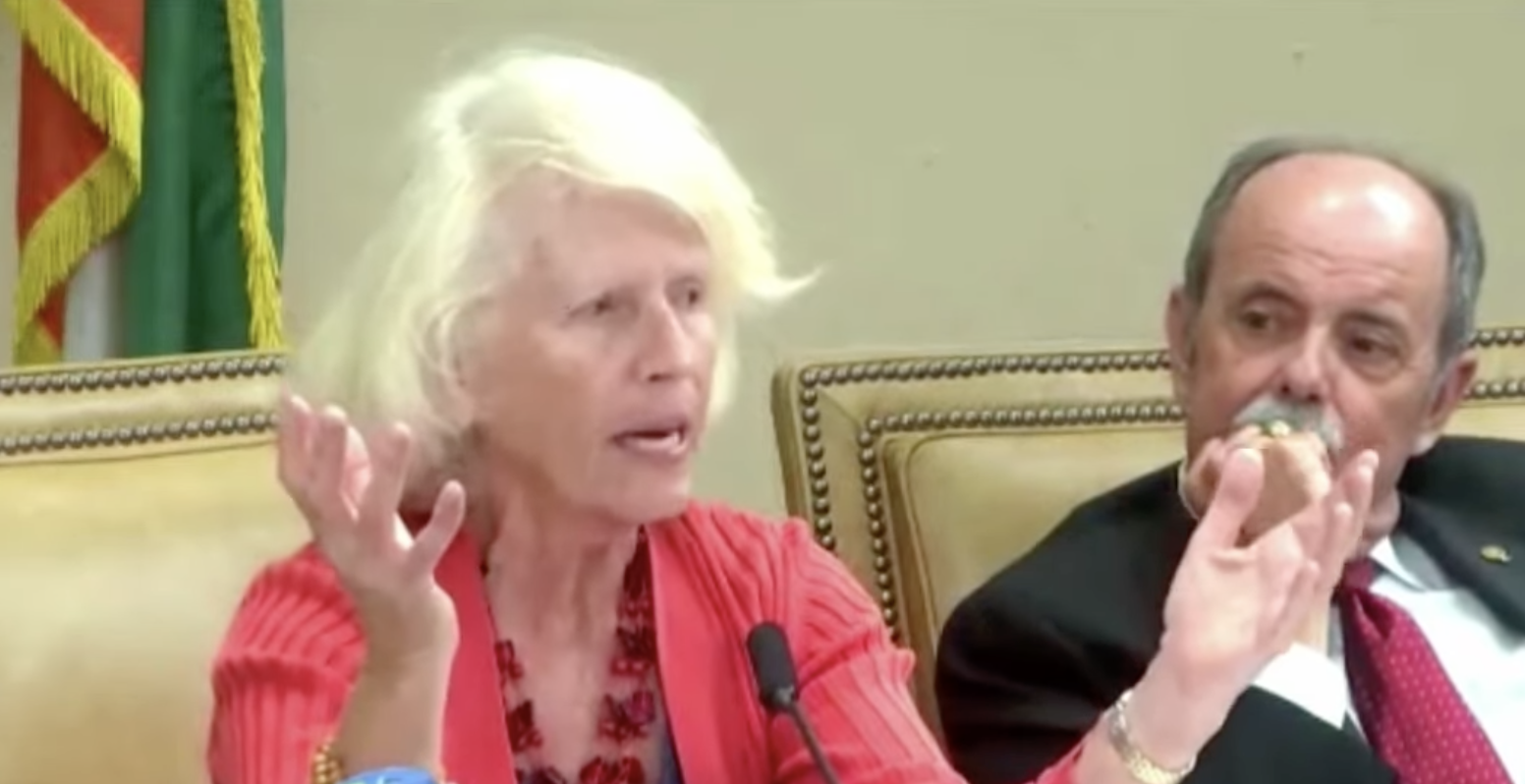 enforcement board. Both are activists who have opposed Lago and his agenda.
More than 60% of the voters also said nananina con eso. So while, technically, he won and, clearly, Lago has plenty to celebrate, he didn’t dominate. Not the way he wanted to. A clean sweep would have allowed him to claim overwhelming validation. Which, as we can all see from every commission meeting, he so desperately needs.
Voters did pass his safeguards for the general fund reserve and a required charter review process every ten years, by 63% and 66% of the vote, respectively. And they voted by 69% to authorize a contract with Miami-Dade County “or a private entity” to provide inspector general services “as needed to the city to investigate, audit and oversee municipal matters in order to identify efficiencies and investigate and prevent fraud, waste, mismanagement an abuse of power.”
But Ladra is not sure how independent “as needed” services will be. Who determines the need?
Read related: Vince Lago’s Coral Gables charter push runs on fumes, burns PAC money
Yep. Now comes the hard part voters don’t see on the ballot: implementation of these changes.
Every one of those six amendments that passed will have to be interpreted, applied and, yes, defended when the unintended consequences start to surface — and they always do. And here’s what comes next — beyond the campaign for the November elections that starts today whether anyone is ready or not: More discussion, more conflict, more political positioning.
Because this vote didn’t end the debate over how Coral Gables is governed. It sharpened it.
This kind of independent, government watchdog reporting is crucial to transparency and democracy. And more so every day. Help shine a light on the darker corners of our community with a contribution to Political Cortadito. Click here. Ladra thanks you for your support.

Six Coral Gables amendments pass, two fail in mail-in ballot only referendum added by Ladra on
View all posts by Ladra →
[…] Read related: Six Coral Gables amendments pass, two fail in mail-in ballot only referendum […]
Ladra you are such a condescending arrogant person. With the exact same awful traits you accuse Lago of having. The assumption that I did not research carefully the consequences of the proposed amendments to the Coral Gables charter amendments because I came to a different conclusion about their merits than you did is exactly the kind of toxic reasoning that makes politics so ugly. Your simple formulation which is so typical of almost everyone who is a strongly partisan is this: When the people vote in the direction I think they ought to they are wise. When they vote in a direction I do not agree with they are bamboozled. The shame of your blind arrogance is that you are performing an important public service with your website. In the absence of wide circulation well read daily newspapers local government and local politicos are less accountable and sadly this is the world we live in today. Here is my suggestion: do what good local papers used to do. Have a section of your web pages that attempts to report with as little bias as possible just the facts. Have a separate section for your editorial views. Try to keep them separate. This would make reading your reporting so much easier. and add to your websites overall credibility. It also would increase the probability of independent financial support from folks like me.
Dear Mike, I am sorry you see it that way. I do not, for one second, assume that you did not carefully research each and every one of the charter amendments. You are a very engaged member of the community.
I cannot say the same thing, however, for the other 8,625 people who voted.
And I do believe that there will be unintended consequences that will surprise those who supported moving the election date. Maybe even you.
Love, Ladra
I am an avid follower of, and very much appreciative of, the journalism performed by Ladra in this space. And I certainly am aware of and respect the civic-mindedness that Elvis has demonstrated over the years and how prepared he is each and every time he enters the public arena. (Is there anyone else anywhere in Miami-Dade County at any time ever that has so consistently come to a forum on behalf of the public with PowerPoints to back up their advocacy?) That said, there are two narrative threads that run through Mr. Cruz’s comment and Ms. de Valle’s quote in his comment that I am struggling with. First, that April elections skew more closely to the will of the residents and against the wishes of the developers. Therefore, April elections are inherently more representative of true civic will. But in this particular election, held in April (!), a strong majority voted in favor of shifting elections to November. Is there something about this April election outcome that makes it an outlier for April elections generally and less representative of the true civic will? If not, doesn’t that undermine the thesis that April elections are more “pure” and better inoculated against undue developer interest? It is true that this election only allowed for mail-in balloting, but why would that result in any diminished voting capacity or commitment of the traditional Coral Gables voter, especially one who is otherwise highly informed and highly motivated to vote? The second thematic objection I sense in the comment from Cruz and the embedded quote from Ladra is that moving the election to November will result in more financial support of favored candidates by developers. And I’m not sure that’s true. Developers – or any business interests – that have a financial interest in supporting a particular candidate will make that contribution regardless of the season in which an election is held. It seems to me that there is nothing magical about holding elections in Spring as opposed to Winter that would prevent any company – or individual for that matter – from writing checks where and when they strongly support a candidate. I am at a loss to understand this argument – that developers will suddenly take a hands off approach to elections if they are held in April or, conversely, will be more likely to contribute to a candidate running in November. I don’t see the logic in that, nor do I think that is what actually happens in the real world. If a developer supports a candidate, there is no “low season” for writing checks. That’s an iron law of democracy in this country (i.e., money follows affinity) . . . which, by the way, runs in both directions. Voters who support neighborhood-focused candidates write checks regardless of the time of year. Ladra, your deep, careful, tireless forensic research over many years into campaign contributions has been spot on and illuminating. It’s always a public service when someone rigorously dives into the numbers. Not to put work on your plate, but I think your readers would/could appreciate an analysis of developer/business interest giving frequency/velocity during Spring campaigns vs. Winter campaigns over a representative sample period (say, 10 years) in Miami-Dade County and in its key municipalities where there is a heavy and steady flow of contributions (e.g., the County, Coral Gables, Doral, Hialeah, Miami, Miami Beach, North Miami, North Miami Beach). That would inform the debate with actual numbers and move the dialogue from a theoretical parade of horribles to firmer ground based on harder-to-refute facts. Let the chips fall where they may.
Dear Michael, thanks for your thoughtful feedback. And you are right about most of it. Especially how developers can write a check any month of the year.
But the difference is that in November, grassroots and candidates who are not supported by developer money have a harder time getting their message across to voters. Because of the increased number of state and national and county races, the prices for materials and advertising (especially air time) goes up. There is a smaller pool of people (volunteers or paid) to knock on doors and make phone calls. News outlets will be very busy with the gubernatorial or presidential or senate races and little time will be spent covering municipal races — unless there’s a scandal.
The greater turnout is still a question mark because I think that a lot of people who turn out to vote for president know absolutely nothing about the city government. And do we really want people who are absolutely unaware of what’s happening at the local level voting because of someone’s name or because they saw their picture on TV?
Also, this election is different because it was mail-in only. A true test would have been to have the amendments on the ballot in a regularly scheduled normal election next April. But the mayor is in a hurry to get his opponents/critics off the dais. And the only real get-out-the-vote campaign was through the mayor’s PAC. I’m curious to see what was spent in total, but that won’t be available until July. It used to be reported monthly. You can thank you state legislators for that.
All that said, I am not against moving any municipal election to November. It does lower costs and is more efficient. I do believe in bringing the question to voters. But I don’t think the way this was done was right. And I am suspicious of the mayor and his agenda. If he is pushing something, it raises my eyebrow. Not to the level of his eyebrows, but still.
Love, Ladra
“The nuances about giving established, monied candidates an advantage during a crowded election cycle and making it harder for grassroots candidates to get their message across are lost in the tilted ballot language.”
So true, Ladra. Changing the vote to November is all about helping the candidates who receive money from developers. The effort to change the election date didn’t originate with the people, it originated with developer-friendly polititians.