
Mercy Hospital could have also been on the table
Miami Commissioner Ralph Rosado walked into last week’s Miami City Commission meeting with a bold solution to the city’s crushing housing crisis: Unlock hundreds of acres of underused land owned by churches, schools, nonprofits, and government institutions — and allow affordable housing to be built by right, without a separate land use vote.
No rezoning. No drawn-out public hearings. No neighborhood appeals.
Just faster housing in the least affordable city in America by tapping into land owned by churches, schools, nonprofits, and government institutions. Require affordability. Speed up production. Problem solved.
Read related: Miami Mayor Eileen Higgins names James Reyes warden, er, city manager
On paper, it sounded like policy courage. Rosado’s proposal would have opened more than 660 parcels — nearly 1,800 acres — to mixed-use and residential development, as long as at least half the units were affordable. It mirrored a new state law behind the “Yes In God’s Backyard” movement already embraced around the country and, in Florida, St. Petersburg.
In practice, it sounded like skipping the very public process Miamians consider a birthright.
And in the back of Ladra’s mind, it also sounded like an end-run around the potential development of the Mercy Hospital 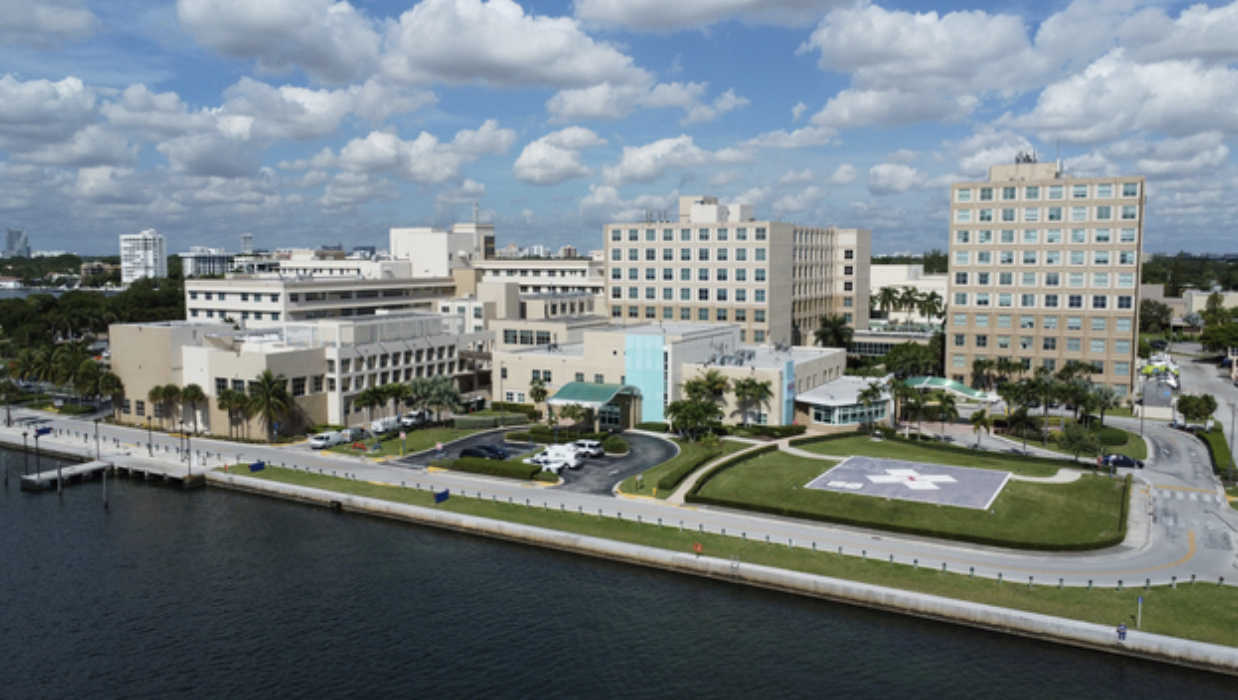 property, a 72-acre waterfront campus on South Bayshore Drive sold by the Archdiocese of Miami to HCA Healthcare for $114.5 million in 2011 — also home to Immacolata-La Salle High School — but still civil-zoned as “community facilities.”
If that sounds familiar, it should. In the mid-2000s, a proposal to drop three luxury high-rise towers on that very property detonated into one of Coconut Grove’s most intense neighborhood battles. Traffic, scale, infrastructure — residents fought it and won.
Rosado’s new ordinance would have quietly rewritten that battlefield.
Under the proposal, Mercy’s land — because it is controlled by a religious institution and used for a hospital and school — could qualify for residential development by right. No rezoning. No policy vote. No neighborhood veto. Just a density default tied to adjacent zoning — potentially 36 units per acre next to single-family streets.
Read related: Miami commissioners Damian Pardo and Ralph Rosado have private lunch
Rosado came ready to sell it, Power Point presentation and all.
But before he could click to slide one, Commission Chair Christine King cut to the chase. “It will not move me,” she said. “I am a firm no on this.”
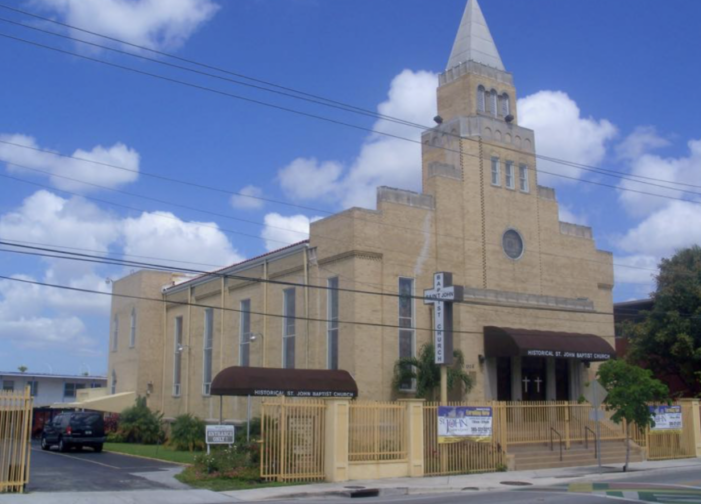
King’s objection wasn’t about the eradication of public process or the potential of a boondoggle in Coconut Grove. It was about protecting churches from slick developers. The chairwoman’s district has the most religious institutions of any district and worked with the Overtown CRA to save the Historic St. John Institutional Missionary Baptist Church from foreclosure in 2023.
“These churches — historic churches — all they have is their land,” King warned, adding that it was telling that not a single pastor showed up to back the plan. Not one religious leader asked for this flexibility. No grassroots group pushed demanding relief.
“The potential unintended consequences of moving this as of right can be disastrous for our churches, particularly our historic 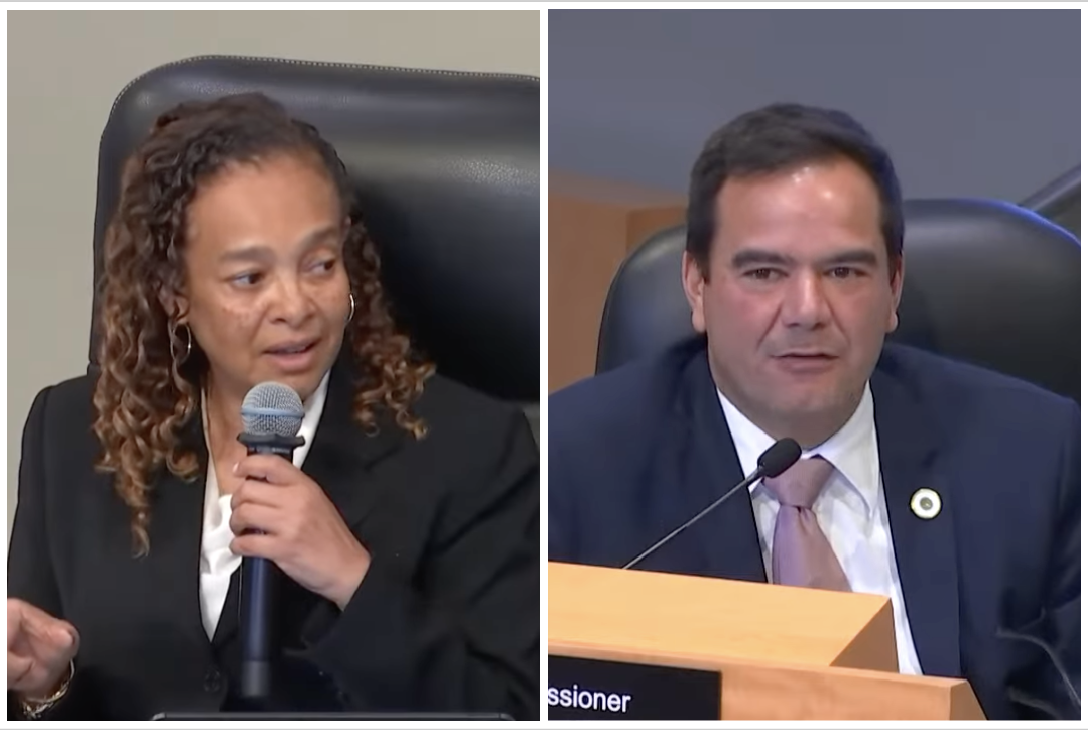 churches. They do not have the expertise to negotiate deals such as this.”
Rosado tried to appeal to the commission by appealing to their desire for more housing options. “We have such a massive, massive demand for housing affordability, I would be negligent if I didn’t put this forward, given that this is land that somebody doesn’t have to buy from somebody else,” he said.
The dais was also unconvinced. Commissioner Miguel Gabela tried to Rosado a bone with a motion to defer. But not this time. The commission skipped its usual slow death by postponement and went straight for the rare public execution: a 4–1 vote to reject Rosado’s proposal outright.
In Miami politics, that’s not just a loss. That’s a message.
Read related: Damian Pardo passes double-density double-down for Miami developers
The irony is that Rosado’s instinct wasn’t wrong. The city desperately needs affordable housing. Underused land exists. State law even opened the door. But by tying his plan to bypassing public review, Rosado accidentally stepped on the third rail of Miami governance.
Efficiency may solve housing. But process keeps the peace.
Rosado called it a wasted opportunity and says he’ll be back with a revised proposal. Which may only mean that somebody already has plans for the Mercy Hospital site.
But the commissioner may want to bring two things next time: pastors in the audience — and a plan that doesn’t tell Miamians they don’t get a say.
Because in this town, you can build almost anything. Just don’t try to build it without a hearing where people will be ignored anyway.
This kind of independent, government watchdog reporting is crucial to transparency and democracy. And more so every day. Help shine a light on the darker corners of our community with a contribution to Political Cortadito. Click here. Ladra thanks you for your support.

Miami Commission slaps down Ralph Rosado’s church land for housing idea added by Ladra on
View all posts by Ladra →
[…] Read related: Miami Commission slaps down Ralph Rosado’s church land for housing idea […]
Thank the Related Group for creating Live Local. Go check on how many boards they sit in on governments around the State. Anyone seen Wynwood lately or what’s left of it? Check their website and the clown fronting; helping us small businesses but only focused on development and thank them for ruining or city.
Wynwood miami.com for laughs read the minutes and how they had an employee steal 200k from them and not mention it once anywhere. It’s a month long investigation for anyone trying to bring the system back to the people that pay.
As our businesses struggle here they keep replacing us with empty buildings under the guise of affordability.
Anyone wonder why small businesses aren’t there? Nobody cares they all contributed to Higgins.
All the politicians, from Tallahassee on down, are selling out the entire state to developers. The Live Local Act, now this YIGBY thing, because they’re so “concerned” about providing affordable housing. You can hear the politicians cashing in for facilitating developers’ paving over of Florida. This state is a mess.
Miami only has 140 parks, maybe 138 now that City officials gave away Melreese Park. Developers want free land. Developers pay / bribe commissioners to get access to the free / cheap land… Residents need to be vigilant. Parks are under attack. Rosado is working for developers. King too. Pardo too… Higgins…
What is Commissioner Rosado SMOKING ?
Commissioner Rosado wants to “allow affordable housing to be built by right, without a separate land use vote.”
Aren’t you getting sick and tired of hearing “housing crisis” and “affordable housing” as the mantra both commissioners and developers use to justify high-rise development in all of our neighborhoods–rich, poor and in-between? I am. Especially when I know that DPZ, the renowned architecture/town planning firm that created Miami 21 two dozen years ago purposely designed it to accommodate Miami’s future growth.
Besides its being a flexible form-based comprehensive planning ordinance, DPZ envisioned it being reviewed and amended regularly, even every other year, with both the City’s and each neighborhood’s evolving needs analyzed before the resulting recommended zoning amendments were presented first for public hearings and then to the City Commission for adoption.
That has never happened, although there was a “Miami 21 Review Commission” a couple of years ago that made some recommendations most of which were immediately forgotten.
It’s more than apparent that the City Commission, individually and as a body, likes to decide what gets built and what doesn’t on a case-by-case basis that often comes close to illegal “spot zoning.” It is also apparent that the influence of big developers and their lobbyists– with their demand for high-rise development everywhere–outweighs all else.
Ralph, should have been the first one to never take this up, considering the good Lord blessed that grifter with a commission seat. In any other real city in America he would be picking up trash for a career or selling flowers. Show me a boy that never played sports and I will show you a person that couldn’t lead a preschool of children to the lunchroom. The fakest and softest looking human being on the commission. Pardo looks like Patton next to fluffy.
This would have opened the floodgates of hell, sheesh count the churches in Coconutgrove.
Go look at the website of the developers trying to pass this.
Maybe they should go erase church and enter “Synagogue” i bet you won’t dare do that for the hands that feed that little boy in a old man soft body.
Churches are a huge problem in many Miami neighborhoods. They own too much land that is only used 3-5 hours a week. AND, churches do not pay taxes. But the biggest problem with Rosado’s legislation is in would make it easier for corrupt Miami elected officials to sell and kill Miami’s 140 parks. Elected officials already killed Melreese Park giving 100+ acres to a well connected Cuban. (Watch the Cuban put Art Noriega on his formal payroll…). But residents have lost many parks over the years…