

For 100 years, the elections in Coral Gables have been in April. It is so written in the city’s charter, which is being celebrated this year for the City Beautiful’s centennial. But that history was erased this month.
The new city commission majority, formed in last month’s elections, voted last week to change the biannual election date from April to November on even years, to coincide with state and national elections. The change, which has been a priority of Mayor Vince Lago‘s for the last two years, is made by ordinance — the first reading was at a special commission meeting May 6.
The move also shortens all electeds’ terms by four months, and an argument could be made about disenfrachising voters, who are apparently not going to get an opportunity to weigh in on this.
At the first reading, the deputy city attorney said there would be a public vote, anyway, “for affirmation,” at a special election to be determined at a later date. There is a whereas clause in the ordinance that calls for a future vote on the matter:
“WHEREAS, should this Ordinance be adopted by the City Commission, the City also wishes to send a question to the electors of the City for affirmation of this change during a special election to be held at a later date as determined by the City Commission;”
So, why wasn’t the motion to take it to the voters in the first place?
Read related: Coral Gables electeds to be sworn in, will push for November elections
And what happens if the voters decide at some future election, not to affirm any change of election date to November?
Ladra has asked these questions multiple times of City Attorney Cristina Suarez, Assistant City Attorney Stephanie Throckmorton and city spokeswoman Martha Pantin. The week after the special commission meeting, Suarez responded via email to say that the city has the right to make the change.
“The City Commission is authorized, under state law, to change the date of the election by ordinance, without a vote of the electors. The timing and language of a ballot question regarding the election date would have to be determined by the City Commission,” Suarez wrote on May 14.
But that really didn’t answer the questions, did it? So, Ladra asked again. And Pantin came back with some crazy story about the question in the whereas clause being about future elections.
“The question being put to voters is about future changes to elections. They are not being asked about changing the election. They are being asked if in the future should a City Commission want to move the election date, would they have to put the question to the voters ,” Pantin wrote in an email Tuesday. “If they vote yes, future Commissions will need to send the question to the voters. If they vote no, future Commissions could change by ordinance.”
When was that discussed? Because it is not what it says in the whereas clause. It is “for affirmation of this change.” This change.
If this is true, it seems more like an attempt to make it impossible for a future commission to change elections back to April.
And, also, Suarez said at the May 20 commission meeting that the question about putting future changes to voters was on another agenda item, not this one.
But further attempts to get clarification from the city attorney or any city official were completely unsuccessful. “Elections are  changed to November, and this applies to future changes,” Pantin wrote in her last email Thursday. “Regarding what if scenarios, I am not going to speculate as to what the city commission might do should that occur.”
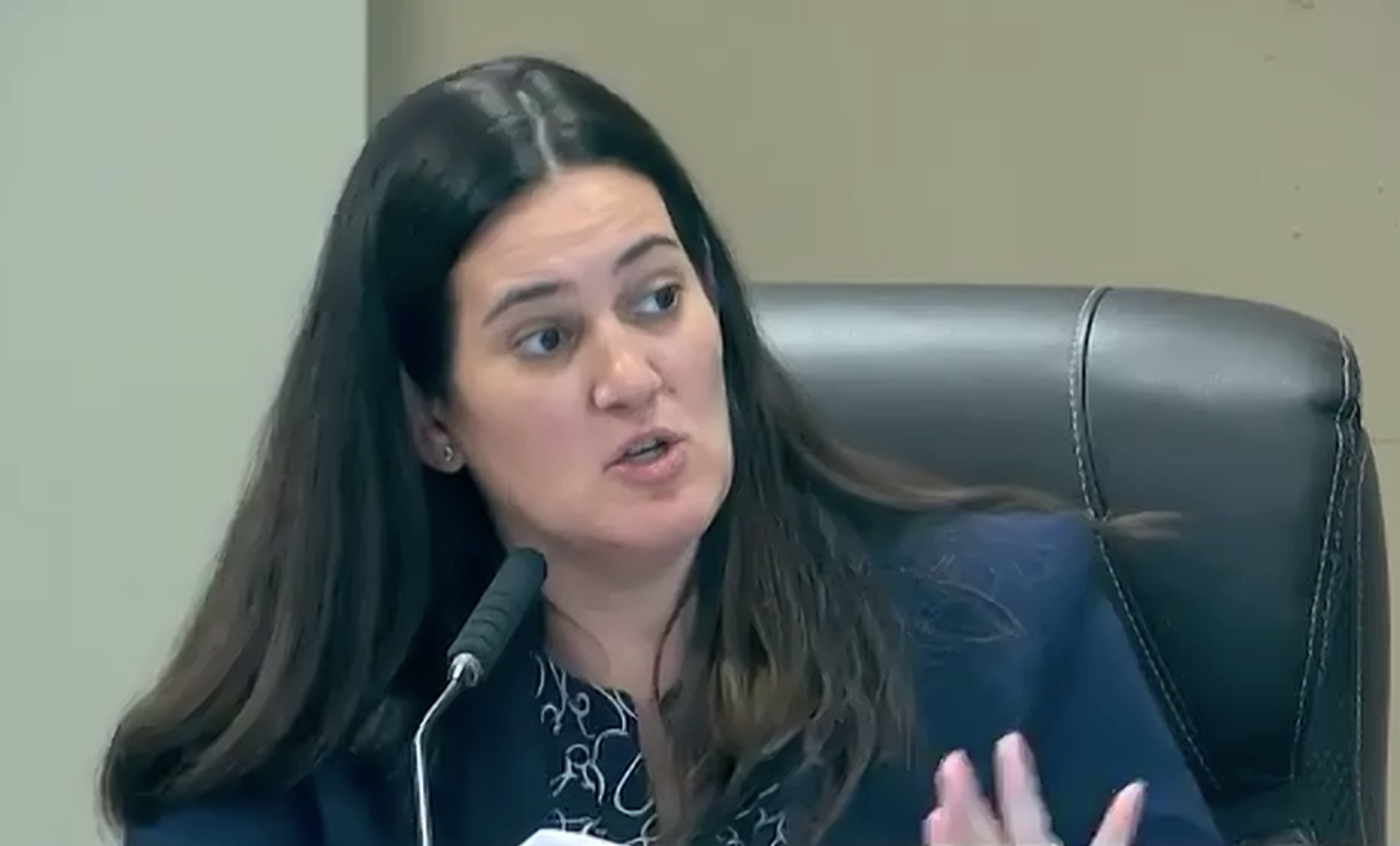
Commissioners Melissa Castro and Ariel Fernandez, who said it should go to voters, voted against it.
“The people who have reached out to me, and I have the emails, are the people asking me, do not change our elections, leave our election in April,” Castro said. “This is really not about saving 200K this is really about drowning the voices of the people. this is about only letting well-funded candidates run city government.
“That’s very dishonest.”
Read related: Post-election Vince Lago revenge tour in Coral Gables = political retaliation
Activist Maria Cruz, who had led a petition drive to recall Lago 2024, questioned why the mayor and his allies bothered to petition for the change via referendum last year — a petition that failed miserably when more than 70% of the signatures were deemed invalid (more on that later) — if they could just do it at a commission meeting. According to a status report from the Miami-Dade Elections Department, the Lago group submitted 4,983 petitions on changing the election from April to November. Of those, 1,461 were valid and 3,522 were not valid.
“Here we are, trying to do what the residents, what the taxpayers, did not choose do to,” Cruz said at the first reading. “It is what I, the emperor wants, not necessarily what the people want.”
Claudia Miro, who lost the commission race in Group 3 in the first round and then endorsed Commissioner Richard Lara, spoke several times during the meeting — always in support of Lago’s arguments — and said that this was probably going to be decided by Tallahassee, anyway. It didn’t happen this year, but it will eventually, she said.
“I don’t think this is an issue we should continue to discuss and fight over at the city level because it is being addressed at the state level,” Miro said. “There are good arguments to be made on both sides of this issue, but right now there is a movement in Tallahassee. This is an area where the state can come and tell us how they want things done.”
Vice Mayor Rhonda Anderson said that this was a direction the district’s state representative also wanted to go in, aside from being one of her platform issues during this last campaign. “I think the voters have spoken by choosing the individuals that they have reelected and elected in Commissoner Lara into his seat, as this is a consistent issue among all three of us,” said Anderson, who has advocated for consensus among the members at the Florida League of Cities.
“Burt not all cities are the same. This is a large city,” Anderson said. “We’re not a snowbird city anymore.”
Ladra didn’t know that the Gables was ever a “snowbird city,” per se. And why was it so hard then to get the required signatures to put the question on the ballot.

Newly-elected Commissioner Lara thanked Lago for “giving me the privilege to speak,” calling it an “auspicious moment,” because it was his first time speaking at a commission meeting. Well, a regular commission meting, since he spoke at the special revenge commission meeting called May 6 by Mayor Lago. What a lama fondillo. It is not a privilege for Lago to give him.
Lara said voters spoke loudly in the April elections and said that was why people voted for him. “It was not because they wanted things the same,” he said.
Read related: Vince Lago scores with Richard Lara’s Coral Gables commission runoff win
“This was a platform point for me, one of the tenets on which I ran,” Lara said. “But the residents also made perfectly clear back to me that they wanted to have greater voice, greater participation.”
It sounds funny to hear them say that the voters spoke loud and clear and, at the same time, that it wasn’t a good majority of the voters.
The benefits of moving the election to November in even years is that it will save the city around $200,000 and encourage greater participation. Turnout is much higher in the Gables for general and state elections than they are for city elections. But a November election is not without its pitfalls.

It will be harder for non-establishment, non-incumbent (read: poorly funded) candidates to compete. It will be harder to get a message across in the barrage of ads, mailers, texts and phone calls about state, national and county candidates, as well as county ballot questions and state constitutional amendments. There will be fatigue. Name recognition will be more important and influential than ever. Deep pockets or sugar daddy special interest money will not just be an advantage, but a necessity.
Yes, there will be more votes. But how many of those voters will be highly informed on city issues and how many of those will be highly partisan voters with no knowledge of the city’s workings, projects or challenges? Even of those voters willing to go all the way down the ballot to the Gables races and/or questions, how many will be just checking off whatever name they heard the most or saw the most signs for? Or whoever’s name comes first?
This is really what Lago wants. After the election two years ago hit him in the, um, fondillo, with Castro and Fernandez beating the two candidates that he heavily backed and helped finance, he doesn’t want that to happen again. He wants the moneyed candidates to keep ruling. It’s also what his moneyed special interest backers want.
If you like what you read in Political Cortadito and want to help keep the cafe brewing, please consider making a contribution to support the independent government watchdog journalism on these pages. Thank you so much!

Coral Gables changes city elections to November, cuts terms by 5 months added by Ladra on
View all posts by Ladra →
Can you please provide the specific state law that allows this change without voter approval? The November elections are stacked with matters that are not specific to the City. Voters will not be well informed. This is not about saving taxpayers. What is your agenda ?
[…] May — at a special meeting called by Lago right after the runoff election won by Lara — the Gables commission voted 3–2 to end nearly 100 years of April elections and align city races with state and federal ones, […]
[…] and lower costs, since the city’s elections would then coincide with national races. It also slashed five months off current elected officials’ […]
[…] Read related: Coral Gables changes city elections to November, cuts terms by 5 months […]
[…] Read related: Coral Gables changes city elections to November, cuts terms by 5 months […]
[…] Javier Fernandez, who in May voted against rescheduling the city’s elections — a change that shortened his and Castro’s terms by five […]
[…] Read related: Coral Gables changes city elections to November, cuts terms by 5 months […]
[…] Read related: Coral Gables changes city elections to November, cuts terms by 5 months […]
[…] and lower costs, since the city’s elections would then coincide with national races. It also slashed five months off current elected officials’ […]
[…] Read related: Coral Gables changes city elections to November, cuts terms by 5 months […]
” With elections in November, the special group activists will need to work harder. Instead of winning an argument with friends and family voting for them, these activists will needs to convince the Coral Gables residents. We, the residents, will listen, decide and vote. This is the way it should have always been.”
Regardless of party one subscribes to or Independent , etc I find Coral Gables as a whole the people are awake . Certainly money in Coral Gables yet not the come mierda mentality you see here in Doral of mid 30s and older yet politically apathetic and what sneakers , etc are in vogue being the main concern .
” My god, Coral Gables sounds as bad as Miami.”
Lol , I’m in Doral and recently a park which cost Doral tax payers a fortune was finished , there is a gym , water park , etc but you have to pay to use them so in other words what the Mayor is tooting her horn like big win for us is another farce as AGAIN we paid for private businesses .
My problem is not that we have to pay to use these things but that we paid for all of it equipment , etc with an increase in property tax and again private businesses .
Last person out please turn off the lights!
With elections in November, the special group activists will need to work harder. Instead of winning an argument with friends and family voting for them, these activists will needs to convince the Coral Gables residents. We, the residents, will listen, decide and vote. This is the way it should have always been.
My god, Coral Gables sounds as bad as Miami.
You are beating a dead horse. As a resident of Coral Gables for almost 40 years, I’ve always wanted the elections to take place in November. I am glad it’s finally happening. It will save the city money plus more residents will participate. Isn’t that what democracy is about?
Nostalgia for the “good old days” of 100 years ago…glossing over that In 1925, several major social ills in the US. racism and white supremacy with Jim Crow laws enforcing racial segregation and discrimination against Black Americans. Although the 1920s are seen as prosperity (aka “Roaring Twenties”), economic inequality was severe. The 18th Amendment Prohibition led to organized crime with bootlegging. Lots of anti-Immigrant sentiment and xenophobia (so similar to 2025), with the Immigration Act of 1924, severely restricting immigration from southern and eastern Europe and banning most Asians.
Anti-Catholic and anti-Jewish sentiments were widespread in parts of the U.S. and Europe.
Three candidates ran and won despite your vociferous opposition and that of the noted “activist,” Maria Cruz. Each of the three very clearly indicated that they’d move to decrease compensation and to synchronize municipal elections with state and national ones. We voters knew these positions.
Procedural quibbles aside, there’s nothing in this article that argues against the commission reflecting the will of the voters, not the “I have the emails” protestations of Commissioner Castro nor the typically spicy yet irrelevant ramblings of Ms. Cruz.
Lago is such a crook. What office does he want next? And did his lobbyist brother show up? Or was he hiding in a back office? Because Miami.
As a political consultant, I can understand why they change. If they see extremely low voter turnout, aligning with the county and state election cycle naturally increases the numbers. Sadly, some voters only turn out for big elections or issues, even though local elections affect their day-to-day lives. Miami-Dade has a lot of shady politics, but I think this is on the up and up (for a change).