
New poll has David Jolly leading Byron Donalds
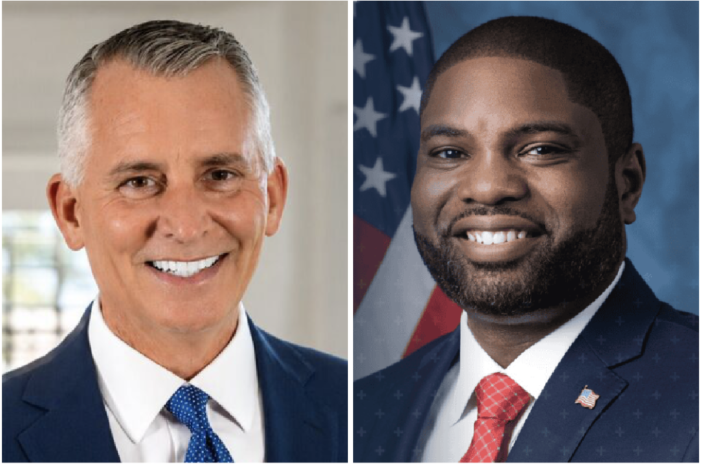
Well, look at that. A new poll in the Florida governor’s race has Democrat David Jolly leading Republican Byron Donalds, 47% to 44%.
Yes, leading.
In Florida.
The state where Democrats have not elected a governor since Lawton Chiles in 1994 and have not won a statewide race of any kind since 2018.
Somebody check on the Florida Democratic Party. They may have fainted from the excitement.
The Change Research survey of 1,107 likely Florida voters was conducted Sept. 7 through Sept. 9. It appears to be the first publicly released poll  conducted entirely after the Aug. 18 primary, when Donalds and Jolly officially became their parties’ nominees.
It is also the first poll taken after Donalds chose Miami-Dade State Sen. Bryan Ávila as his running mate.
That makes the three-point Jolly advantage newsworthy.
But before Democrats start measuring the drapes at the Governor’s Mansion, there is an important disclaimer: Change Research is a Democratic-aligned polling firm that regularly works for progressive campaigns and organizations.
This is a real poll. But it is not the political equivalent of Moses bringing the results down from Mount Sinai. And the firm did not exactly hide its interpretation, promoting the results under the headline “An Emerging Florida Blue Wave.”
Easy, chicos. One poll is a ripple. Maybe a splash. A blue wave requires several more surveys—and preferably some from pollsters who do not already want Democrats to win.
Still, this is not the first poll suggesting Jolly might have a race.
A Hart Research survey conducted for the Democratic Governors Association in August also had Jolly ahead, 46% to 45%. That was another Democratic-sponsored poll and another statistical tie, but it pointed in the same direction.
Meanwhile, Republican and independent surveys have generally shown Donalds ahead.
 A University of North Florida poll conducted in July had Donalds leading 46% to 41%. A Targoz Market Research survey for the conservative James Madison Institute put Donalds ahead 45% to 38%.
Earlier polling by the Republican-aligned Florida Chamber of Commerce had Donalds up eight points. Another Change Research poll had Jolly ahead by four.
See the pattern? Republican-sponsored polls say the Republican is winning. Democratic-sponsored polls say the Democrat is winning.
No me digas.
Polling averages — which combine all these competing snapshots — generally place Donalds ahead by somewhere between one and five percentage points, depending on which surveys are included and how much weight each is given.
So the most honest assessment is that Donalds remains the favorite, but this may be much closer than Republicans expected.
That alone is remarkable.
Donalds should have every structural advantage available to a Florida Republican. The Naples-area congressman has President Donald Trump’s 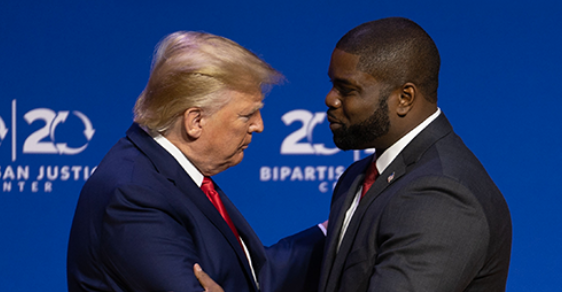 endorsement, Gov. Ron DeSantis’ post-primary support — which, like, did he have a choice? — and the full machinery of the Republican Party of Florida. He also has an enormous financial advantage.
Before the primary, Donalds had reportedly raised more than $100 million through his campaign and political committee. Jolly had raised roughly one-tenth of that.
That is not a fundraising gap. That is a different sport.
Donalds can spend millions introducing — or rather, defining — Jolly to voters before the Democratic nominee has enough money to respond.
And Jolly gives him plenty of material.
The Democratic nominee is a former Republican congressman who left the GOP, became an independent and then joined the Democratic Party. Republicans will call him an opportunist, a turncoat and probably several things that will not fit comfortably on a family-friendly mailer.
Jolly argues that his political evolution makes him independent-minded and uniquely able to attract moderate Republicans and no-party-affiliation voters.
That is not just campaign spin. It may be his only plausible path to victory.
One conservative-sponsored poll found Jolly leading Donalds among voters with no party affiliation, 36% to 19%, although more than 40% of those voters remained undecided.
That is the number both campaigns should be obsessing over. The undecideds.
Jolly does not have to turn Florida blue. He has to hold Democrats, win independents decisively and peel away enough Republicans who may like Florida’s conservative direction but are tired of the Trump-DeSantis permanent culture war.
No small assignment.
Read related: David Jolly and Gwen Graham launch Florida ‘rescue mission’ among friends
He is running with former Democratic Congresswoman Gwen Graham, daughter of the late governor and U.S. senator Bob Graham, which 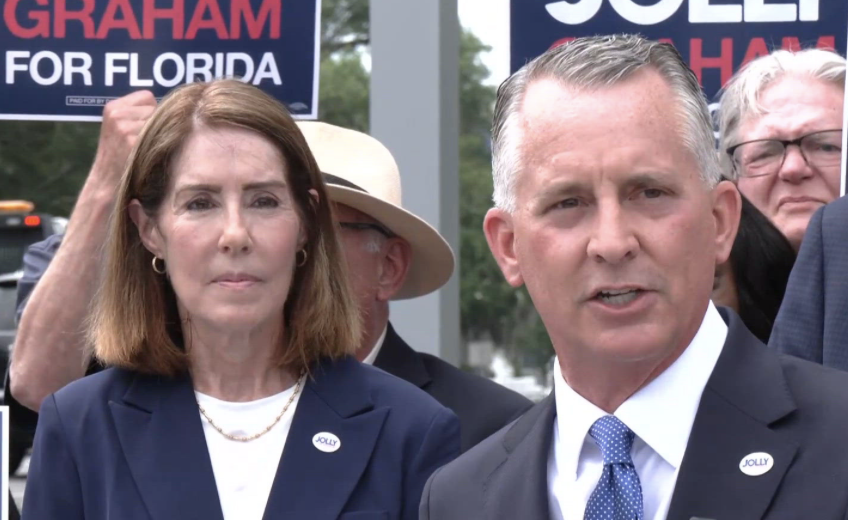 gives him some credibility with the blue voters who don’t like his past. It is a ticket built to look moderate, familiar and reassuring — not exactly the socialist invasion Donalds will undoubtedly describe in television ads.
Donalds, meanwhile, chose Ávila, a Hialeah-born Cuban-American legislator, presumably to strengthen the ticket in Miami-Dade and reinforce Republican gains among Hispanic voters.
But does Ávila actually bring votes Donalds did not already have?
That remains one of the most interesting local questions in the race.
Read related: Byron Donalds picks Bryan Ávila for LG instead of Ana Maria Rodriguez
Ávila is well known inside the Tallahassee-Miami political bubble, but statewide voters are not exactly stopping him at Publix for selfies. His value may be less about widespread name recognition and more about donors, political relationships and Spanish-language campaigning in South Florida.
The next useful poll should show geographic and demographic breakdowns — especially Miami-Dade, Hispanic voters and independents. A 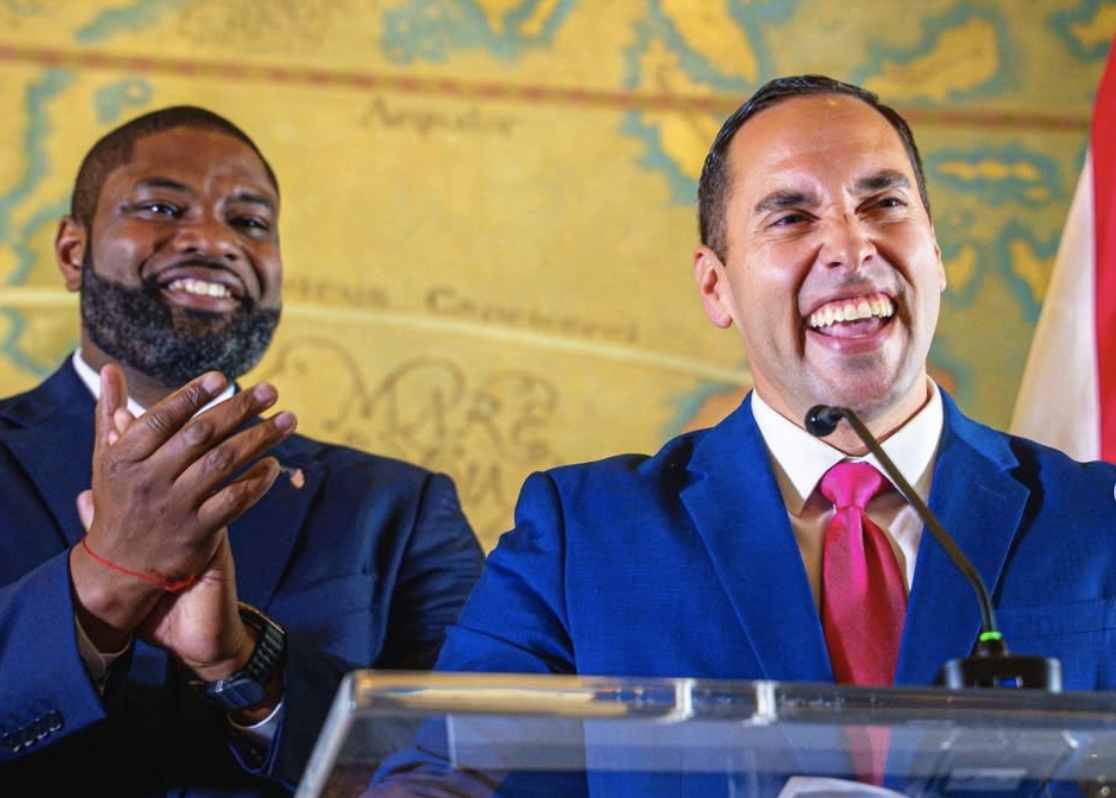 statewide topline alone will not tell us whether Ávila is earning his spot on the ticket or merely decorating it.
The election is also shaping up around issues neither party can easily escape: property insurance, housing costs, utility bills, public schools, property taxes and the overall cost of living.
Jolly’s best argument is obvious: Republicans have controlled Florida government for decades, so they cannot blame Democrats for every homeowner staring in horror at an insurance renewal.
Donalds’ best argument may be even easier: Florida voters have repeatedly rejected Democrats, and Jolly had to change political parties to become their nominee.
The political handicappers still favor Donalds, but not as confidently as they once did.
The Cook Political Report and Sabato’s Crystal Ball have both shifted the race into “Likely Republican” territory rather than treating it as safely Republican. Inside Elections has remained more skeptical of Democratic chances and still regards the seat as solidly Republican.
Nobody should confuse “Likely Republican” with a toss-up.
Florida’s voter-registration numbers, recent election results, Republican organization and Donalds’ giant pile of money are real. Jolly has not magically erased them because one poll put him three points ahead.
But Donalds cannot ignore the warning, either.
If another independent poll confirms a tie — or puts Jolly ahead — Republicans may have to spend real money defending a governorship they expected to inherit.
And Democrats may finally have something they have not had in Florida for a very long time.
A reason to show up.
This kind of independent, government watchdog reporting is crucial to transparency and democracy. And more so every day. Help shine a light on the darker corners of our community with a contribution to Political Cortadito. Click here. Ladra thanks you for your support.

Who’s winning the Florida governor’s race? Well, depends on who you ask added by Ladra on
View all posts by Ladra →