
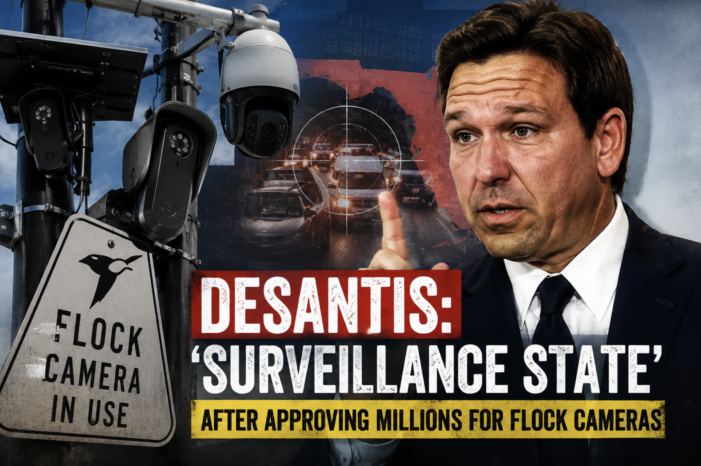
This after state spent millions on license plate readers
Well, this is rich. Florida Gov. Ron DeSantis has apparently discovered civil liberties.
The same governor whose administration has pushed Florida law enforcement deeper into immigration enforcement, expanded cooperation with ICE and actually approved millions of dollars to buy automated license plate readers for that very purpose is now worried that those same cameras could create a — wait for it — “surveillance state.”
You can’t make this stuff up.
The Florida Department of Transportation this week ordered local law enforcement agencies to remove automated license plate readers — commonly called Flock cameras after one of the biggest manufacturers — from state roads within 30 days. FDOT is also revoking existing permits and won’t issue new ones.
The cameras have become ubiquitous. They photograph passing vehicles, read their license plates and can collect information about the make, model, color and other characteristics of the car. Like who has a Biden bumper sticker, for instance. Put enough of them together — and give 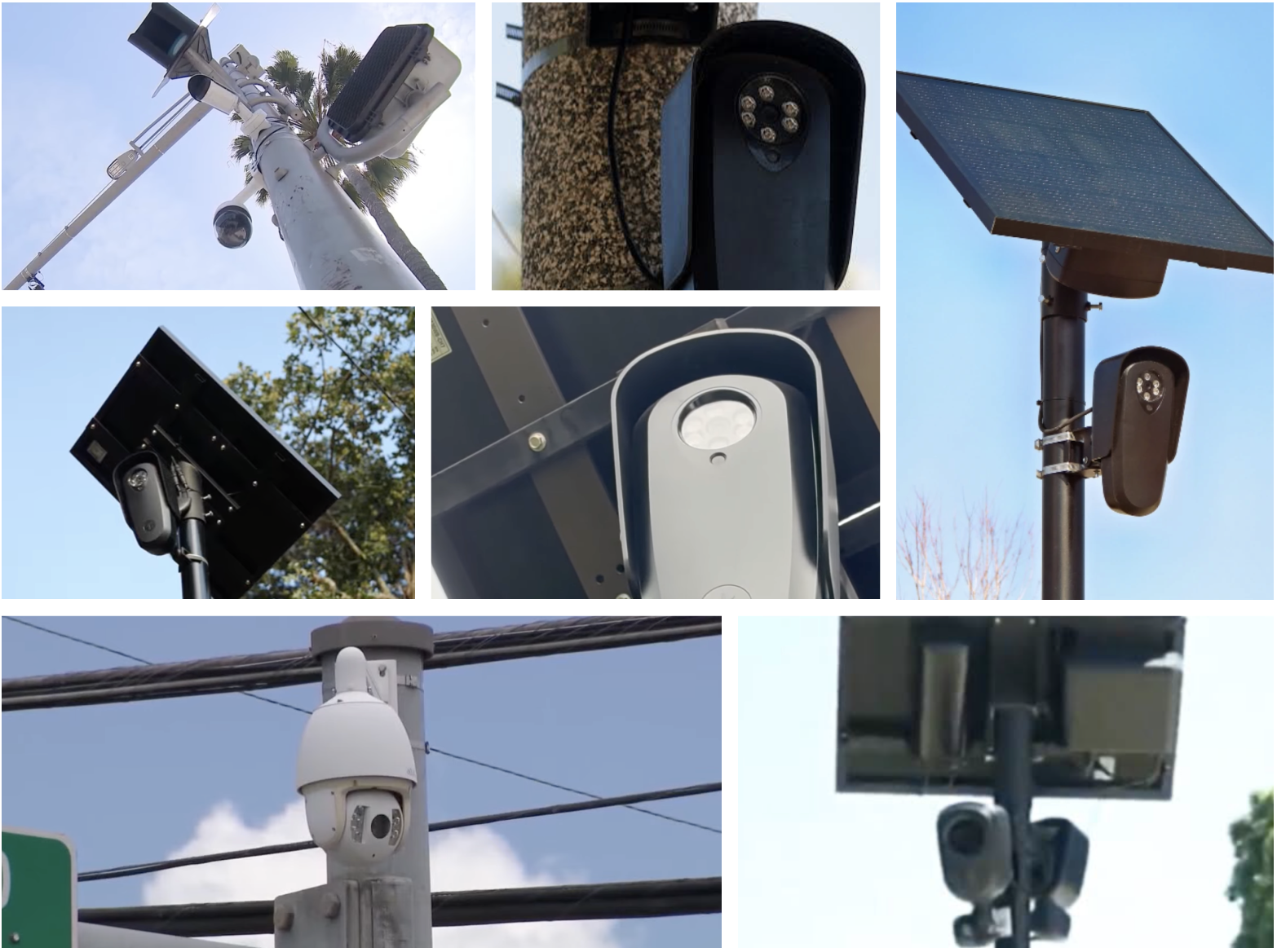 enough police agencies access to the information — and you’ve got something much more powerful than a cop checking a plate.
You’ve got a map.
Where you went. When you went. How often you went. Potentially where you live, where you work and who knows what else.
And DeSantis says that’s gone too far.
“I think these cameras, the license plate readers, I think it’s out of control,” the governor said last week during an appearance at Florida International University, warning that the technology could turn Florida into a “surveillance state.” He doubled down Monday, saying the technology could potentially be used to create a “dossier” of someone’s movements.
Imagine that.
Except — plot twist! — DeSantis apparently wasn’t nearly as concerned about the surveillance state when the people being surveilled were suspected undocumented immigrants.
Over the past year, DeSantis and the Florida Cabinet approved approximately $4.6 million in requests from 18 local law enforcement agencies for about 440 license plate readers as part of the state’s immigration enforcement grant program. And some of those grant applications were remarkably explicit about what the cameras would do.
Read related: Miami commissioners had the votes to ditch ICE 287(g) agreement — but didn’t
St. Johns County, for example, proposed putting readers in high-traffic areas including Interstate 95 because those roads are supposedly used to smuggle undocumented immigrants. The county proposed keeping the data for as long as a year so investigators could establish what it called a “pattern of life” — potentially identifying people’s homes and workplaces and planning enforcement actions.
But now we’re worried about dossiers?
“Where is this data going? They claim that the companies aren’t going to misuse it, but noone is watching that,” DeSantis said. “And I know you can  make some money selling cameras, but you really can make some money if you can sell people’s data.”
DeSantis isn’t wrong about the potential for abuse. The technology has produced some downright creepy examples.
A Haines City police officer reportedly searched his estranged wife’s license plate hundreds of times over two years. A Sarasota police officer was criminally charged last month in another alleged misuse of a license plate reader system. Those kinds of cases have fueled a bipartisan backlash against Flock and similar systems.
And the concern isn’t crazy.
There are now roughly 120,000 of these AI-powered cameras across 49 states, according to Reuters. Flock provides one of the most widely used ALPR systems, but they aren’t the only company trying to make a buck by spying on us. Axon, Vigilant Solutions (a subsidiary of Motorola Solutions), Genetec, PlateSmart, Innova Systems, Rekor, ELSAG, Perceptics, and Jenoptik are a few of the other leading companies selling ALPRs to police, private companies, and others.
They can be extraordinarily useful for finding stolen cars, locating missing people and tracking suspects fleeing violent crimes. Coral Gables Commissioner Melissa Castro has defended the use of the City Beautiful’s automated license reader cameras (reportedly 30, probably more), including some on U.S. 1, to fight crime.
Gables resident Jack Thompson has been after the city to remove the cameras for weeks, since before the guy’s order.
“It doesn’t matter which company has its creepy cameras in your neighborhood; they all have the same problems: a lack of transparency, oversight, and regulation into how they collect, store, and use our data, and how to hold public and private actors accountable if they abuse it,” Thompson said. “Just think about how much someone could learn about your life if cameras constantly tracked where you drove. They could find out which doctors you visit, what house of faith you worship at, who you visit or drive around with — even which political meetings and protests you attend.”
An interconnected network capable of reconstructing the movements of ordinary people who haven’t committed any crime? Yeah. That’s a legitimate civil liberties question.
Coral Gables, in fact, has already fought this fight — in court.
Local resident Raúl Mas sued the city over its license plate reader program, arguing that a network of cameras continuously recording motorists’ 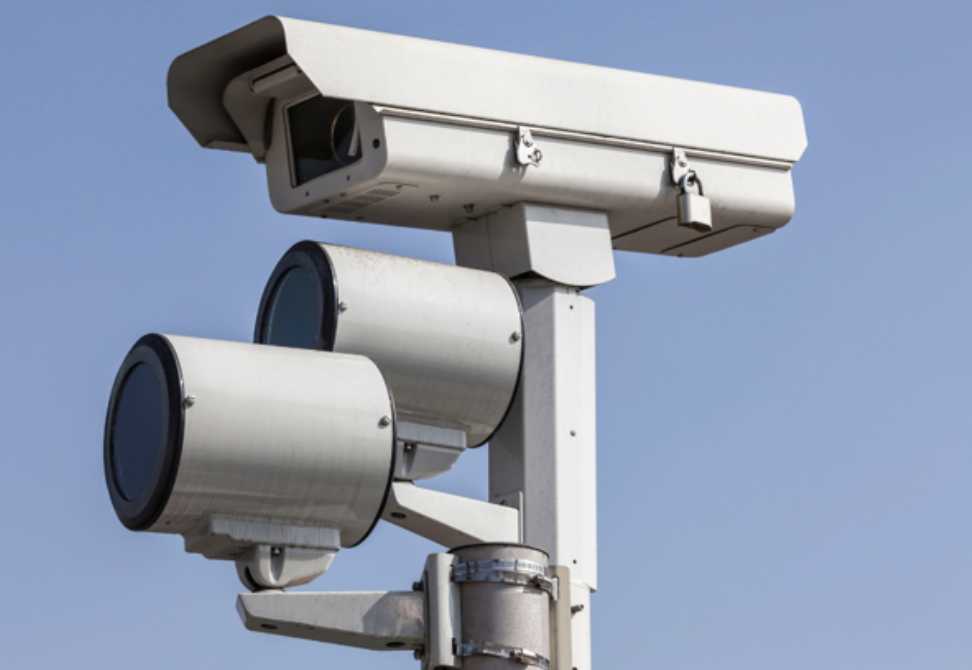 movements violated both the Fourth Amendment and the stronger privacy protections in the Florida Constitution. In August 2021, a Miami-Dade circuit judge granted summary judgment to Coral Gables, finding that collecting license plate information visible on public streets did not constitute an unconstitutional search. Mas backed by the New Civil Liberties Alliance, appealed. But in May 2023, the Third District Court of Appeal sided with the city, too, affirming the lower court’s ruling.
The courts essentially distinguished photographing a license plate that anybody can see on a public roadway from obtaining genuinely private information, and Mas couldn’t demonstrate the kind of individualized injury that would make the city’s system unconstitutional. So Coral Gables won. Twice. And Mas lost his attempt to get the cameras curtailed through the courts.
Five years after Coral Gables successfully defended its license plate readers against a resident warning that government shouldn’t be able to continuously collect people’s movements, Ron DeSantis has arrived at essentially the same privacy concern from Tallahassee — and his administration is forcing those cameras off state-controlled roads.
Mas couldn’t get the courts to stop Coral Gables from doing it.
Now the governor is doing it for him. It’s just fascinating that Tallahassee found religion now.
And nowhere is the contradiction playing out more dramatically than Miami-Dade.
Sheriff Rosanna “Rosie” Cordero-Stutz responded to the governor’s action Tuesday by going even further than Tallahassee required. FDOT’s 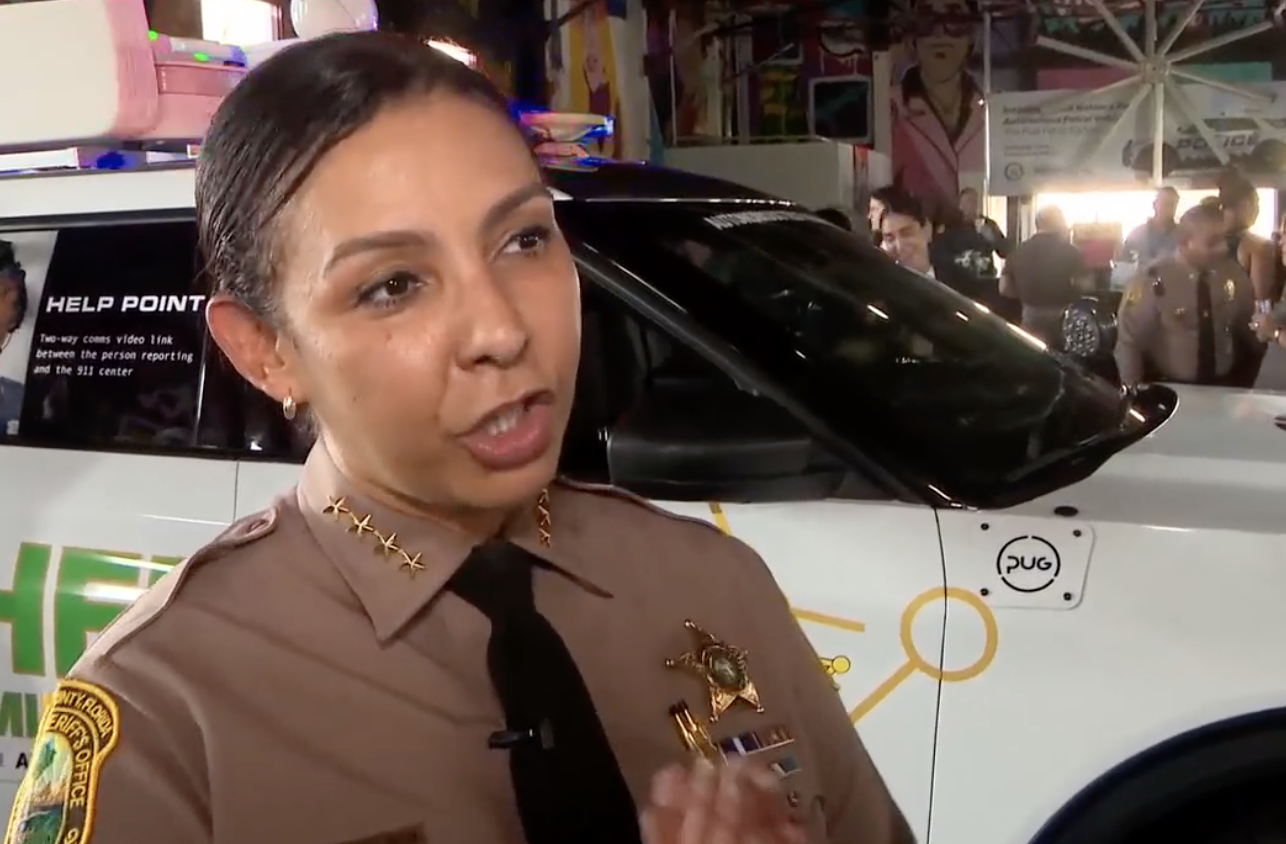 directive applies to readers located within the state’s highway jurisdiction. Cordero-Stutz suspended Miami-Dade’s entire license plate reader program.
All of it.
Read related: Miami-Dade Sheriff Rosanna “Rosie” Cordero-Stutz touts new RoboCop car
At the same time, the sheriff defended the technology, saying it has helped authorities apprehend murderers and robbers, prevent child abductions and locate missing people.
In other words: These things work. They help us catch really bad people. But we’re turning them all off. When she didn’t have to.
Welcome to Florida.
Some Miami-Dade mayors are not happy about it.
Miami Beach Mayor Steven Meiner is leading a group of seven municipal mayors asking the DeSantis administration to pump the brakes.
Meiner was joined by the mayors of Aventura, Bal Harbour, Bay Harbor Islands, Golden Beach, Indian Creek and Sunny Isles Beach in asking state officials for more time and for regulations that protect privacy without eliminating a crime-fighting tool they say works.
Miami Beach has about 40 license plate readers, and roughly half are on state roads such as Collins Avenue and Alton Road.
That’s not insignificant in a city that has spent years throwing practically every policing tool it can find at Spring Break.
Meiner says the readers have helped police trace cars fleeing violent crimes and find suspects. He argues that the state should impose safeguards 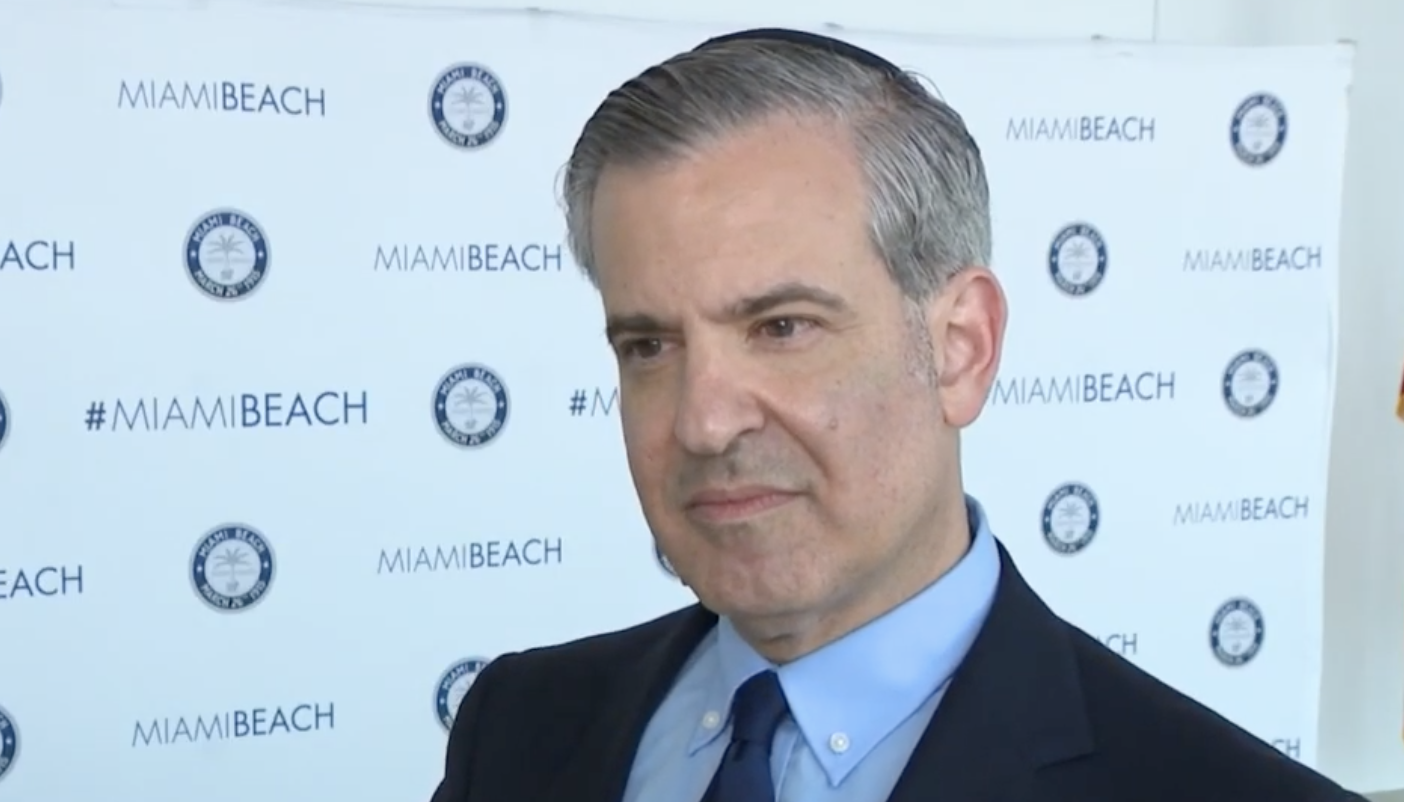 and serious penalties for misuse instead of simply ripping the cameras out.
He has even talked about legislation to “take back control of our roads from the state.”
Oh, now there’s an interesting sentence.
After years of Tallahassee telling local governments what they can regulate, what they can’t regulate, what ordinances they can pass and which ones the Legislature will preempt, suddenly Miami-Dade municipalities want home rule back.
So they can keep the surveillance cameras.
Only in Miami.
Not everyone locally disagrees with DeSantis. Miami-Dade Commissioners Danielle Cohen Higgins and Rene Garcia have expressed support for the state’s privacy concerns.
And that’s what makes this fight more interesting than the usual Republican-versus-Democrat food fight. The politics are scrambled.
DeSantis — Mr. Law and Order — says the police surveillance technology has gone too far.
Republican Miami Beach Mayor Meiner says taking it away could make residents less safe.
The Republican Miami-Dade sheriff shuts the entire system down while simultaneously explaining how useful it has been catching murderers, robbers and kidnappers.
Civil libertarians don’t want government tracking innocent drivers.
Immigration advocates don’t want ICE getting the information.
Read related: Miami-Dade commissioners vote to urge Ron DeSantis to veto anti-DEI bill
And police departments don’t want to lose a tool that can tell them, almost instantly, where a suspect’s vehicle went after a shooting, robbery or 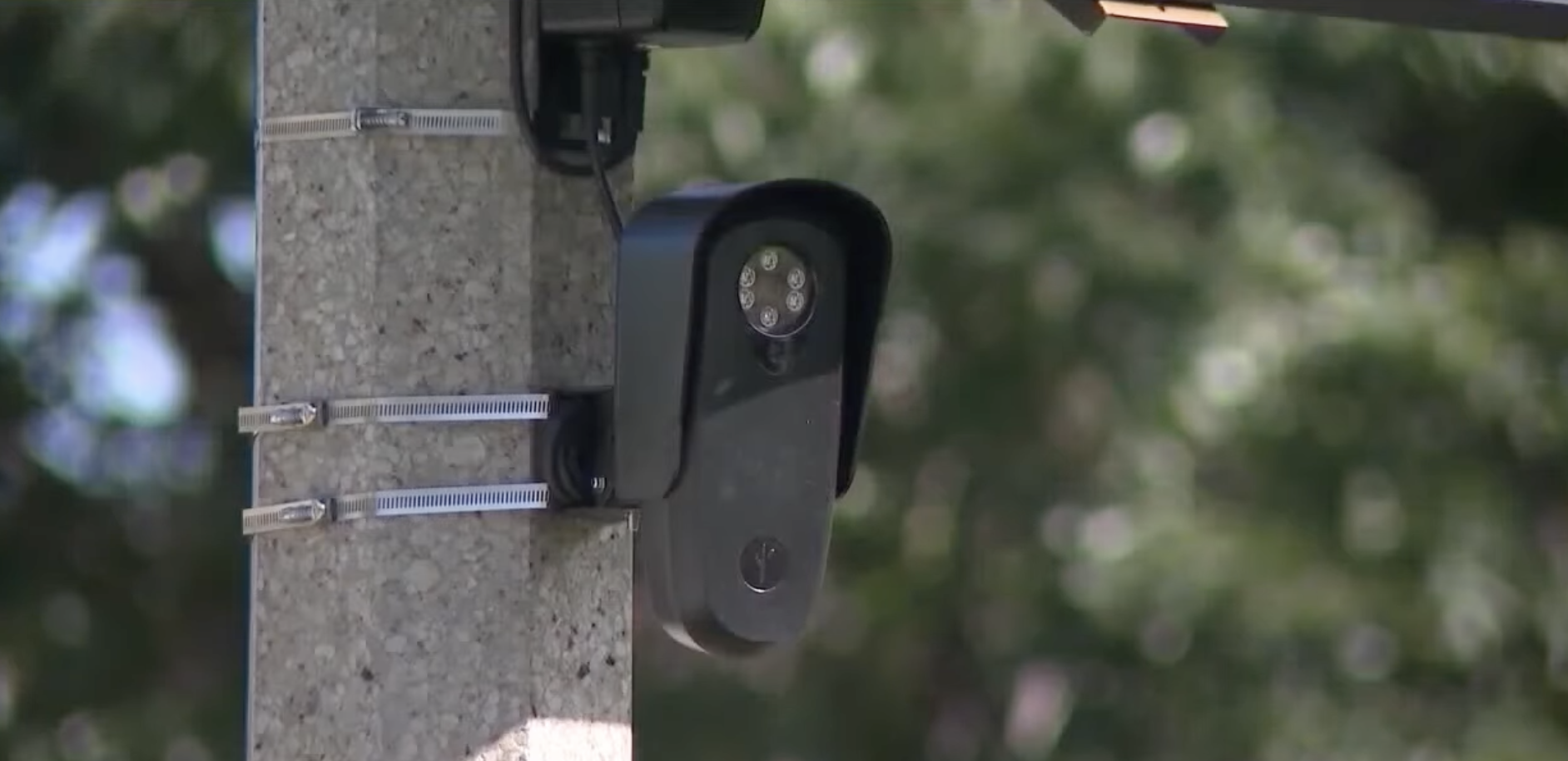 kidnapping.
Everybody has a point.
Which suggests there might be another option between having a camera on every corner and telling them to flock off.
How about rules? Real ones.
Require a legitimate law-enforcement purpose for every search. Attach a case number to it. Keep an immutable record showing which officer searched which plate and why. Automatically flag repeated searches of the same vehicle. Limit how long data can be stored. Restrict sharing with agencies outside Florida. Require warrants for historical movement searches except in emergencies. Make it a crime for an officer to use the database to track an ex-wife, boyfriend, neighbor, political opponent or anybody else for personal reasons.
And — here’s a revolutionary concept — tell the public exactly who can access their information.
Because the underlying question DeSantis is raising is legitimate.
Government shouldn’t be able to construct a detailed record of where innocent people go simply because the technology makes it possible. But neither is it unreasonable for Miami Beach cops to want a camera to tell them where the getaway car went after somebody gets shot on Ocean Drive.
There is a balance somewhere between those two things. Florida just apparently didn’t bother finding it before allowing thousands of these cameras to proliferate.
In fact, Tallahassee helped buy some of them. That’s the part that makes the governor’s sudden alarm so precious.
The surveillance technology was apparently acceptable when Florida wanted to use it to establish immigrants’ “patterns of life.”
Now DeSantis is warning us that government could establish our patterns of life.
Ah. So now it’s creepy.
This kind of independent, government watchdog reporting is crucial to transparency and democracy. And more so every day. Help shine a light on the darker corners of our community with a contribution to Political Cortadito. Click here. Ladra thanks you for your support.

Flock off cameras! Gov. Ron DeSantis suddenly fears a ‘surveillance state’ added by Ladra on
View all posts by Ladra →