
Ladra has spent months asking one question: How did Miami-Dade County end up contemplating spending $400 million to buy an old industrial property it could have purchased a couple of years earlier for so much less?
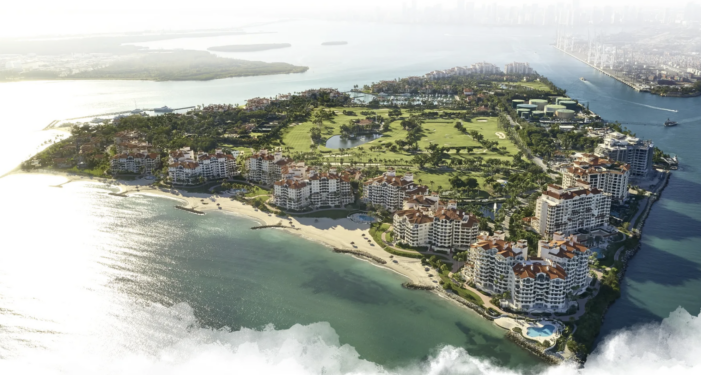
The answer may not begin at County Hall. It may begin behind the gates of Fisher Island.
Long before Miami-Dade taxpayers were asked to foot the bill for preserving the PortMiami fuel depot, leaders of the Fisher Island Club and the Fisher Island Community Association (FICA) were already working hand-in-hand with the private developer that wanted to redevelop the property — and they negotiated memberships for future condo dwellers that hugely and artificially inflated the price of the property.
Read related: Fisher Island fuel depot developer blames Miami-Dade for fiasco
A video of a virtual Fisher Island town hall obtained by Political Cortadito paints a picture not of an open-ended discussion over 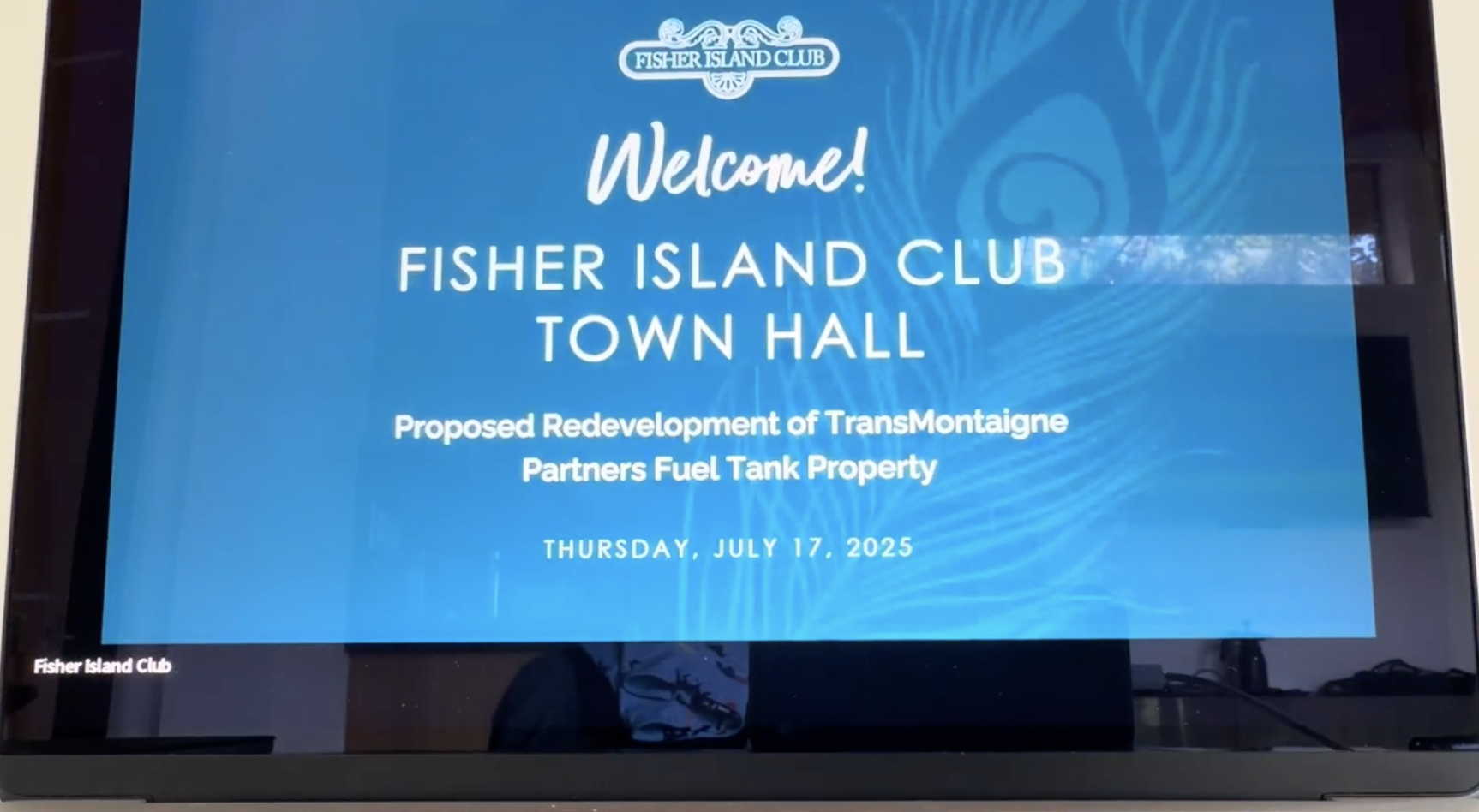 whether redevelopment should happen, but of what appears to have been a carefully orchestrated campaign to persuade residents to approve a framework that had already been negotiated.
By the time residents logged into the July 17, 2025, Zoom meeting — titled “Proposed Redevelopment of Transmontaigne Partners Fuel Tank Property — the deal wasn’t being debated. It was being sold.
According to the presentation, board leaders had already spent roughly seven months negotiating with developer HRP, had exchanged multiple drafts of a memorandum of understanding, and both the Club Board and the FICA Board had already endorsed moving forward before members were asked to vote. It was sold as a way of eliminating the tanks. That’s it.
Repeatedly, residents were reminded that the opportunity was “once in a lifetime.” They were warned not to repeat what board members described as two historic mistakes — failing to acquire other valuable properties years earlier. “These were not failures of intent but of process,” said Andrew Zaro, a member of the family behind Zaro’s Bakery wo purchased a 9,800-square-foot penthouse at Palazzo Del Sol on Fisher Island for over $35 million last year. He has had another property at the Oceanside condo since 2021.
“Decisions influenced by advice that, while well meaning, was not the right expertise. Let’s learn from those moments,” Zaro said.
The message was unmistakable: Don’t overthink it. Don’t miss this one, too.
Read related: Miami-Dade’s $400 million ‘oops’ — Fisher Island fuel depot fight explodes
Ladra has watched enough government meetings over the years to recognize the difference between a public discussion and a sales pitch. This looked far more like the latter.
The presenters highlighted all the benefits Fisher Island would supposedly receive:
 Four acres of remediated waterfront land.
- A new seawall.
- A dedicated emergency helipad.
- A waterfront restaurant.
- Walking paths.
- Employee facilities.
- Green space.
- An upfront $10 million payment.
- And perhaps most importantly, the removal of the fuel tanks that many residents considered an eyesore and environmental risk.
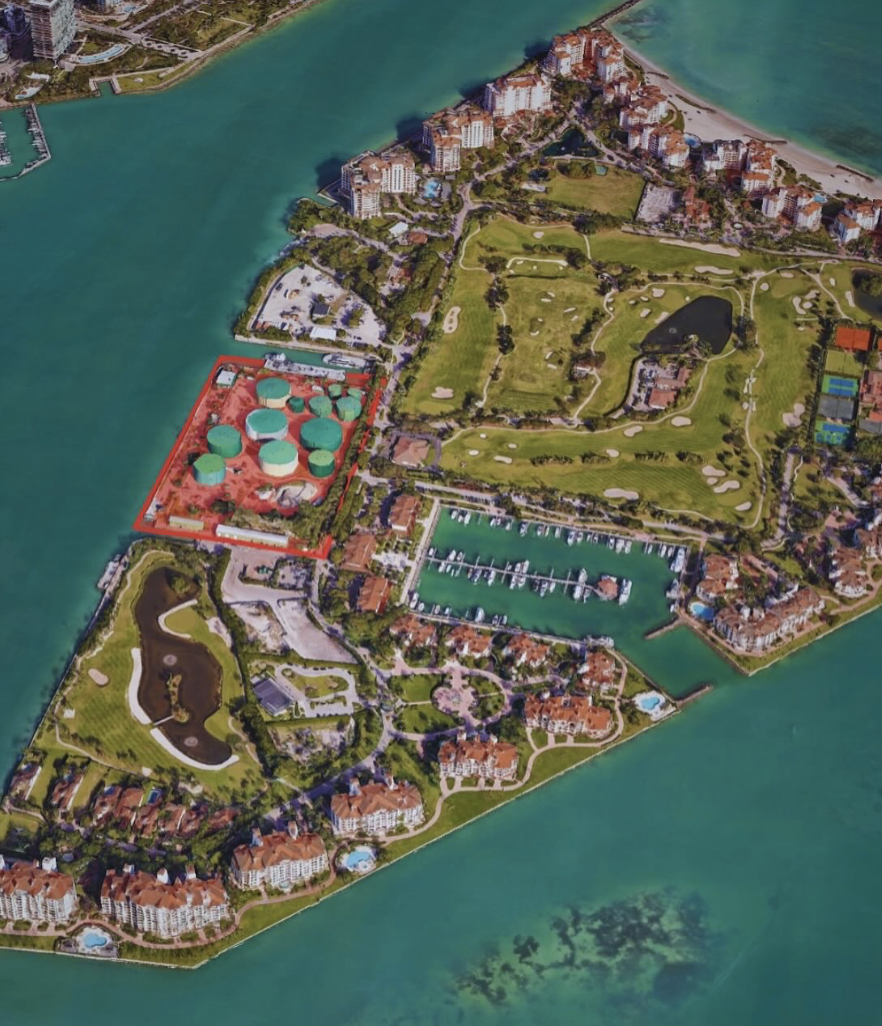
Residents asked if having another 400 or so families move in was the best thing for their community. Again and again, they were told the deal would cost the island “nothing” and that it was the best way to get rid of the ugly old tanks.
What received considerably less discussion was the additional value being created for the private developer by the association’s talks. Or what alternatives might exist.
One resident asked what may have been the most important question of the entire evening: Why not have Fisher Island buy the property itself?
The response focused on environmental liability, cleanup costs and the possibility that owners could face assessments approaching $300,000 per member.
Those may all be legitimate concerns. But with the benefit of hindsight, another possibility looms large.
What if neither Fisher Island residents nor Miami-Dade taxpayers should have been forced into such an expensive dilemma in the first place?
Read related: Fisher Island fuel depot flipping fiasco smells like a long con on Miami-Dade
One of the more remarkable moments came just minutes into the presentation.
Before the substantive discussion even began, FICA board chair David Chen addressed rumors circulating within the community about possible conflicts of interest.
Chene acknowledged that his firm had participated in bidding for the property before ultimately losing. He argued that experience uniquely qualified 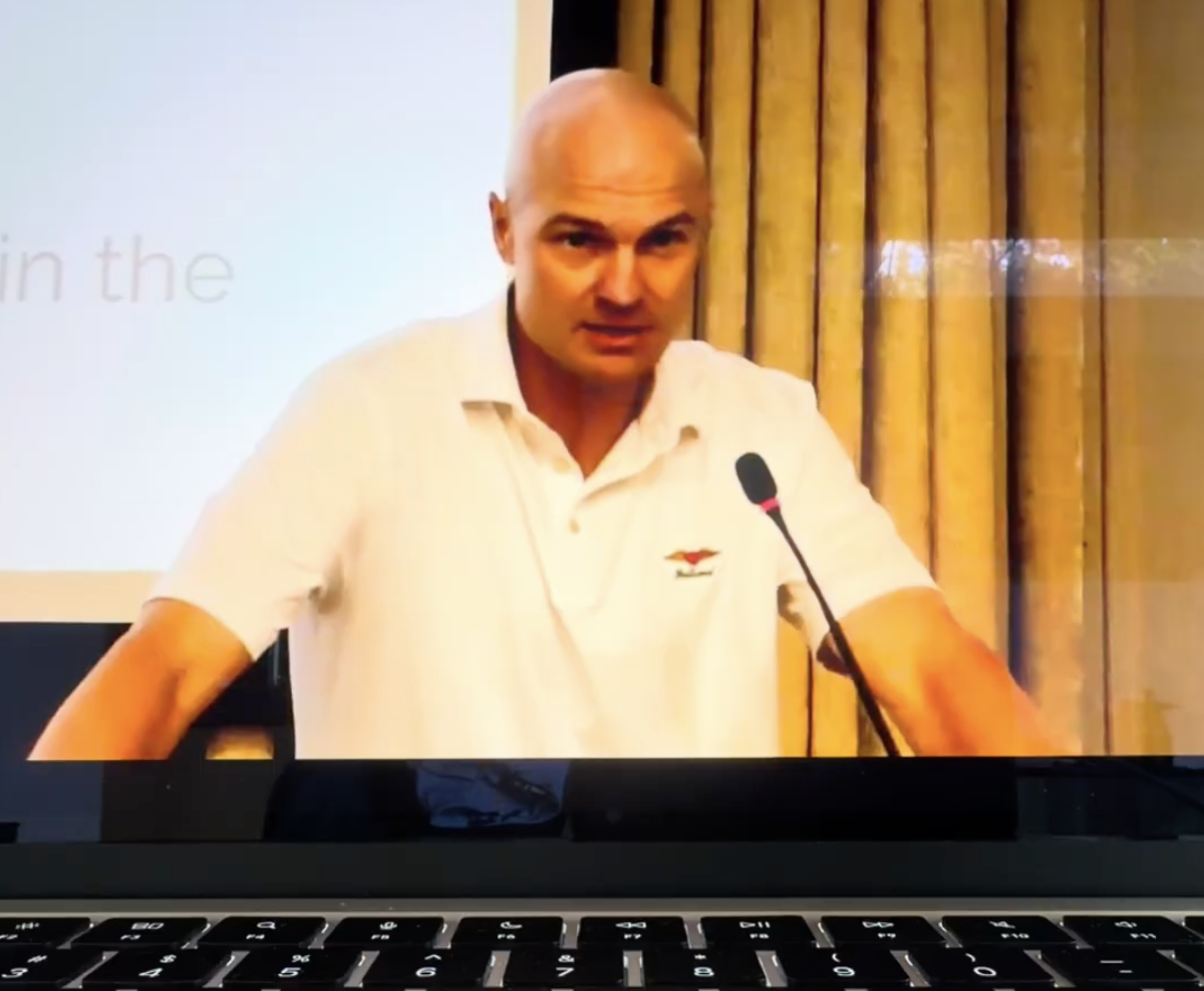 him to negotiate on behalf of Fisher Island and emphatically denied any conflict or improper financial interest, including suggestions involving his role with Douglas Elliman, a luxury real estate company.
Political Cortadito has found no evidence that Chene or any other board member held an ownership interest in HRP or financially benefited from the proposed redevelopment. Still, the fact that conflict allegations were significant enough to warrant a preemptive denial — a two-minute long denial — underscores that those concerns were already circulating among residents.
Many have questioned how the board could simply hire a high-priced attorney, at the association’s cost, to sue the county for interfering in the deal.
Ladra spoke with two Fisher Island “stakeholders” who requested anonymity because they fear retaliation within the tightly controlled private community. Other residents politely refused to speak at all for the same reason. The Fisher Island Club has publicly enforced a “disharmony” policy — the subject of public reporting and litigation — which critics argue discourages members from publicly criticizing or even questioning club leadership.
The Miami Herald wrote about the clause earlier this month, noting that the association has sent emails since March that describe “zero tolerance policy” for breaking the disharmony provision. Violations could result in disciplinary action that basically means no access to any of the island’s amenities. Residents found to have violated the disharmony clause could even be blocked from using the ferry and have to get back and forth on their own private yacht.
“While free speech is a right, the use of free speech as a tool to incite disharmony is not,” the club wrote, according to the Miami Herald story. “The current level of disharmony has reached a crescendo and would not be tolerated at almost any civilized club in America.”
Really? If this is civilized, Ladra wants no part of it.
Why would the powers that be go to such lengths to keep everything quiet? Both sources who spoke to Ladra told Political Cortadito that the whole tone of the meeting seemed shady. They believe that certain board members may be investors in HRP. And that, they say, may be a violation of their fiduciary duty to the association.
What makes this newly-obtained video even more interesting is what it may reveal bout the role FICA played in what happened afterward. After all, it is entirely too possible that without the conditions and memorandum of understanding that was negotiated between the association and the developer, an agreement that would entitle the property to be part of the Fisher Island community, the decrepit old fuel depot would not have been worth the 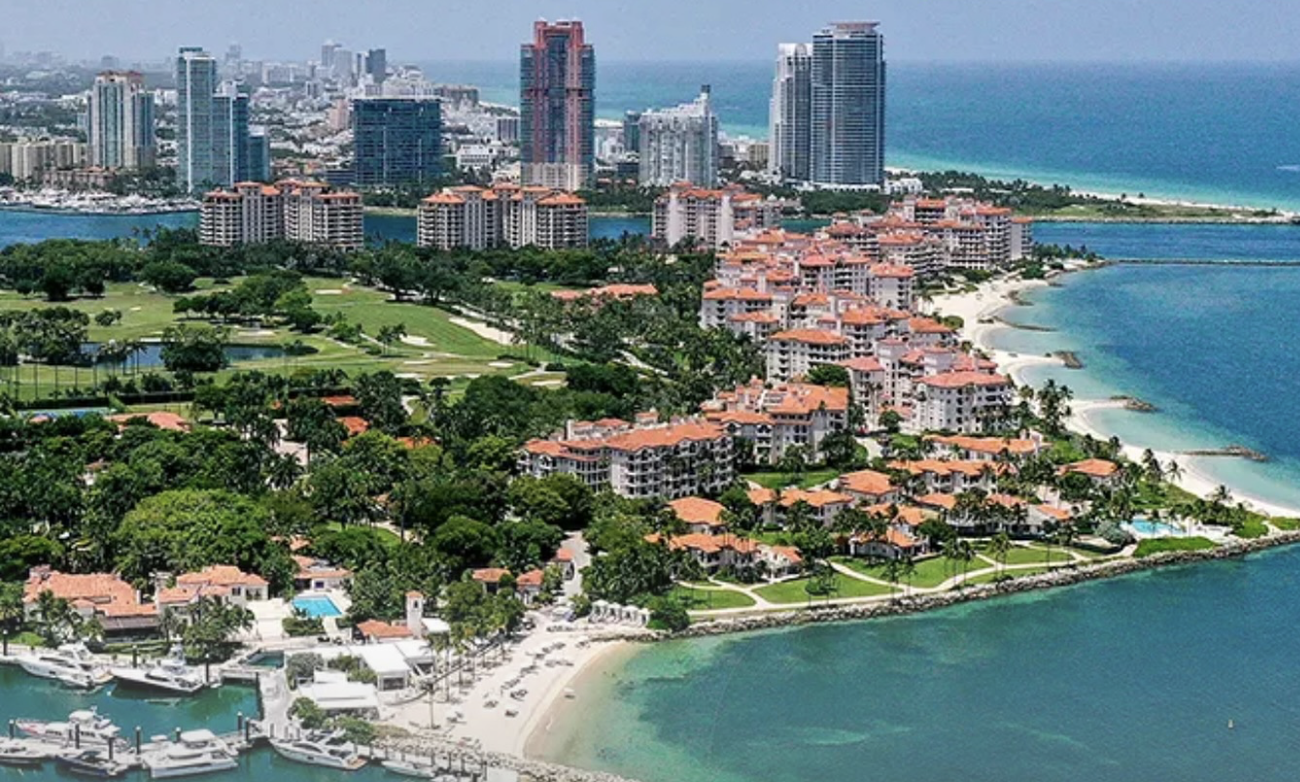 $180 million price that it got from the private developer.
Maybe it could have been purchased by the county for, las malas lenguas say, like $20 million or so.
More than a year later, the proposed private redevelopment collided with the county’s determination that the fuel depot remained critical to PortMiami’s operations. Suddenly, Miami-Dade found itself contemplating an acquisition that ballooned into one of the most expensive and controversial real estate disputes in recent county history.
But instead of going through with a $400 million purchase negotiated by the administration and the new developer owners — who include South Florida real estate legends Jorge Perez of The Related Group and Russell Galbut of lots of development deals — Mayor Daniella Levine Cava nixed the deal and urged the commission to go through eminent domain proceedings. Two major county execs — Deputy Mayor Jimmy Morales and PortMiami Director Hydi Webb — were forced to resign over it.
This week, the Miami Herald published a brief text exchange between Morales and Webb that indicates they were taken by surprise when the mayor rejected the purchase deal with the new developers.
Read related: Jimmy Morales, PortMiami director quit over Fisher Island fuel depot fiasco
But the obvious question now isn’t what the mayor and the administration knew and when. The real question is this: Did private negotiations that began years ago help create the conditions that ultimately left Miami-Dade taxpayers staring at an artificially inflated price tag measured not in tens of millions but in hundreds of millions of dollars?
In other words, was anybody on Fisher Island in on the developers’ long con?
This kind of independent, government watchdog reporting is crucial to transparency and democracy. And more so every day. Help shine a light on the darker corners of our community with a contribution to Political Cortadito. Click here. Ladra thanks you for your support.

Miami fuel depot fiasco didn’t start at County Hall; it started on Fisher Island added by Ladra on
View all posts by Ladra →