
So let me get this straight.
Miami-Dade County is staring down what could be one of the toughest budget seasons in recent memory. A projected deficit in the hundreds of millions. Hard choices. Potential service cuts. Taxpayer anxiety. And the grand plan for public engagement is…two town hall-like conversations?
That’s it?
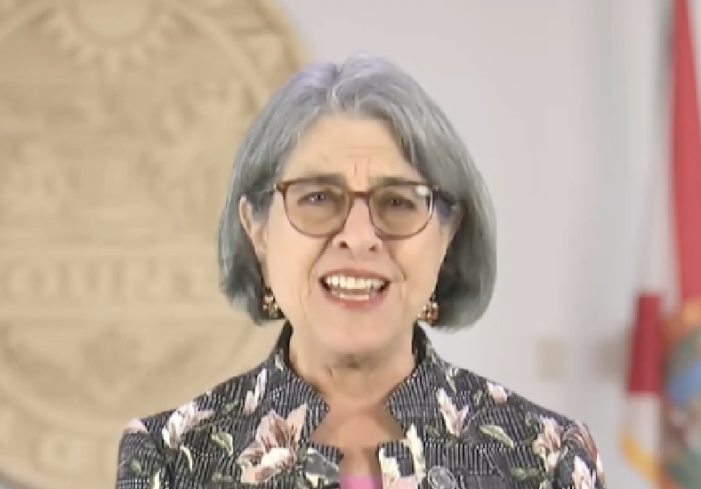
Mayor Daniella Levine Cava announced that she will host two “Conversations with Cava” about the county budget this week — one Monday evening at the Dennis C. Moss Cultural Arts Center in Cutler Bay and another Wednesday at the North Dade Regional Library in Miami Gardens. There is also a Zoom option for Wednesday’s meeting.
South Dade. North Dade. Online.
Apparently the middle of the county can just read about it later.
Read related: Financial finesse? Miami-Dade budget shortfall disappears in final version
Ladra remembers when county mayors held budget town halls across Miami-Dade. Not two. More like six or more, spread throughout the county so residents didn’t have to drive 30 or 40 miles to be heard.
Westchester had one. Kendall had one. Other communities had one. The point wasn’t convenience for County Hall. The point was that taxpayers 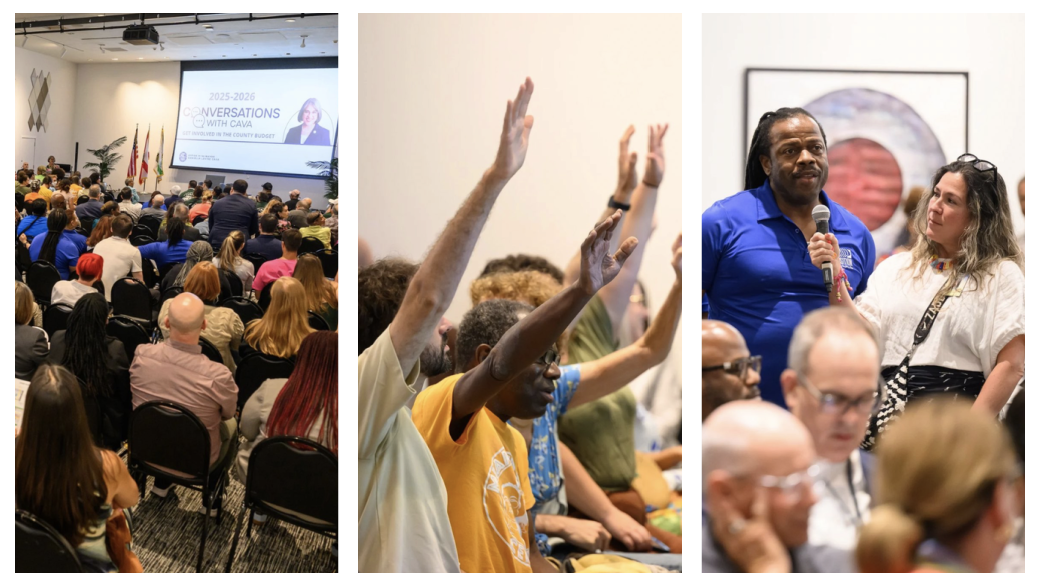 from every corner of Miami-Dade deserved a chance to tell their elected officials what services mattered most before the budget was written in stone.
Now?
If you live in Westchester, West Miami-Dade, Coral Gables, Hialeah, Sweetwater, Doral, Fontainebleau, Aventura or West Kendall, your choices are simple: drive, log into Zoom or hope somebody else asks the question you wanted answered.
Yes, Westchester may not be the mayor’s strongest political base. But they’re still taxpayers. They’re still constituents. And they still deserve to be heard.
Because this isn’t some ceremonial ribbon cutting or a feel-good proclamation recognizing National Whatever Day. The budget is the most important thing county government does all year.
It determines whether your bus runs. Whether your library stays open more than three days a week. Whether parks get maintained and have programs or just become places for bored kids to congregate. Whether police, firefighters and emergency services have the resources they need. Whether cultural programs survive. Whether your property taxes go up. Whether promised projects move forward or quietly disappear.
Every county priority eventually becomes a budget decision.
That’s why these meetings matter.
And if you thought last year’s budget season was ugly, buckle up. Miami-Dade’s 2025-26 budget process was a bruising political knife fight from the moment Mayor Daniella Levine Cava unveiled a spending plan to plug a more than $400 million hole. Suddenly, everything seemed to be on the chopping block. Transit fares. Park fees. Grants for nonprofits and the arts. Government jobs. Entire departments were merged. Commissioners spent weeks trying to save their favorite programs while insisting someone else’s should take the hit.
Everybody wanted the budget balanced. Nobody wanted the cuts in their own backyard. In the end, the county got there with a combination of layoffs, consolidations, one-time money, reserve funds and a little fiscal duct tape.
Read related: Madness marathon: Observations from the first Miami-Dade budget hearing
This year promises to be just as painful — if not worse. Many of the one-time fixes used to get through last year’s budget won’t be available again, while the same structural problems haven’t magically disappeared. Rising operating costs, the expense of the new constitutional offices, uncertainty over state and federal funding, and growing demands for county services all mean commissioners are once again preparing for months of difficult choices, angry residents and competing priorities.
That’s why the county budget is arguably the single most important thing commissioners do every year. It isn’t just about numbers on a spreadsheet. It’s about deciding who gets funded, who gets cut, and whose voice matters when there’s simply not enough money to make everyone happy.
Of course, maybe the administration believes that offering a Zoom option instead of additional in-person meetings solves everything. Technology certainly makes participation easier for some residents.
But virtual meetings aren’t always a substitute for showing up in neighborhoods where people live, work and pay taxes. There’s something different  about looking residents in the eye, hearing the frustration in their voices and answering questions from people who took time out of their evening to be there.
It’s harder to mute reality in person.
Ladra can’t help but remember that previous budget meetings weren’t always love fests. Residents had tough questions. They challenged spending priorities. They weren’t shy about criticizing proposed cuts or questioning new initiatives while basic services struggled.
Public participation can be messy. Democracy usually is.
But fewer opportunities for public participation don’t make difficult budget decisions any easier. They just make them feel more distant.
Perhaps there are practical reasons for scaling back the meetings. Staff time. Logistics. Cost.
If that’s the case, say so.
But if Miami-Dade County can organize community meetings for development projects, transportation plans, resilience initiatives, transit expansions and every other major policy issue, surely it can find the time to hear from taxpayers before deciding how to spend nearly every public dollar collected.
The county likes to say residents should have a seat at the table.
This year, it looks like there are only two tables.
Better get there early.
The first “Conversation with Cava” about the 2026-27 budget will be from 6 to 8 p.m. Monday at the Dennis Moss Cultural Arts Center, 10950 SW 211th St., in Cutler Bay. The second will be from 6 to 8 p.m. Wednesday at the North Dade Regional Library, 2455 NW 183rd St., in Miami Gardens. You can also join via zoom.
This kind of independent, government watchdog reporting is crucial to transparency and democracy. And more so every day. Help shine a light on the darker corners of our community with a contribution to Political Cortadito. Click here. Ladra thanks you for your support.

Miami-Dade Mayor Daniella Levine Cava will have two budget ‘town halls’ added by Ladra on
View all posts by Ladra →
