
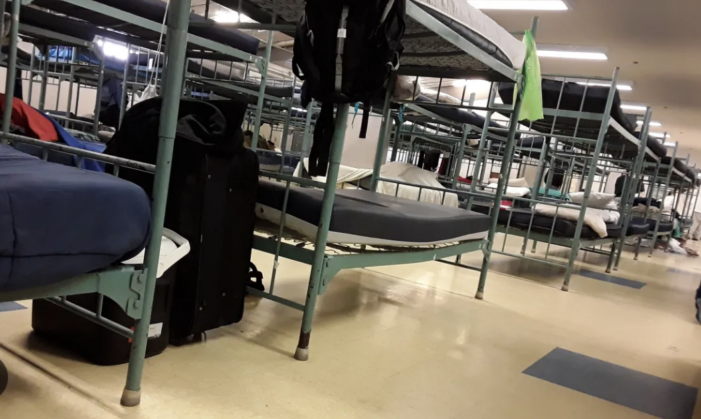
… with a side of forgotten federal audit
Welcome to Miami-Dade’s latest civic education opportunity: a virtual webinar on homelessness featuring the Homeless Trust — sponsored, promoted, and proudly polite.
After last year’s brutal budget season, and in the shadow of Tallahassee talks about axing all property taxes, the topic of Wednesday’s Zoom call, hosted by District 7 Commissioner Raquel Regalado, should be interesting to everyone: How local funds and agencies aim to house homeless people, prevent homelessness and move us all toward “long-term solutions.”
Sounds earnest. Except in Miami politics, earnest is often the polite cover story for entrenched interests with good PR and bigger rolodexes.
Yes, the Homeless Trust does important work. It coordinates funding from the 1% food and beverage tax with federal, state and local grants as it oversees emergency shelter, outreach, rapid re-housing, long-term supportive housing, legal services, care — and lots of good intentions.
You’ll hear all that Wednesday.
But here’s the part they won’t highlight: The Homeless Trust isn’t just a service agency. It’s a political apparatus.
For more than 20 years, it’s been led by Ron Book — a man who Miami insiders treat sorta like royalty. Book is not merely a 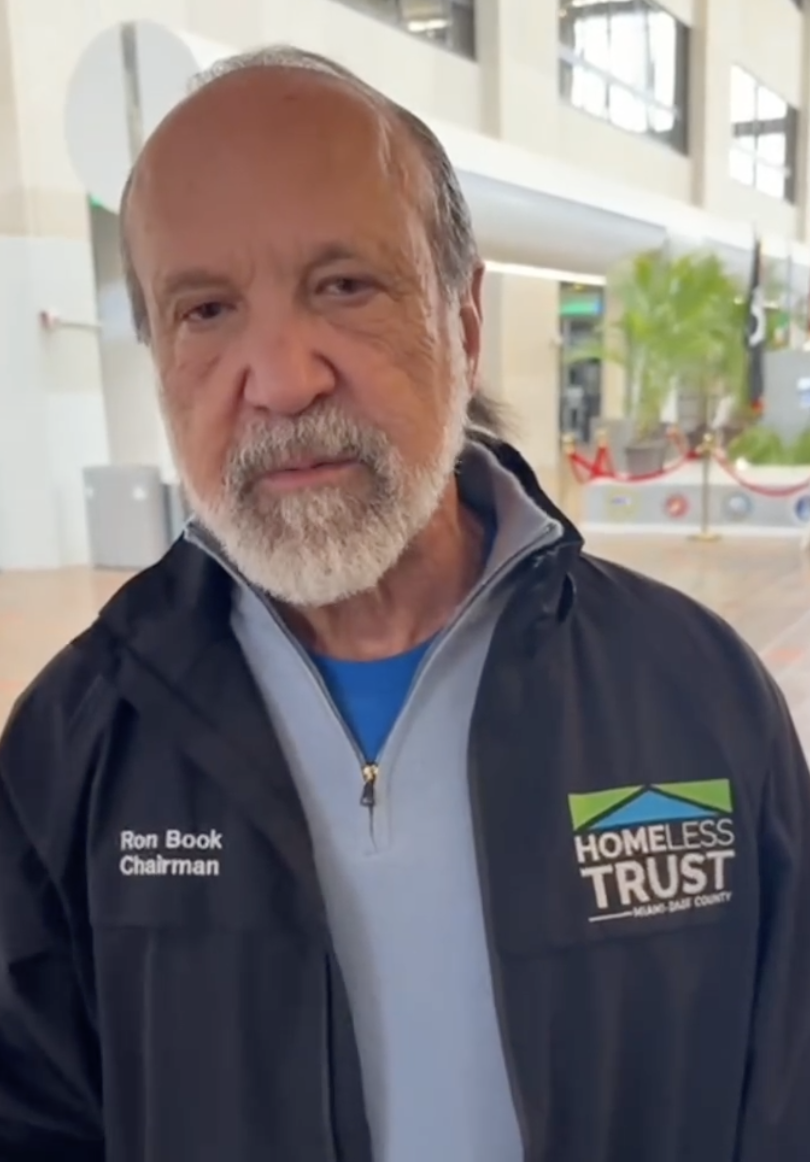 lobbyist and perennial campaign contributor, he is the Homeless Trust Chair who has served through multiple mayoral terms, County Commission majorities, and political earthquakes, always with the same combination of influence and access.
That’s not coincidence. That’s not luck. That’s years of work, starting in his early days as special counsel and head of legislative affairs for Gov. Bob Graham, then founding his own firm in 1987, and he has nurtured deep ties to elected officials not just across Miami-Dade, but across Florida, providing funding to many of their campaigns and political action committees, fundraising, creating political networks and lobbying on their behalf.
En otras palabras, Book is the dude with the keys — not just to the Homeless Trust — but to the broader civic-money ecosystem. When he talks, people seem to listen.
But he’s not the guest speaker at the webinar. That would be his No. 2, Executive Director Victoria Mallette, who makes $315,000 a year. She’s got a sign taped to her door not to knock or bother her. Call the hotline instead. Before she joined the Trust, she was Acting Director of Development, Advocacy and Communications for Miami-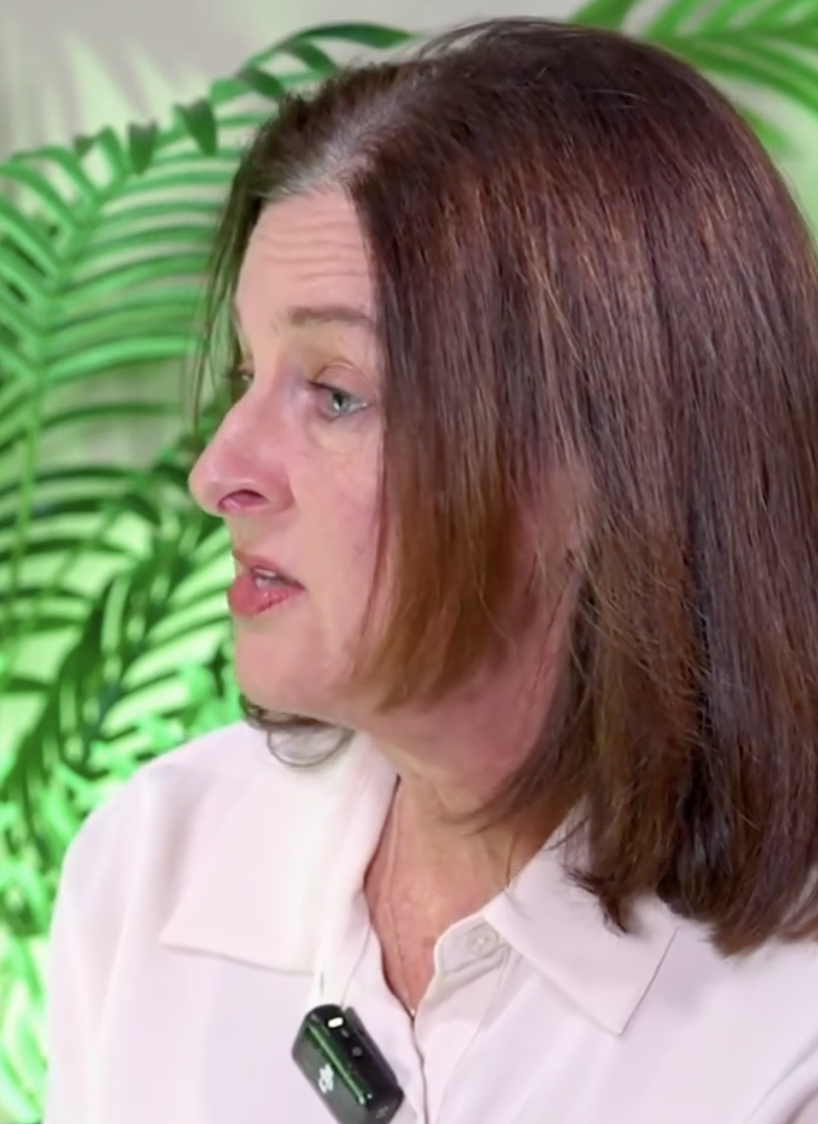 Dade Parks.
And here’s a detail that probably won’t make her PowerPoint: In May 2017, the U.S. Department of Housing and Urban Development Office of Inspector General issued an audit finding that the Miami-Dade County Homeless Trust:
- Failed to properly document certain expenditures
- Failed to report program income
- Failed to adequately support participant eligibility
- And had $98,433 in “questioned costs”
Questioned costs. That means the Trust couldn’t show that it spent the money properly under the rules and restrictions. Nearly $100,000 in questioned costs tied to federal Continuum of Care funding.
That might not sound like much in a government agency budget. It was mostly documentation failures — missing support for payroll charges, incomplete eligibility files, unreported program income.
Read related; Cutler Bay hotel still best option for homeless housing project, county says
And the icing on the cake? The audit wasn’t officially closed until six years later, in June of 2023. So we’re not talking about 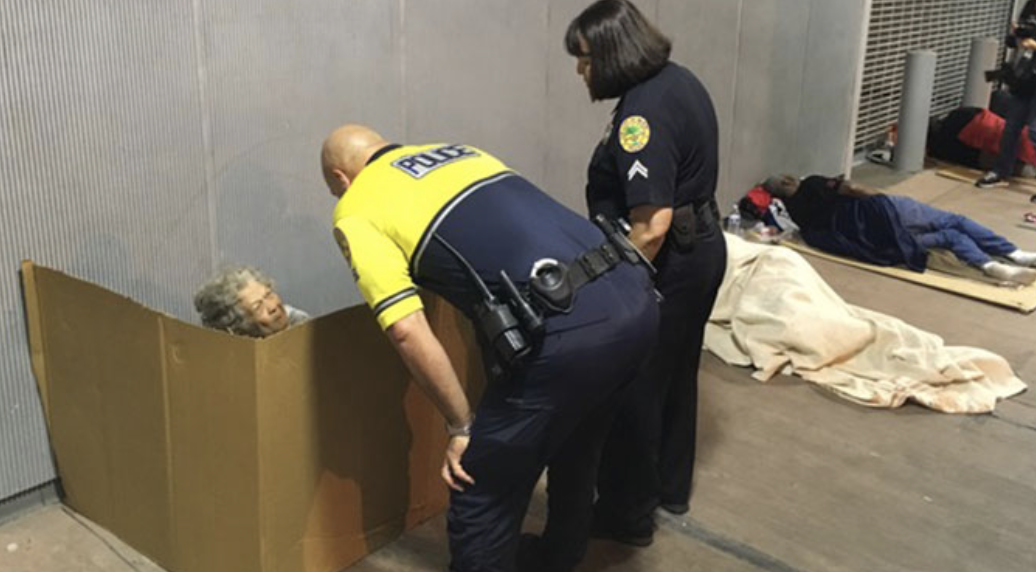 ancient history. There’s no whining “that was the old administration.” It wasn’t. Ron Book, who has been involved in the Trust since the 90s, has been the continuous chair since 2004. So, he was there when the fit hit the shan.
And all the while, he has been a lobbyist and veteran power broker. There’s nothing illegal about that. It’s very Miami.
But when a federally-funded agency chaired by a major political influencer is cited for compliance failures — and takes six years to close out an audit — people should be able to ask questions. Especially when that same agency presents itself as the model of structured oversight and coordinated funding. This webinar should offer that opportunity.
Alas, Ladra doesn’t know if there’s going to be any time for questions, because there very rarely is during these intentionally-titled webinars, so there’s no real participation.
If it were open to questions, Ladra might ask Mallette, who has been executive director since 2014 so she was there during the compliance failures, too: What internal controls changed after 2017? What safeguards were implemented to prevent repeat findings? How does the Trust now document eligibility and expenditures differently? And how quickly would similar issues be corrected today?
Also, let’s follow the money. The Miami-Dade Homeless Trust this past year proposed a budget with $9.046 million for capital improvement projects (acquisitions and renovations) and $15.3 million to maintain current service levels.
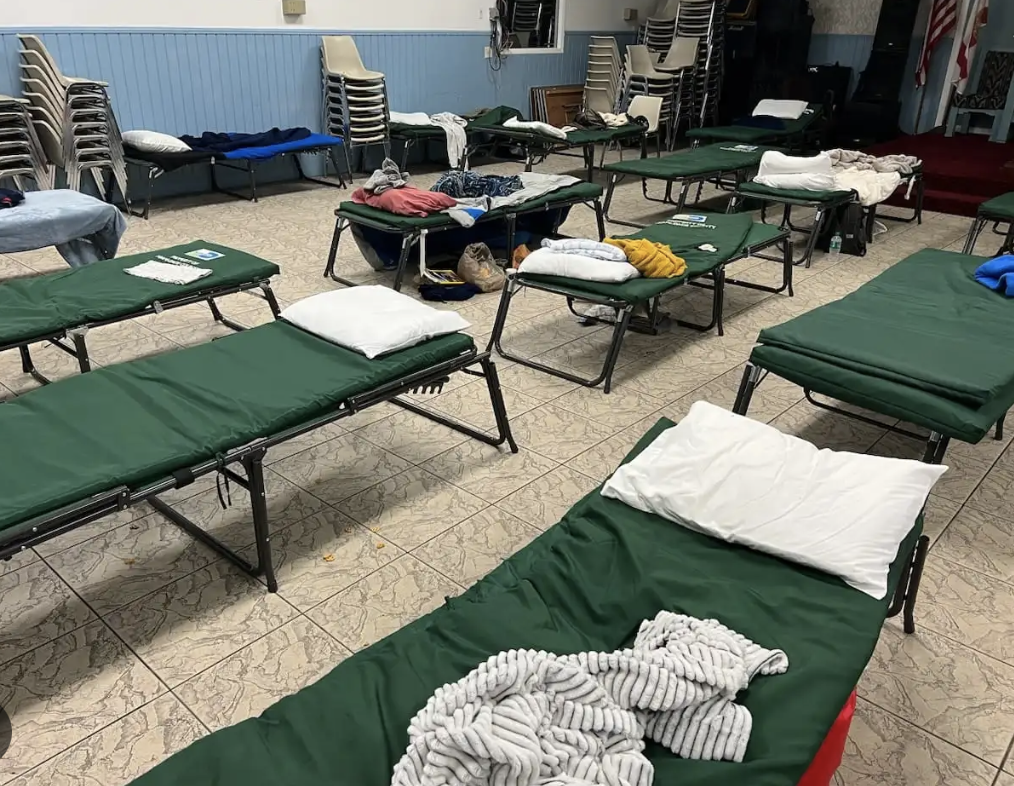 Homeless policy isn’t just about shelter beds. It’s about who gets the contracts and how the money flows through nonprofits and providers — in a county where well-connected boards and agencies control millions in annual funds.
Again, if we were allowed to ask questions, Ladra might ask what contractors get repeat business from the Trust? Do they have a registry for lobbyists? How transparent are the funding flows? Are line items and outcomes publicly available and easy to digest? Or do they live buried in budget reports and agency dashboards?
Also, can Miami house more people permanently — or are we just juggling census counts? Yes, street homelessness has seen declines. But are people truly stable? Are housing solutions permanent — or temporary band-aids?
Expect to hear about the outreach programs and how the homeless demographics have changed. But also quietly remember this: Homeless services are big business. And Miami’s political economy is not for the faint of heart.
From the press release: “Learn how the Homeless Trust distributes funding to local agencies … and how these efforts impact our  community.” Ladra’s take? This webinar is as much about framing the homelessness debate as it is about facts.
Because in Miami, context is power.
Before you hear about street outreach, prevention, emergency, shelter, transitional housing and other types of housing, legal services and primary care, participants should understand that all of these programs are funded through taxes, contracts, and local policy choices.
And a big slice of that pie is allocated, overseen, or influenced by the Homeless Trust — the agency chaired by a political operator. Maybe one of the best.
Read related: Homeless advocates protest city of Miami’s treatment of the unsheltered
Homelessness is a human issue. But in Miami-Dade, it’s also a political and economic one.
Elected officials, nonprofit partners, consultants, service providers — all have seats at the table once the funding flows enter  millions. So when Commissioner Regalado invites you to “learn about the Homeless Trust,” remember:
This is more than a webinar. It’s a political briefing. It’s public relations. It’s framing the future narrative.
And it’s happening at lunch hour — when most people are eating, not investigating budgets.
Which is precisely when the insider crowd prefers to operate.
So, go to the webinar if you want to understand the mechanics of how Miami-Dade funds homelessness services. But don’t treat it as the final word. Ask questions. Who’s in charge? Where does the money go? What successes are they reproducing?
Because policy isn’t only about intentions. It’s about power. And in this county, power likes to drink its cafecito in semi-public, well-scheduled, lunchtime Zoom sessions.
But if you want to go, contact the commissioner’s office at [email protected] or 305-375-5680 because you may have to be invited.
See you on Wednesday.
This kind of independent, government watchdog reporting is crucial to transparency and democracy. And more so every day. Help shine a light on the darker corners of our community with a contribution to Political Cortadito. Click here. Ladra thanks you for your support.

The Homeless Trust 101 — or ‘How Ron Book still keeps the cafecito warm’ added by Ladra on
View all posts by Ladra →
Since Regalado has declared (for running for County Mayor), doesn’t she have to resign from the BCC? and if so, by when?
When did that happen, Richard?
Love, Ladra
To the best of my knowledge, the only person that had had a fight with Book over principle had been me and that was early on in ’92 when he first got involved with the homeless and I was already in for many years of working with them mostly through volunteer work before the Trust being set up. ’92 was also the year when KFR began her now 34 year stint as the chief law enforcement officer of our county and I could write a treatise on the correlation of the ineptness of an institution such as the Trust and the absence of the State Attorney’s Office, holding the principals of the county to structured legal requirements that would make any taxpayer effort to solve a crisis, a paramount issue in the calendar of the State Attorneys Office.
I can only judge that you Elaine perhaps formed your opinions on this matter early on as myself, when you were professionally employed at Knight Ridder and of course you would have noticed the over the top kissing that went on between Book and Alvah Chapman to grow the Trust and become the sole spokesmen for any financial structure to solve a problem that would, by leap and bounds only get worst as these two incompetent men became untouchables out of cowardliness by a succession of county managers and mayors who added administrative stupidity to the aforementioned cowardliness.
Sorry for making this too long Elaine. I will close by saying that neither Raquel Regalado or her father have ever had the political will necessary to deal with the issue that you have here presented, and neither of the two of them have practiced honesty in their public lives.
Executive Director Victoria Mallette makes $315,000 a year? Is that fiscally responsible for a public social service agency?
if you would like to have a constructive and open conversation about any of your quite uninformed and accusatory questions, I would be glad to have that. In 30+ years of the Trust’s existence have you taken five minutes of your valuable time to attend our publicly noticed and advertised meetings to get yourself educated? Do you even watch them on the public station? Are you so ill-informed that you don’t know that anyone choosing to lobby our Board would have to register with the Clerk of the Courts Lobbyist registration rules? do you know that in 30myears, other than Marc Sarnoff who was unregistered at the time have ever lobbied the Trust? You have nothing better to do with your time than to tear down the #1 Homeless Continuum of Care in America?
Dear Mr. Book, thank you for reading and commenting. But I haven’t even really started yet.
For more than 20 years (closer to 30?), the Homeless Trust has operated under a single leader: you. During that time, residency requirements and term limits were waived. In any publicly-funded entity supported by Miami-Dade taxpayers, long-term leadership without structural checks raises legitimate governance questions. Continuity can be valuable, but accountability and renewal are also core principles of public service. Keyword: Service.
Despite the Trust’s designation as a leading Continuum of Care, and despite the sporadic successes that have come in those three decades, homelessness in Miami-Dade remains a persistent and visible issue. While there may have been inroads made in the downtown, more and more homeless are making their lives in West Kendall, Westchester, the area around The Falls, Hialeah and other suburban zones. I believe residents would disagree that there are fewer homeless individuals in these neighborhoods. Maybe they are just being moved from one place to another. Displacement always affects the most vulnerable. The public deserves transparent outcome data demonstrating measurable, sustained reductions relative to the resources allocated.
The Trust is funded by taxpayers across multiple municipalities. Employees are actually Miami-Dade staffers. They receive Miami-Dade compensation and benefits because the Trust operates as an “agency” or “instrumentality” of the county government. That financial relationship warrants public scrutiny and open dialogue without dismissive characterizations of concerned residents. Especially when you lobby both for the county and other municipalities, like the city of Miami, and then before them for your private clients. That is a messy and uncomfortable dynamic, at the very least.
Public engagement should not be framed as hostility. It is part of civic oversight. You should look at this story as an opportunity to address these issues. And so much more.
You don’t only run The Homeless Trust, you also manage the beds that are set aside through the Domestic Violence Oversight Board for domestic violence victims and the money that the county spends on building and operating domestic violence shelters. Yet, I hear over and over again how there are never any beds when a victim comes a-knocking. Which they don’t do on Vicky’s door, as we have established, because of the very clear sign she has on her door that she doesn’t want them to. I have a picture of that. I would have posted it on the story, if my intent was really to just “tear down” anything. I would have written about your 2019 DUI arrest after you crashed your Lamborghini on I-595 in Broward, where you live, which you pled guilty to reckless driving after presenting medical reasons. My intent is not to tear anything down. Why would I do that? My intent is to ask the very obvious questions nobody else is asking.
You should just answer them rather than deflect. Thank you for answering the question about the lobbying registration. Where do I find that list online? Is it mixed in with the lobbyists who register to lobby the county or is it a different list? And I’m not sure I understand your answer. “In 30myears (sic), other than Marc Sarnoff who was unregistered at the time have ever lobbied the Trust?” Do you mean that nobody at all has lobbied the trust in 30 years, except Marc Sarnoff, who was unregistered at the time, or that no other unregistered lobbyist has lobbied the trust in those 30 years? Can you try to answer some of the other questions? You took the time to attack the story but didn’t answer any other questions.
And I have even more questions. So many more. Why does The Homeless Trust own so many vacant properties down south worth tens of millions of dollars? Are they to be developed? Is that through a competitive public bidding process? Where can the community see those plans? Is the Trust involved in the process of selling a women’s shelter to a developer to build a Live Local Act complex? Of course, there’s the promise that the shelter will be reincorporated into the project or built again somewhere else, but it smells like a backroom deal. Have you made any public statements on that?
Or have you been silent like you were in Miami when Commissioner Ralph Rosado proposed to take people’s property, namely 8th street hotels, by eminent domain because he says there was human trafficking there with zero evidence of it. Zero. You were there at the meeting but at no time did you stand up and say, “Wait a minute, we use these hotels to house vulnerable people when we run out of beds.” No, you were there to represent a strip club whose owners were indicted last year in an alleged $8 million tax fraud bribery scheme involving lap dances at Tootsie’s Cabaret in Miami Gardens, where a dancer said she was sexually assaulted. And you got them an extension on whatever.
And during that meeting, as now documented by Billy Corben, you texted Christine King several times to get your item moved up. You said your client would be unhappy. You said you had the votes, which means you lobbied the commissioners, but you didn’t register until two weeks later, after Corben caught you. The texts included a picture of you boarding a private jet, which I am sure was paid for by your client and not the Trust but still, optics!
I know I have gone on and on, but I told you there were a lot of questions and I wanted to maximize your sudden attention.
There is still time for that sit-down open and constructive conversation, but there are going to be uncomfortable questions. It’s not going to be another chance for you to show off your impressive Power Point presentation.
Love, Ladra