

Miami-Dade Commission chair says it ain’t
Along with the Miami-Dade County commission, mayoral and judicial races on the August 20 ballot, after the state legislative and party committee candidates and the new constitutional officers, there will be a ballot question about county mass transit.
It’s a non-binding, straw ballot, which means that, really, nothing will get done.
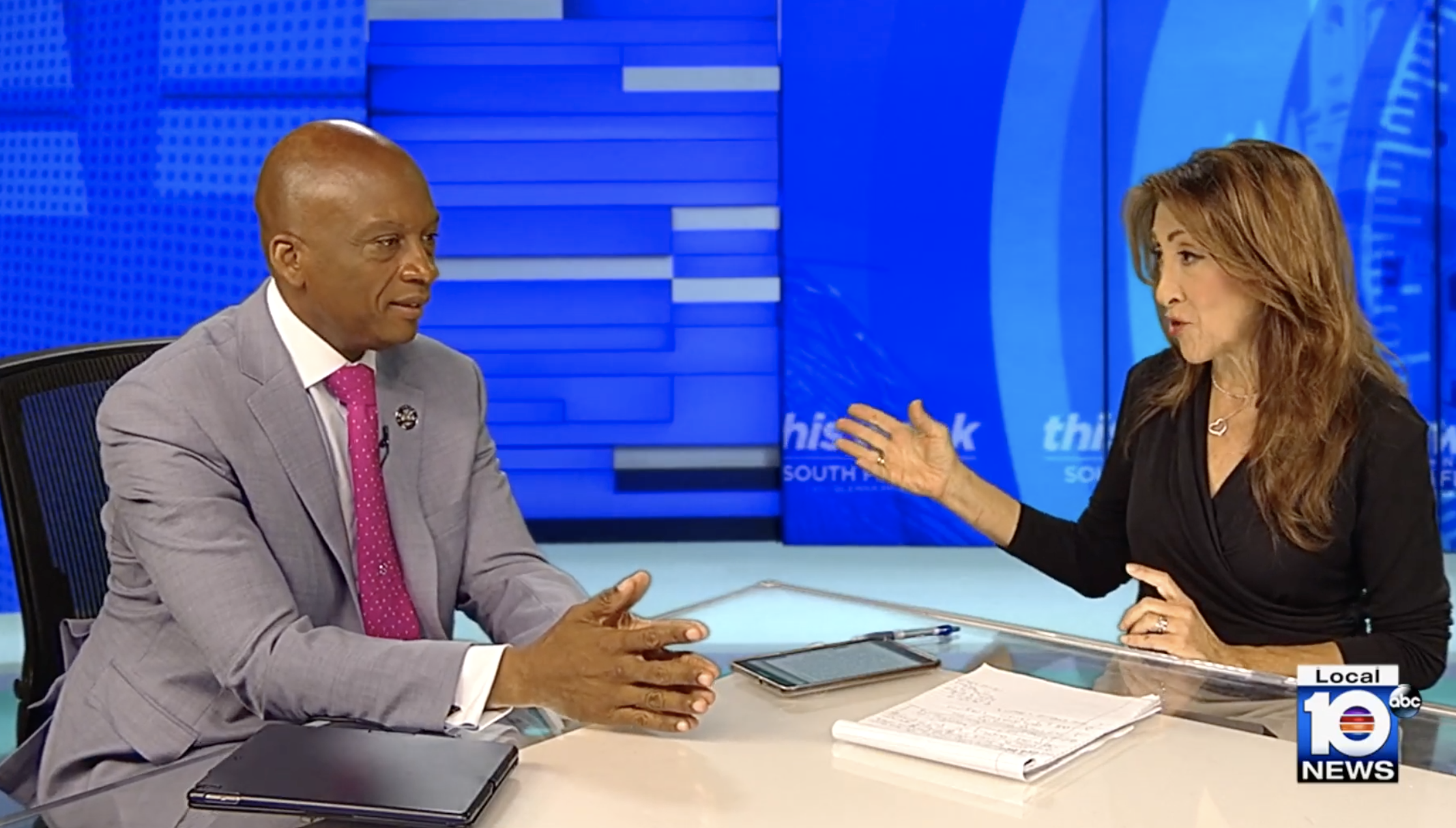
But that hasn’t stopped it’s sponsor, Commission Chair Oliver Gilbert from promoting a yes vote. He penned an op-ed last week in Community Newspapers and was on WPLG Local 10’s This Week in South Florida with Glenna Milberg on Sunday.
The question on the ballot is simple enough: “Does Miami-Dade County need to expand its existing rapid mass transit system? (Rapid mass transit is defined here as elevated Metrorail, passenger rail, and/or Metromover).”
It seems there needs to be that clarification because some people in the county think that rapid mass transit means express buses.
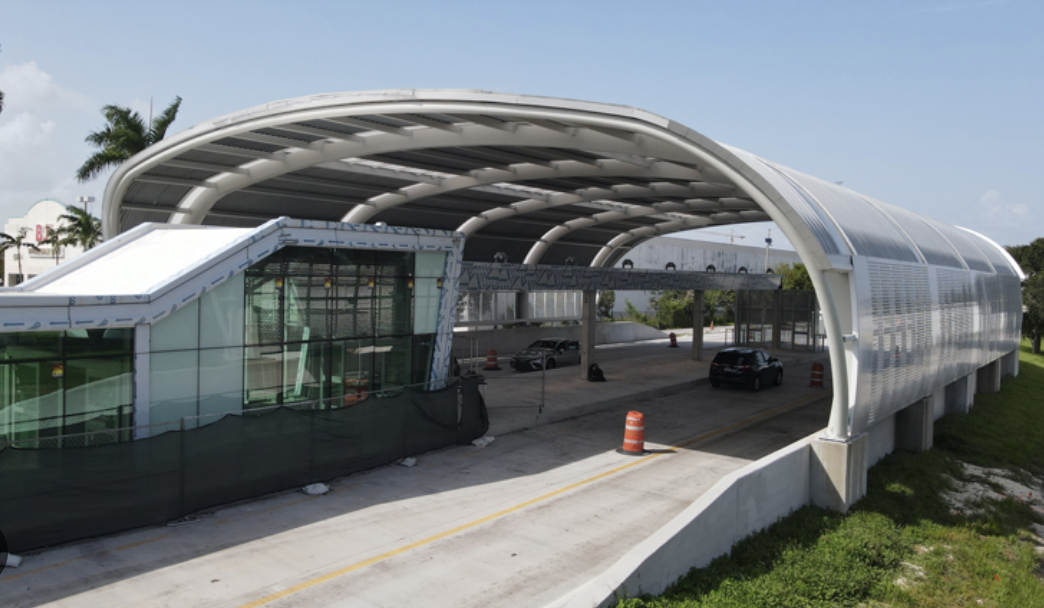

That’s what the county has been focused on for the past several years, spending close to $368 million for the design and build of the 20-mile South Dade rapid busway that goes from the Dadeland South Metrorail station to Homestead. That’s $18.5 million per mile. Milberg did the math.
“That’s still cheap compared to what people are paying without mass transit,” Gilbert told her, adding that, on average, it costs Miami drivers $1,800 a year to use their personal vehicles (Ladra believes it’s more). It comes to $8.13 billion that is being wasted sitting in our cars in traffic. Gilbert did the math.
“We’re losing $8 billion to congestion.”
Read related: Miami-Dade Commission to discuss $245 million South Dade Transit station
He also says it is costing us greater economically. Studies have indicated, Gilbert said, that every dollar invested in public transportation is multiplied four times in economic returns. That includes increase property values that drives up the county’s tax base.
Gilbert, who is the main champion behind denser development along the Metrorail corridor, just doesn’t believe that buses will cut it.
“Ultimately, if we’re going to develop along the corridor, if we’re going to move people, it’s going to be by rail, or some other form of rapid transit,” he said. “We spend a lot of time talking about how much it costs. But we don’t talk about how much it costs not to do it.
“It’s not going to get cheaper.”
In his op-ed piece, Gilbert calls mass transit the great public equalizer and reminisces about going to the University of Miami School of Law in 2000, taking the 27 bus to the Martin Luther King Jr. Metrorail station and then the train to the University of Miami station along U.S. 1. “With every bus ride, with every time I took the Metrorail, I was getting closer to my dream of being an attorney.
“This question isn’t just about moving from Point A to Point B; it’s about moving from the past to the future. It’s about understanding and respecting who we were and acknowledging and curating who we must become. It’s about fostering economic growth, promoting Miami-Dade’s position as a world-class community, and improving the quality of life for all,” Oliver wrote.
Read related: Kionne McGhee pulls the brakes on Miami-Dade BRT for South corridor
This is a no-brainer — except that voters have been stung with the misspending of the half-penny tax passed in 2002, which has been dipped into for maintenance costs instead of the expansion of Metrorail, which is what people were voting for. Does this mean that Gilbert — who sounds like he’s running for mayor in the near future — wants to float another bond to pay for it.
There are really no details. No plans. No source of funding identified. No nada. Gilbert said he’s not just taking the pulse of the people, but starting a conversation.
“Ultimately, we have to build mass transit, and that’s why we are building these stations in a way that they can be converted to rail,” he said. “We have to invest in mass transit. We have to.
“Just waiting around won’t make the problem go away.”

August ballot question on mass transit sounds like same ol’ empty promises added by Ladra on
View all posts by Ladra →
Mr. Gilberts failure to address the Bus sized Elephant In the room is concerning. Although Miam Dade needs Rail I voted no because the county has proven it Does not have the ability to manage and implement rapid transit. Expansion funds were spent in maintenance and they approved a bus system at a cost of 600 million dollars that does not provide Rapid Transit
Vote yes so we finally leave the traffic jams and car centric hellhole that Miami has been for far too long.
Hang on to your wallets…they have mismanaged the budget for decades and now they are coming for more…
Another Pets’ Trust—tell us what you want so we can pretend we care what voters want. Although this could be different because billion dollar projects have lots of opportunities for graft. https://petstrustmiami.com/
Fool me once… vote NO! to any more transit programs. We’re still paying the 1/2 tax for expanded Metrorail. Where’s our money? And where’s the project? Never again.
While Our 1/2 Cent tax been ” Wasted ” By #OURCOMMISSIONERS and Use in Pet Programs of Lobbyist Friends and Shuttle Services that Do Not do The Job and MTA been Manipulated by Transportation Alliance a $ 650,000. Grant from Gimenez .
What Expertise can Mr. Gilber have in Mas Transit ? Moss, Sosa, Bovo ,Barreiro and others have failed us, We need More and Wider Roads Not More Buildings and less Idiots W/ GPS Trying to solve This Problem .
Rapid mass transit is a scam and nowhere pays for itself.
It is too static for today’s job market, where people are more likely to work from home, and not all jobs are concentrated in a central business district.
Buses give more flexibility in case of changing patterns, and cars create the most freedom.
The county should focus on streamlining passageways for car traffic.
For example, the District of Columbia has an extensive system of rapid mass transit, but its most prosperous neighborhood, Georgetown, kept it out over 40 years ago, yet they are thriving!
Many years ago, when the idea of extending Metrorail to the Dolphin Stadium was floated, I heard cost-per-mile numbers close to $1 billion. It may have been an exaggerated figure (similar to Commissioner Gilbert’s 1:4 benefits ratio) but, without such unit prices AND, at least a proposed route, I urge everyone to vote NO.